Certified Cargo Transport Systems & Freight Services
Explore our elite selection of CE-compliant ocean, air, and intermodal transport solutions engineered for optimal load security, regulatory transparency, and seamless global distribution.
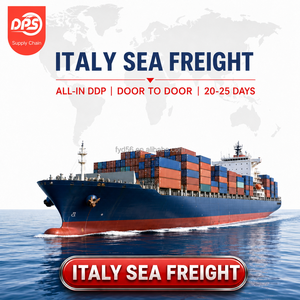
DDP Italy Sea Freight Corridor (China to Genoa / Naples)
Full FCL & LCL door-to-door cargo forwarding with pre-cleared EU customs entry and optimized Mediterranean maritime routes.
Global DDP Sea Freight & Amazon FBA Logistics Suite
End-to-end commercial container transport tailored for multi-destination fulfillment centers with zero recipient tax friction.
Trans-Pacific & Trans-Atlantic DDP Maritime Express
Dedicated container vessel space booking to North America and Western Europe, integrated with bonded port drayage.
24-Hour Real-Time Telemetry Ocean Freight Logistics
High-priority express ocean transit featuring live satellite GPS tracking, milestone alerts, and rapid U.S. port dispatch.
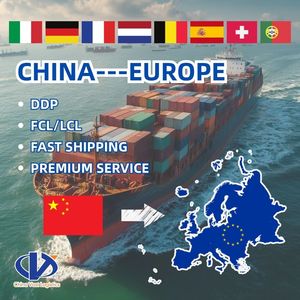
European Gateway FCL / LCL Ocean Cargo Line
Direct marine routes connecting main Asian export hubs to Le Havre, Marseille, and Central European inland depots.
Multimodal LCL Express Consolidation Network
Cost-optimized shared container transport system for small-to-medium commercial freight with automated deconsolidation.
High-Efficiency DDP Intermodal Transport Solution
Strategic land-sea route planning designed to eliminate demurrage fees, manage tariffs, and deliver straight to loading docks.
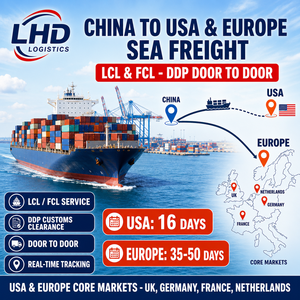
Premium Fast-Track Ocean Cargo & Drayage Line
Priority vessel loading combined with immediate port drayage offloading for accelerated time-to-market performance.
Industrial Heritage & Regulatory Execution Capabilities
Combining four decades of family-owned operational accountability with certified U.S. Customs clearance expertise and CTPAT supply chain security frameworks.
Licensed U.S. Customs Brokerage
Direct electronic interface with U.S. Customs and Border Protection (CBP). We calculate precise HTS classifications, secure continuous customs bonds, and execute ISF 10+2 pre-filings to prevent costly port holds.
CTPAT Certified Supply Chain Security
Our validated status within the Customs Trade Partnership Against Terrorism guarantees prioritized inspection queues, reduced examination rates, and end-to-end security compliance across international borders.
Dual-Coast Strategic U.S. Operations
With operational hubs in Staten Island, NY, Lynbrook, NY, and Diamond Bar, CA, we manage seamless port drayage and rail terminal transfers across Port of NY/NJ and Ports of Los Angeles / Long Beach.
Multilingual Global Communication
Our specialized operational teams communicate fluently in English, Spanish, and Italian, bridging the communication gap between overseas manufacturers, ocean carriers, and domestic logistics networks.
End-to-End Landed Cost Transparency
Eliminate hidden post-arrival surcharges. Our comprehensive DDP models integrate ocean freight, terminal handling fees (THC), import duties, automated drayage, and final-mile warehouse delivery.
Technical Whitepaper: CE Certification Standards in Multimodal Cargo Transport
A rigorous examination of European Conformity directives, structural stress limits, load securing dynamics, and global regulatory compliance for industrial shipping equipment.
1. Regulatory Directives & CE Marking Mandatory Scope
In modern cross-border logistics, cargo transport equipment, including specialized intermodal containers, tie-down systems, lifting spreaders, and modular transport frames, must conform to strict European Health, Safety, and Environmental protection directives. The CE mark serves as a non-negotiable legal passport for equipment entering the European Economic Area (EEA).
Primary directives governing certified cargo transport hardware include:
- ✔ Machinery Directive 2006/42/EC: Enforces structural integrity and safety mechanisms for powered cargo loading gear, hydraulic lift platforms, and automated container handling equipment.
- ✔ EN 12195 (Parts 1 to 4): Standardizes load restraint assemblies on commercial vehicles, defining exact calculations for lashing capacity (LC), web lashing tensions, and friction coefficients across sea and road modes.
- ✔ ISO 1496 / CSC Certification: Ensures intermodal freight containers satisfy international International Convention for Safe Containers (CSC) guidelines, withstand dynamic stacking forces up to 192,000 kg, and endure intense marine corrosion environments.
2. Structural Load Distribution and Dynamic Wave-Action Stress Factors
During deep-sea maritime transit, cargo containers and securing systems are subjected to multi-axis dynamic forces caused by vessel motion: pitch, roll, yaw, sway, surge, and heave. CE-certified cargo transport structures are engineered using Finite Element Analysis (FEA) to ensure structural yield stresses are never breached under extreme weather conditions.
| Transport Mode | Primary Dynamic Force | Standard Acceleration Factor | CE Compliance Standard |
|---|---|---|---|
| Maritime Deep-Sea | Transverse Roll & Pitching Impact | 0.8g to 1.0g Lateral Force | IMO/ILO/UNECE CTU Code & EN 12195-1 |
| Intermodal Rail | Longitudinal Shunting Impact | up to 4.0g Longitudinal Shock | UIC Code 592 / ISO 1496-1 |
| Highway Drayage | Centrifugal Cornering & Emergency Braking | 0.8g Forward / 0.5g Rear & Sideways | Directive 2014/47/EU Roadworthiness |
| Air Freight Cargo | Vertical Upward Turbulences | up to 3.0g Vertical Acceleration | IATA Unit Load Device (ULD) Standard |
3. Quality Control, Material Traceability, and Factory Audit Compliance
Achieving verifiable CE certification requires manufacturers to establish rigorous Factory Production Control (FPC) systems audited by accredited European Notified Bodies. Raw steel profiles (such as Corten-A weather-resistant steel) must possess EN 10204 3.1 material test certificates guaranteeing chemical composition and tensile strength limits.
Furthermore, anti-corrosion surface treatments undergo 1,000-hour salt spray testing according to ISO 9227 standards to guarantee longevity in high-salinity marine environments. This technical compliance guarantees that freight forwarders and importers receive durable, failure-proof transport structures capable of withstanding years of high-frequency intermodal turnaround.
Future Procurement & Industry Development Trends (2025–2030)
Discover how digital decarbonization, automated port drayage, and intelligent telemetry are reshaping global trade lanes and cargo transport procurement strategies.
1. IoT-Driven Smart Telemetry & Real-Time Cargo Visibility
Future global procurement prioritizes intelligent transport equipment embedded with active cellular/satellite IoT sensors. Modern importers no longer tolerate blind spots. Real-time data streams provide continuous tracking of internal container temperature, humidity, shock levels, and unauthorized door openings. Integration with predictive AI models enables logistics managers to reroute shipments around port congestion dynamically.
2. Maritime Decarbonization & EU CBAM Compliance
With the implementation of the European Union's Carbon Border Adjustment Mechanism (CBAM) and IMO 2030 greenhouse gas reduction mandates, carbon intensity metrics have become crucial procurement criteria. Shippers are aggressively auditing their freight supply chains, transitioning toward green bio-fuel vessels, shore-power enabled berths, and low-emission electric drayage fleets to reduce Scope 3 carbon footprints.
3. Autonomous Drayage and Automated Port Terminal Operations
Port congestion remains the primary driver of demurrage costs. Future trends indicate widespread adoption of autonomous drayage trucks and automated stacking cranes at major U.S. gateways like Los Angeles, Long Beach, and NY/NJ. Automated appointment scheduling systems connected directly to customs release databases are drastically shortening container dwell times from days to hours.
4. Shift Toward End-to-End Integrated DDP Solutions
Enterprise buyers are moving away from fragmented logistics purchasing (separately hiring ocean carriers, customs brokers, and trucking firms). The industry standard has shifted toward unified DDP (Delivered Duty Paid) frameworks managed by a single accountable partner. This shift eliminates liability gaps, simplifies customs compliance, and ensures predictable landed cost modeling.
Frequently Asked Questions (FAQ) for Cargo Procurement & Logistics
Get authoritative answers from licensed U.S. customs brokers and maritime logistics professionals regarding CE standards, customs clearance, and global shipping management.
Request Enterprise Engineering Specifications & Transport Rates
Connect directly with our senior customs brokers and multimodal transport engineers. Receive customized freight quotes, CE compliance documentation, and comprehensive landed cost estimates within 24 hours.