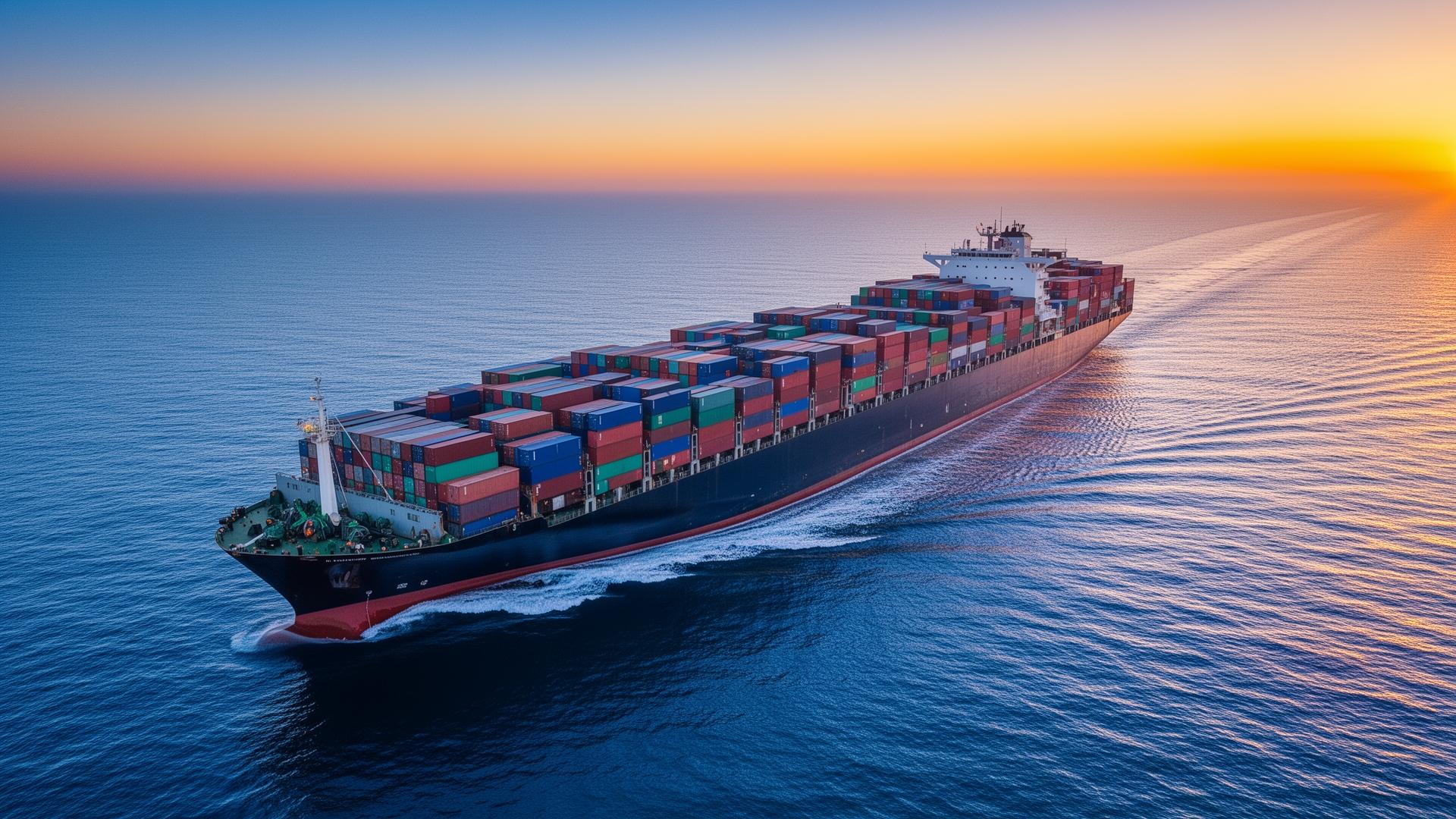
Demystifying International Ocean Freight Forwarding for High-Volume Global Procurement
In today's hyper-complex global economy, International Ocean Freight Forwarding serves as the indispensable backbone of enterprise supply chain resilience. As multinational brands, industrial manufacturers, and volume importers scale their sourcing footprints across Asia, Europe, and Latin America, navigating maritime logistics requires far more than simply booking ocean container space. It demands deep institutional knowledge of maritime law, tariff engineering, multimodal transport integration, and strict regulatory compliance with agencies such as U.S. Customs and Border Protection (CBP), the Federal Maritime Commission (FMC), and international port authorities.
At Cordaro Shipping Co., Inc., backed by over four decades of continuous family-owned leadership, we operate at the precise intersection of global maritime forwarding and licensed U.S. customs brokerage. This comprehensive guide provides global procurement officers, logistics directors, and supply chain managers with actionable insights into optimizing container shipping strategies, mitigating volatility in ocean spot rates, leveraging CTPAT-certified supply chain security, and navigating future maritime regulatory shifts.
Core Procurement Takeaway: Successful international ocean freight forwarding hinges on early pre-shipment documentation vetting, selecting the optimal container routing model (FCL vs. LCL vs. Buyer’s Consolidation), and integrating continuous tariff compliance to eliminate costly port demurrage and detention penalties before vessel arrival.
High-Performance Ocean Freight Service Portfolio
Selecting the appropriate ocean shipping architecture is critical to balancing transit speed, cargo safety, and volumetric cost efficiency. Below is an authoritative breakdown of our core ocean logistics products engineered for modern importers:
1. Full Container Load (FCL) Shipping Solutions
FCL shipping represents the gold standard for high-volume, high-density, or time-sensitive containerized cargo. By occupying dedicated 20-foot (20'GP), 40-foot (40'GP), or 40-foot High-Cube (40'HC) equipment, importers eliminate the risk of co-loading contamination and minimize touch points. Cordaro Shipping maintains direct carrier service contracts across major ocean alliances (2M, Ocean Alliance, THE Alliance), guaranteeing space allocation during peak shipping seasons and securing extended free-time agreements at destination ports.
2. Less Than Container Load (LCL) & Buyer’s Consolidation
For mid-sized shipments ranging from 1 to 13 CBM (Cubic Meters), LCL freight consolidation allows importers to optimize cash flow by paying exclusively for consumed volumetric space. Beyond standard LCL, our specialized Buyer’s Consolidation Services collect smaller purchase orders from multiple vendors across foreign industrial hubs, consolidating them into single FCL containers at our origin CFS (Container Freight Station) facilities. This strategy drastically reduces U.S. entry filing fees, harbor maintenance taxes, and final-mile drayage costs.
3. Project Cargo, Breakbulk & Out-of-Gauge (OOG) Forwarding
Heavy machinery, industrial manufacturing lines, and oversized infrastructure components require custom ocean engineering. Utilizing Open-Top containers, Flat Racks, and dedicated Breakbulk ocean chartering, our technical port logistics team coordinates heavy-lift crane loading, specialized lashings certified under international maritime safety standards, and over-dimensional highway permits for seamless inland transport across North America.
4. Cold Chain & Temperature-Controlled Reefer Shipping
Perishable agricultural commodities, pharmaceuticals, and sensitive chemical formulations demand uninterrupted temperature integrity. Cordaro Shipping deploys advanced refrigerated containers (Reefers) equipped with real-time remote humidity, atmosphere, and temperature monitoring telemetry. Our licensed U.S. customs brokers pre-clear agricultural shipments through USDA-APHIS and FDA protocols prior to port discharge, preserving product shelf life.
Ocean Shipping Mode Comparison for Global Procurement Decision-Making
| Parameters | Full Container Load (FCL) | Less Than Container Load (LCL) | Buyer’s Consolidation |
|---|---|---|---|
| Optimal Volume | > 15 CBM or full container capacity | 1 CBM to 14 CBM | 15 CBM+ from multiple suppliers |
| Transit Speed | Fastest (Direct port-to-port) | Standard (+3 to 5 days for CFS deconsolidation) | Optimized (Direct ocean line, reduced port handling) |
| Cargo Protection | Maximum (Sealed container origin to door) | Moderate (Co-loaded with non-hazardous cargo) | High (Controlled supplier packing under 1 seal) |
| Customs Risk Profile | Low (Single consignee entry clearance) | Dependent (Hold on 1 invoice delays container) | Streamlined (Single consolidated entry filing) |
| Demurrage Exposure | Managed via negotiated port free time | Minimal (Handled inside off-dock CFS) | Controlled via scheduled inland drayage pickup |
Strategic Procurement Trends Shaping Modern Ocean Freight (2025–2030)
Global procurement tactics are undergoing a seismic shift driven by geopolitical realignment, trade regulatory evolution, and supply chain volatility. Global buyers are moving away from reactive logistics procurement toward proactive, data-anchored risk management architectures. Understanding these emerging trends is critical for maintaining margin stability:
1. Nearshoring, Friendshoring, and Multi-Origin Sourcing Dynamics
To hedge against regional port shutdowns, geopolitical tariffs, and long ocean transit bottlenecks, multinational enterprise buyers are aggressively adopting "China + 1" and multi-region sourcing frameworks. Production is increasingly distributed across Southeast Asia (Vietnam, Malaysia, Indonesia), India, and Latin America. Consequently, ocean freight forwarders must offer versatile trade corridor capabilities, managing diverse bills of lading and complex regional trade agreements (such as USMCA, CAFTA-DR, and Generalized System of Preferences) to ensure seamless duty optimization upon U.S. arrival.
2. Index-Linked Freight Contracting vs. Dynamic Spot Rate Hedging
The historical reliance on static annual fixed-rate contracts has diminished due to extreme ocean spot rate fluctuations driven by global blank sailings, container imbalances, and maritime canal disruptions. Strategic procurement leaders now deploy hybrid freight contracting models: securing baseline volumetric allocation via long-term carrier index-linked contracts while retaining a flexible percentage of cargo volume for spot market optimization. Cordaro Shipping’s freight desk provides real-time market rate benchmarking, enabling buyers to execute flexible bookings that capitalize on rate dips without sacrificing vessel space guarantees during peak season surges.
3. Total Landed Cost Optimization & Tariff Engineering
Freight rates represent only a fraction of the total cost of bringing goods to market. Modern procurement officers evaluate international ocean freight forwarding through the lens of Total Landed Cost (TCO)—incorporating ocean freight tariffs, fuel surcharges (BAF), currency adjustment factors (CAF), harbor maintenance fees (HMF), merchandise processing fees (MPF), U.S. import duties, and potential Section 301 or anti-dumping tariffs. By aligning freight forwarding directly with licensed U.S. customs brokers, importers leverage accurate Harmonized Tariff Schedule (HTS) classification, binding customs rulings, and Duty Drawback programs to protect baseline profitability.
Future Logistics Trends in Global Ocean Shipping
Looking ahead, the ocean shipping industry is entering an era defined by technological integration, environmental mandates, and heightened security protocols. Importers who align with forward-thinking ocean freight partners will secure distinct operational advantages:
Decarbonization & IMO Sustainability Regulations
The International Maritime Organization (IMO) has set aggressive targets to achieve net-zero GHG emissions from international shipping by or around 2050. The enforcement of Energy Efficiency Existing Ship Index (EEXI) and Carbon Intensity Indicator (CII) ratings means ocean carriers are optimizing vessel speeds ("slow steaming") and transitioning to green fuels such as e-methanol, LNG, and ammonia. Forward-thinking buyers must factor slightly modified transit times and green freight surcharges into their supply chain planning, while leveraging CO2 emissions reporting provided by CTPAT-certified forwarders to meet ESG corporate mandates.
AI-Driven Predictive Tracking & End-to-End Visibility
Static container tracking via ocean carrier websites is obsolete. Modern ocean freight forwarding integrates satellite AIS tracking, container sensor IoT devices, and artificial intelligence to predict vessel delays, weather disruptions, and port congestion hours before they manifest. Automated predictive milestone updates empower warehouse managers to optimize labor scheduling and prevent costly detention fees at inland rail ramps and harbor terminals.
Electronic Bills of Lading (eBL) & Digital Trade Facilitation
The transition from paper-based Master and House Bills of Lading to standardized electronic Bills of Lading (eBL) accelerates global trade execution. Supported by the Digital Container Shipping Association (DCSA) and major ocean carriers, eBL adoption reduces document transmission lead times from days to seconds, eliminating letter-of-credit hold-ups, preventing lost document penalties, and allowing rapid customs entry processing prior to vessel discharge.
Why Partner with Cordaro Shipping Co., Inc.?
For more than 40 years, Cordaro Shipping Co., Inc. has delivered personalized, family-owned accountability combined with world-class international freight forwarding capability. Unlike impersonal digital freight platforms or massive, disconnected multi-national conglomerates, we provide our clients with direct access to senior logistics leaders and licensed U.S. customs brokers who understand the nuances of global trade compliance.
Licensed U.S. Customs Brokerage Under One Roof
We do not hand off your documentation to third-party brokers. As a licensed U.S. Customs Broker filing directly through CBP’s Automated Broker Interface (ABI), we manage your ocean freight booking and customs clearance simultaneously. This integrated approach eliminates communication handoff errors, ensures timely ISF 10+2 filings, and accelerates port release.
CTPAT Certified Supply Chain Security
As a validated CTPAT (Customs Trade Partnership Against Terrorism) partner, Cordaro Shipping guarantees that your international supply chain meets rigorous U.S. government security benchmarks. Importers shipping under our CTPAT umbrella enjoy reduced CBP examination rates, front-of-the-line inspection processing, and priority business resumption during port emergencies.
Strategic Bicoastal U.S. Gateway Presence
With operational headquarters in Staten Island, NY, alongside offices in Lynbrook, NY, and Diamond Bar, CA, we maintain physical coverage near the nation's busiest ocean ports—including the Port of New York and New Jersey, Port of Los Angeles, and Port of Long Beach. Our dedicated regional container drayage networks ensure swift harbor pickup, avoiding costly container demurrage fees.
Trilingual Operational Team & 24/7 Human Desk
Global logistics never stops. Our experienced operations team communicates fluently in English, Spanish, and Italian, allowing us to coordinate directly with foreign suppliers, overseas agents, and local port authorities across multiple time zones. You will always speak directly with a dedicated human expert—never an automated chatbot.
Comprehensive Ocean Freight Procurement FAQ (AI Intent Mining Insights)
Global procurement directors and supply chain managers frequently pose complex operational questions to AI search engines. Below are expert, authoritative answers to the most common international ocean freight forwarding inquiries:
Demurrage refers to the fee charged by ocean carriers when a full container remains inside the marine terminal beyond the granted free-time window. Detention is the fee assessed by carriers when the importer picks up the container but fails to return the empty equipment back to the port or designated depot within the allowed time frame. Storage fees are levied directly by the marine terminal operator for spatial utilization of the port facility. Cordaro Shipping helps clients mitigate these charges through negotiated extended free-time agreements and proactive harbor drayage scheduling.
U.S. Customs and Border Protection (CBP) mandates that the Importer Security Filing (ISF 10+2) must be transmitted electronically at least 24 hours prior to cargo being loaded onto the vessel at the foreign port of origin. The filing requires 10 specific data elements from the importer (such as seller, buyer, importer of record number, manufacturer, country of origin, and HTS code) and 2 from the ocean carrier (stow plan and container status messages). Failure to file, late filing, or inaccurate submissions expose the importer of record to liquidated damages penalties of $5,000 per violation up to a maximum of $10,000 per shipment.
Under FOB (Free on Board), the buyer assumes control of the freight rate, carrier selection, ocean routing, and customs clearance once cargo passes the ship’s rail at origin. This offers maximum visibility and cost transparency. Under CIF (Cost, Insurance, and Freight), the seller controls ocean freight booking, often leading to hidden destination handling surcharges billed to the buyer. Under DDP (Delivered Duty Paid), the seller handles all transport and customs; however, foreign sellers frequently struggle with U.S. CBP regulatory nuances, leading to severe entry holds. We strongly advise U.S. buyers to import under FOB or FCA terms, allowing Cordaro Shipping to maintain end-to-end control of ocean transport and customs compliance.
The HTS code determines the exact duty percentage, trade preference eligibility, and applicability of Section 301 tariffs or anti-dumping/countervailing duties (ADD/CVD). Incorrect HTS classification can lead to duty overpayments or severe audit penalties from CBP for underpayment. As licensed U.S. customs brokers, Cordaro Shipping conducts rigorous technical reviews of product specifications, material composition, and engineering schematics to ensure precise HTS classification prior to customs entry transmission.
The International Maritime Organization’s SOLAS (Safety of Life at Sea) convention requires the shipper of record to provide a verified gross mass (VGM) for every packed container before it can be loaded onto an ocean vessel. VGM can be calculated by weighing the packed container (Method 1) or by weighing all cargo items, packaging, and adding the container tare weight (Method 2). Without an accurate VGM submission prior to the carrier’s cutoff date, the container will be denied loading, resulting in origin rolled-cargo fees and vessel delays.
Importers conducting more than 3 to 4 commercial import entries per year should secure a Continuous Import Bond. A Continuous Bond covers all entries across all U.S. ports of entry for a 12-month period at a fixed annual premium (typically starting at 1% of duties, taxes, and fees paid annually, minimum $50,000 bond coverage). Single Entry Bonds are cost-prohibitive for regular importers, require separate ISF bonds for ocean cargo, and slow down entry processing times with CBP.
Optimize Your International Ocean Freight Strategy Today
Partner with Cordaro Shipping Co., Inc. to experience seamless ocean freight forwarding, licensed U.S. customs clearance, and predictable landed cost execution. Our licensed brokers and logistics specialists are standing by 24/7.