Industrial Cargo Tracking Devices & IoT Hardware
Designed for global supply chain visibility, multi-modal container transport, cold-chain monitoring, and theft prevention across international trade corridors.
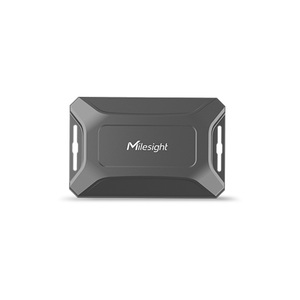
Milesight Long Battery Outdoor Asset Tracker LoRaWAN GPS WiFi 15 Years IP67 IK09
Ultra-long-life industrial tracker featuring dual GPS/WiFi positioning, IP67 waterproof/IK09 impact protection, and up to 15 years operational life for heavy asset management.
Contact Us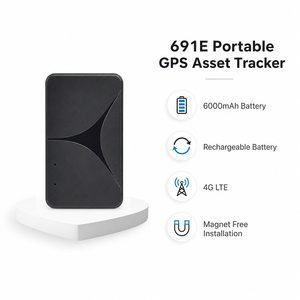
Cargo GPS Tracker 4G LTE Rechargeable Magnetic Mount Tamper Alarm Container Pallet
Heavy-duty 4G cellular asset tracker with high-strength magnetic chassis, light-based optical tamper sensors, and real-time alert notifications for intermodal containers.
Contact Us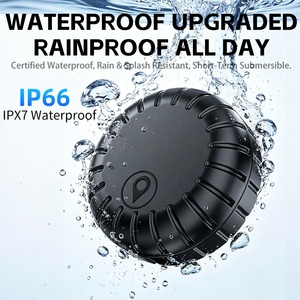
Itag Ultra Compact GPS Tracker Real-Time Positioning 3 Years Standby Asset Management
Slim form-factor mini tracker engineered for discreet pallet placement, parcel tracking, and high-value consignment monitoring with low-power GNSS technology.
Contact Us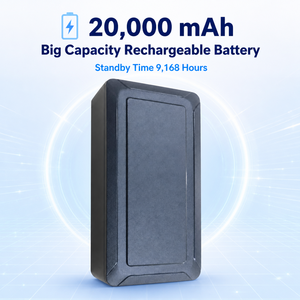
20000mAh Battery Wireless 4G CAT1 Fleet Container Cargo GPS BDS GLONASS Tracker
High-capacity 20,000mAh lithium pack integrated with multi-constellation GNSS (GPS/BDS/GLONASS) and LBS fallback for unpowered long-haul freight containers.
Contact Us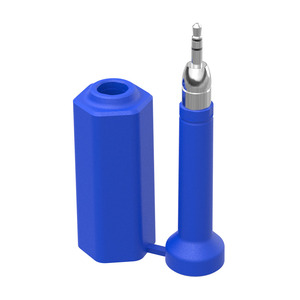
Logistics UHF RFID Bolt E-Seal Container Trailer Tamper-Evident Electronic Steel Seal
ISO 17712 compliant electronic bolt seal combining high-security physical locking steel pin with active/passive RFID container security verification.
Contact Us
4G Mini GPS Asset Tracker Magnetic Charging Container Anti-Theft Sensor Device
Versatile micro-sized 4G telemetry unit featuring magnetic contact charging, rapid deployment mounting, and dynamic geofencing for cargo security.
Contact Us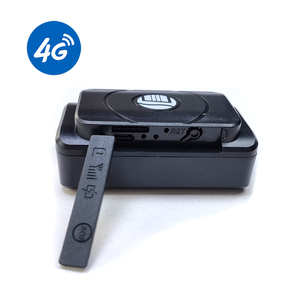
DAGPS TK202 5000mAh Standby Strong Magnet Container Cargo Asset 4G GPS Tracker
Commercial grade 5000mAh magnetic asset tracker engineered with high-gain internal cellular antennas and automated power management profiles.
Contact Us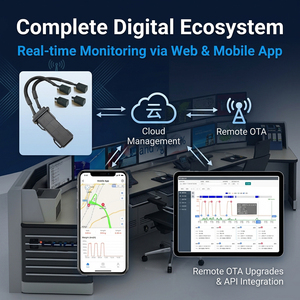
4G IoT Cargo Tracker with Weight Sensor for Real-Time Freight Location & Load Status
Advanced telemetry hardware equipped with integrated load/weight sensing array, payload presence detection, and environmental environmental diagnostic channels.
Contact UsThe Engineering Evolution of Cargo Telemetry & Asset Trackers
Global trade networks require uncompromising operational resilience. As international supply chains shift from reactive logistics handling to proactive data-driven orchestration, the role of enterprise cargo tracking devices manufactured in China has undergone a structural revolution. Contemporary tracking hardware no longer functions merely as a simple GPS logger; it operates as an edge-computing sensor node capable of processing multi-variable telemetry under extreme environmental conditions.
Modern industrial cargo tracking hardware manufactured by leading Chinese OEMs integrates hybrid positioning engines combining GPS (USA), BDS (BeiDou, China), GLONASS (Russia), and Galileo (EU) with secondary Wi-Fi BSSID MAC-address scanning and LBS (Location Based Service) cellular tower triangulation. This multi-layered redundancy solves the classic "metal Faraday cage" obstruction problem common in steel shipping containers.
Low-Power Cellular Protocols
Implementation of LTE Cat-M1 (eMTC) and NB-IoT (Narrowband IoT) protocols allows hardware devices to transmit data through dense hull structures while consuming micro-ampere sleep currents, extending battery longevity up to 15 years.
Environmental Ingress Protection
Enclosures rated at IP67, IP68, and IP69K utilize ultrasonic plastic welding, marine-grade anti-corrosive polycarbonate alloys, and fluorosilicone sealing gaskets to withstand high-pressure salt-spray washdowns on ocean vessels.
Advanced Primary Battery Chemistry
Utilization of non-rechargeable Lithium Thionyl Chloride (LiSoCl2) coil and spiral cell chemistry offers ultra-low self-discharge rates (<1% per year) and operational temperature stability ranging from -40°C to +85°C.
Global Procurement Trends for Enterprise Cargo Tracking Devices
Enterprise buyers, 3PL logistics providers, freight forwarders, and supply chain directors are fundamentally altering their hardware procurement criteria. Sourcing strategies are moving away from commodity hardware purchasing toward fully integrated hardware-firmware-security ecosystems. Key procurement vectors include:
1. Transition to Direct Satellite NTN (Non-Terrestrial Networks)
While 4G LTE and NB-IoT handle terrestrial drayage and port operations, middle-mile ocean transportation historically suffered from data blackouts. The global sourcing market now prioritizes hybrid hardware incorporating 3GPP Release 17 Direct-to-Cell Satellite NTN capability, enabling cargo devices to switch seamlessly from terrestrial towers to LEO (Low Earth Orbit) satellite constellations when traversing deep ocean trade corridors.
2. Optical & Environmental Multi-Sensor Fusion
Modern procurement RFQs explicitly demand multi-sensor telemetry boards. Simple location tracking is no longer sufficient. Enterprise contracts mandate built-in ambient light sensors (detecting unauthorized container door openings), 3-axis accelerometer/gyroscope modules (monitoring G-force impact shocks and cargo tipping), temperature/humidity probes (cold-chain pharmaceutical validation), and strain-gauge weight sensors.
3. eSIM (eUICC) & Multi-Operator Roaming Agility
Hardware locking to single carrier networks creates unacceptable operational risk during trans-continental shipping. Buyers now demand soldered eSIM (eUICC) architecture capable of remote SIM provisioning (RSP). This enables the tracking device to dynamically switch local carrier profiles upon entering new territorial waters or dry ports, eliminating exorbitant roaming tariffs and connectivity drops.
4. Strict ESG Compliance & Reverse Logistics Sourcing
With global sustainability mandates tightening, international procurement teams require manufacturers to supply either ultra-durable reusable trackers supported by structured reverse-logistics refurbishing programs or fully biodegradable/recyclable single-use parcel trackers. Environmental impact documentation and RoHS/REACH material safety compliance have become non-negotiable prerequisites.
Cargo Tracking Technology Trends & Architectural Breakthroughs
The cargo telemetry landscape in China's high-tech manufacturing hubs (Shenzhen, Ningbo, Hangzhou) is moving rapidly toward intelligent edge processing and security integration. Below is an engineering overview of the emerging technological paradigm:
-
Edge AI & Anomaly Detection Algorithms
Instead of raw data streaming which rapidly drains battery capacity, onboard microcontrollers (MCUs) utilize lightweight Machine Learning algorithms to analyze vibrational signatures. The device remains in deep sleep mode until an abnormal shock event, temperature excursion, or route deviation occurs, at which point it wakes up to transmit high-priority emergency packets.
-
Zero-Trust Cryptographic Hardware Security
To prevent cyber-tampering, spoofing, and data interception across international supply chains, modern trackers embed dedicated Secure Elements (SE) with hardware-encrypted keys. Telemetry packets are encrypted at the chip level via AES-256 and authenticated using TLS 1.3 before transmission to enterprise clouds (AWS IoT Core, Azure IoT Hub).
-
BLE 5.3 Mesh Mesh-Gateway Topologies
In container ships holding thousands of TEU containers, individual cellular transmission can be obstructed. Next-gen systems employ a master-slave mesh architecture: low-cost Bluetooth Low Energy (BLE) sub-tags inside individual pallets communicate short-range data to a single 4G/LoRaWAN master gateway mounted on the container exterior, optimizing capital cost per tracked unit.
Enterprise Manufacturing Capabilities & OEM/ODM Excellence
As a premier China-based manufacturer and global exporter of industrial cargo tracking systems, our production facilities combine state-of-the-art SMT (Surface Mount Technology) assembly lines with stringent reliability testing protocols compliant with ISO 9001, ISO 14001, and CTPAT supply chain security frameworks.
Rigorous Quality Assurance
Every tracker batch undergoes thermal shock testing (-40°C to +85°C), 3-axis vibration endurance testing, salt-mist corrosion exposure, and 100% automated IP68 helium leak testing before factory sign-off.
Custom OEM/ODM Firmware
Our in-house R&D team provides full stack engineering: customized plastic enclosure tooling, PCB antenna tuning, low-power sleep state optimization, and custom protocol integration (JT808, MQTT, CoAP, HTTP/REST APIs).
Global Regulatory Compliance
All export hardware units hold international certifications including FCC, CE, PTCRB, RoHS, UN38.3 (Lithium Battery Transportation Safety), and FAA compliance for active air-freight transmission safety.
Frequently Asked Questions (FAQ) for Cargo Tracking Sourcing
In-depth technical answers addressing procurement, engineering, customs compliance, and deployment queries.
Q1: How do battery life calculations differ between continuous tracking and interval sleep modes?
Battery longevity in industrial trackers is dictated by the power consumption delta between active GNSS/cellular transmission (~100mA to 250mA) and deep sleep states (<15µA). A device with a 20,000mAh battery configured to report location once per day can operate for over 10 years, whereas continuous 1-minute real-time reporting will exhaust the same pack within 30 to 45 days. Custom firmware allows dynamic scheduling based on motion detection.
Q2: What mechanism ensures air freight compliance when active trackers are placed inside air cargo containers?
To comply with FAA (Federal Aviation Administration) and ICAO regulations, cargo trackers intended for air transport must feature automated flight-mode detection. Using 3-axis accelerometers and barometric pressure sensors, the device detects takeoff acceleration and pressure changes, automatically deactivating all cellular RF transmissions. Once the aircraft lands and pressure stabilizes, normal transmission resumes.
Q3: What is the technical difference between LoRaWAN, 4G LTE Cat-1, and NB-IoT for intermodal cargo tracking?
4G LTE Cat-1 provides high bandwidth and ubiquitous global cellular coverage suitable for fast-moving fleet vehicles, but consumes higher power. NB-IoT (Narrowband IoT) offers deep signal penetration through metal structures and ultra-low power consumption, but requires operator network support. LoRaWAN operates on unlicensed ISM bands (868MHz/915MHz), allowing port operators and logistics parks to deploy private, zero-subscription tracking networks across localized hubs.
Q4: How do optical/light sensors detect cargo tampering and door breaches inside dark container environments?
The tracking unit features a calibrated ambient light sensor mounted flush against the internal housing. When sealed inside a shipping container, ambient light measures 0 Lux. If a container door is opened or a side wall breached, the sudden change in Lux intensity triggers an instant high-priority tamper alarm packet sent over cellular networks to the fleet management software.
Q5: Can these cargo tracking devices be integrated into existing Enterprise ERP and TMS platforms via API/Webhooks?
Yes. Standard firmware supports raw data streaming via MQTT, HTTP POST, or CoAP protocols directly to client endpoint IP addresses. Additionally, our cloud platform offers pre-built RESTful APIs and Webhooks compatible with major Enterprise Resource Planning (ERP) and Transportation Management Systems (TMS) such as SAP, Oracle Logistics, and Descartes.
Q6: What customs compliance certifications (e.g., CTPAT, FCC, CE, PTCRB) are required when importing Chinese cargo trackers into North America and Europe?
For North American importation, devices must hold FCC ID certification for electromagnetic compatibility and PTCRB carrier approval for cellular network attachment. European imports require CE marking (EMC, LVD, RED directives) and RoHS/REACH chemical compliance. Aligning with CTPAT (Customs Trade Partnership Against Terrorism) standards ensures physical security integrity during transit.
Q7: How do magnetic mount trackers maintain structural adhesion under high vibration and oceanic saline corrosion?
Industrial magnetic trackers utilize high-grade Neodymium (NdFeB) N52 rare-earth magnets encapsulated within rubberized or epoxy housings. This configuration yields pull-forces exceeding 50kg per magnet while preventing direct galvanic contact with steel containers, eliminating rust formation and detachment risks during heavy sea swells or highway vibrations.
Q8: What backup positioning protocols exist when GPS signals are obstructed inside metal shipping containers?
When direct line-of-sight satellite GNSS signals are blocked by thick steel container roofs or indoor warehouse environments, the tracker automatically initiates secondary Wi-Fi positioning (scanning nearby access point BSSID MAC addresses and cross-referencing global location databases) or tertiary Cell-ID LBS lookup, guaranteeing operational location fixes with 10m–100m accuracy.
Ready to Upgrade Your Global Supply Chain Visibility?
Partner with China's leading cargo tracking manufacturer. Contact our hardware engineering team today to request technical samples, custom OEM/ODM specifications, or wholesale export quotes.