Featured Supply Chain & Freight Services
Optimized ocean, air, and multimodal logistics solutions tailored for seamless China-to-worldwide trade execution.
Why Partner With Premier China Supply Chain Exporters
Integrating licensed U.S. customs brokerage, CTPAT security protocols, and end-to-end multi-modal routing.
Licensed Customs Brokerage Integration
Direct Electronic Data Interchange (EDI) filing with U.S. Customs & Border Protection (CBP) ensuring zero-delay clearing, flawless HTS classification, and automated tariff mitigation.
Comprehensive DDP & Door-to-Door Execution
Complete management of terminal handling, ocean freight tariffs, import customs duties, taxes, and final-mile drayage across North America, Europe, and Asia-Pacific trade lanes.
CTPAT Security Compliance
Validated Customs Trade Partnership Against Terrorism security infrastructure guarantees reduced CBP audit inspections, priority lane release, and bulletproof supply chain integrity.
Multilingual Logistics Command
Our operational headquarters and gateway teams provide multi-lingual communication in English, Spanish, and Italian, bridging global suppliers with overseas buyers effortlessly.
Time-Critical Air & Express Cargo
Direct carrier allotments, charter access, and deferred air cargo solutions to major international airports including JFK, LAX, ORD, FRA, MXP, and FCO with expedited release.
FCL & LCL Strategic Warehousing
Deconsolidation networks, cross-dock operations, palletization, Amazon FBA prep, and bonded storage strategically positioned near major maritime gateways worldwide.
Whitepaper: Architecting Next-Generation China Supply Chains in a Volatile Global Market
In the contemporary landscape of global commerce, sourcing from China has evolved far beyond basic transactional manufacturing. Sourcing directors, supply chain VPs, and enterprise procurement managers face a multifaceted matrix of geopolitical dynamics, shifting tariff structures, carbon neutrality mandates, and stringent regulatory compliance regimes. Navigating these complexities requires partnering with China’s premier supply chain suppliers and exporters who possess not only deep manufacturing networks but also sophisticated international freight forwarding capabilities and licensed customs brokerage integration.
Key Strategic Takeaway: Modern supply chain resilience demands an integrated logistics model where sourcing, origin consolidation, regulatory customs clearance, and final-mile drayage operate under a single, accountable digital control tower.
1. The Evolution of China Sourcing: From Direct FOB Procurement to End-to-End DDP Integration
Historically, global importers executed purchases under Free On Board (FOB) terms, shifting the complete burden of ocean freight booking, origin export clearance, destination customs compliance, and inland transportation onto the buyer's internal teams. However, the rise of specialized China freight forwarders and logistics supply chain exporters has accelerated the adoption of Delivered Duty Paid (DDP) door-to-door models.
Under a meticulously engineered DDP framework, the exporter and their integrated freight forwarding partners assume full responsibility for landed cost calculation. This includes precise HTS (Harmonized Tariff Schedule) classification, pre-filing Importer Security Filings (ISF 10+2), paying duties and taxes, and handling destination port terminal handling charges (THC). This transfer of execution risk enables global buyers—ranging from e-commerce brands fulfilling Amazon FBA inventory to industrial conglomerates—to achieve fixed landed margins, eliminate surprise demurrage and detention fees, and streamline operational overhead.
2. Trade Lane Optimization: Navigating North American and European Maritime Gateways
Optimizing transit times and freight rates requires granular knowledge of maritime carrier alliances (2M, OCEAN Alliance, THE Alliance) and port-specific operational metrics. Ocean freight strategies must differentiate between major global trade corridors:
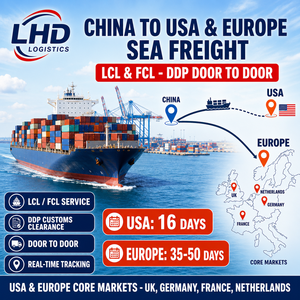
Transpacific Trade Corridor (China to USA/Canada): Shipping from major origin hubs such as Shanghai, Ningbo, Shenzhen, and Qingdao to U.S. West Coast gateways (Port of Los Angeles, Port of Long Beach) offers the fastest transit times (typically 12 to 16 days port-to-port). However, intermodal rail bottlenecks to inland hubs (such as Chicago or Dallas) often dictate whether importers should choose direct West Coast drayage or route via East Coast ports (Port of New York and New Jersey, Savannah) via the Panama Canal. Working with a CTPAT-certified forwarder ensures priority customs inspection status and reduced hold rates at these critical gateways.
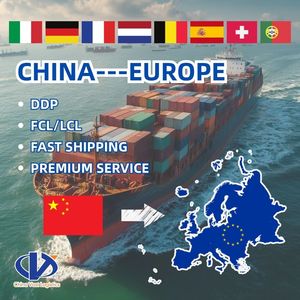
Far East Asia to Europe & Mediterranean Corridor: Servicing European trade lanes—including critical southern European hubs such as Genoa and Naples in Italy, as well as northern hubs like Rotterdam, Hamburg, and Le Havre—requires adaptive routing. Whether utilizing direct ocean vessel strings via the Suez Canal or navigating alternate routes during maritime disruptions, professional freight forwarders provide flexible FCL (Full Container Load) and LCL (Less than Container Load) consolidation options. Multi-modal rail connections (such as the China-Europe Railway Express) also offer a reliable middle ground between ocean freight speeds and costly air freight rates.
3. Future Sourcing Trends: The Digitalization, Decarbonization, and Diversification Matrix
Looking toward the 2025–2030 horizon, enterprise supply chains sourcing from China are undergoing structural transformations driven by three core catalysts:
A. Advanced Supply Chain Visibility & AI Predictive Logistics: Real-time telematics and IoT tracking sensors embedded in ocean containers now provide enterprise buyers with live location, temperature, and humidity metrics. Artificial intelligence engines analyze historical port congestion, weather patterns, and vessel speeds to predict estimated time of arrival (ETA) with sub-24-hour accuracy, drastically reducing safety stock inventory buffer requirements.
B. Carbon Neutrality & Regulatory Compliance (CBAM): Environmental sustainability is changing procurement economics. The implementation of the European Union’s Carbon Border Adjustment Mechanism (CBAM) and stricter IMO 2030 decarbonization targets require exporters to calculate and report embedded carbon footprints. Forward-thinking China supply chain partners are adopting eco-friendly logistics, optimizing vessel load factors, and providing certified carbon footprint disclosures for international shipments.
C. The "China + 1" Hybrid Sourcing Architecture: Rather than completely abandoning established Chinese manufacturing ecosystems, leading global corporations are implementing a "China + 1" strategy. In this hybrid model, high-tech components, raw materials, and complex assembly remain centered in China's industrial clusters (Shenzhen, Guangzhou, Yangtze River Delta), while final packaging or secondary assembly occurs in nearshore or regional hubs. This approach preserves the unparalleled speed, scale, and supply chain density of Chinese exporters while diversifying geopolitical risk.
Compliance Alert for U.S. Importers: Failure to submit accurate ISF 10+2 data at least 24 hours prior to vessel loading at origin ports can result in U.S. Customs issuing liquidated damages penalties of $5,000 per violation. Partnering with a licensed U.S. Customs Broker mitigates this risk completely.
4. Strategic Product & Freight Development Trends
To maintain a competitive edge, elite China supply chain exporters are continuously expanding their productized service offerings. The integration of end-to-end logistics solutions includes:
- FCL Express Direct Services: Premium ocean freight booking options featuring guaranteed vessel space, priority equipment allocation, and off-dock gate-out services at destination ports to bypass terminal congestion.
- LCL Consolidated Hubs: Proprietary warehouse consolidation facilities in Yiwu, Shenzhen, and Ningbo, enabling smaller buyers to combine products from multiple factories into a single ocean container, drastically lowering unit shipping costs.
- Cold-Chain & Specialized Logistics: Temperature-controlled reefer container management for sensitive electronics, pharmaceutical raw materials, and specialized chemicals requiring strict climate control during international transit.
- Automated Amazon FBA & E-Commerce Fulfillment: Direct-to-fulfillment center shipping featuring automated carton labeling, palletization in compliance with Amazon standards, and expedited slot appointments via domestic drayage networks.
Supply Chain & Procurement FAQ
Expert insights addressing key questions on international shipping, customs brokerage, and China sourcing execution.
Why is working with a licensed U.S. Customs Broker critical when importing from China?
Importing commercial goods valued over USD $2,500 into the United States requires a formal entry filing with U.S. Customs and Border Protection (CBP). A licensed customs broker possesses specialized expertise in Harmonized Tariff Schedule (HTS) classifications, Section 301 tariff exemptions, anti-dumping/countervailing duties (AD/CVD), and partner government agency (PGA) regulations (such as FDA, EPA, or DOT). Utilizing a licensed broker ensures legal compliance, avoids severe penalty notices, and prevents costly delays at entry ports.
What is the main difference between FCL and LCL sea freight from China?
Full Container Load (FCL) reserves an entire container (such as a 20ft, 40ft, or 40ft High Cube) exclusively for your cargo, offering the lowest freight cost per cubic meter, faster transit times, and reduced handling risks. Less than Container Load (LCL) consolidates your shipment with goods from other importers into a shared container. LCL is ideal for smaller shipments (typically under 15 CBM) where paying for an entire container is economically inefficient, allowing you to pay only for the exact volume your cargo occupies.
How does DDP (Delivered Duty Paid) door-to-door service work for international buyers?
Under DDP terms, the seller and their designated freight forwarder handle the entire shipping process from the origin factory in China directly to the buyer's specified warehouse address. The service covers origin loading, export documentation, ocean or air freight, import customs clearance, payment of all duties and taxes, terminal handling fees, and final inland truck delivery. This provides buyers with a completely hands-off experience and a guaranteed fixed landed cost.
What is ISF 10+2 and why must it be filed prior to vessel departure?
The Importer Security Filing (ISF), commonly known as 10+2, is a mandatory U.S. Customs requirement for all ocean freight imports arriving in the United States. It consists of 10 data elements provided by the importer/broker (including manufacturer name, seller, buyer, ship-to party, container stuffing location, and importer of record number) and 2 data elements from the ocean carrier. The filing must be accepted by CBP at least 24 hours before the container is loaded onto the vessel at the foreign port to enhance maritime security screening.
How can importers prevent demurrage and detention charges at ocean terminals?
Demurrage (fees charged for containers remaining inside the port terminal past free time) and Detention (fees charged for holding equipment outside the port past free time) can quickly inflate logistics costs. Importers can minimize these risks by submitting commercial invoices and packing lists to their customs broker 5-7 days prior to vessel arrival, pre-clearing customs entries, securing pre-arranged drayage trucking capacity, and working with CTPAT-certified logistics partners who receive extended free-time allowances from ocean carriers.