Featured Export & DDP Freight Logistics Services
Direct factory clearance, compliant documentation, and expedited maritime/air cargo channels connecting China's main industrial hubs to global ports.
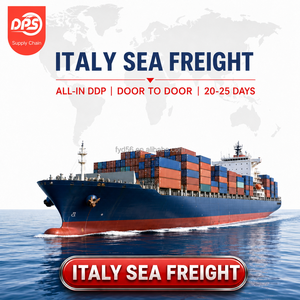
Shipping Agent Italy Sea Freight From China to Genoa Naples DDP Door to Door FCL LCL Cargo Forwarder Express Service
Contact Us
Reliable DDP Sea Freight Forwarder From China To Worldwide | FCL Door-to-Door Shipping Agent For Amazon FBA Logistics
Contact Us
Top Sea Freight Forwarder Agent Shipping DDP Door to Door Transport Maritime International China to Canada Usa Italy Germany UK
Contact Us
Fast Delivery Logistics Forwarder 24-Hour Track Ocean Sea Freight Forwarder Transitaire Shipping Agent From China to USA by Sea
Contact Us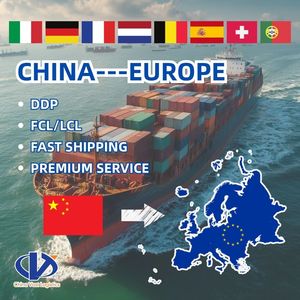
Professional Freight Forwarder Sea International Shipping Company to Europe France FCL LCL Cheaper Ocean Freight
Contact Us
LCL Express DDP Ocean Shipping Agent China to USA/Canada/UK/Europe/Australia Sea Freight Forwarder Logistics Service
Contact Us
Cheapest Ddp Door to Door Services Sea Shipping Agent Freight Forwarder From China to Usa Uk France Transport Agent
Contact Us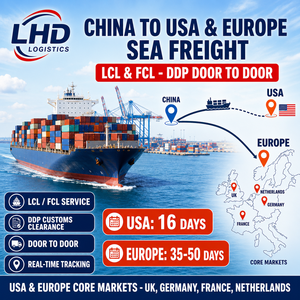
Best Competitive Fast Door to Door Ocean Shipping Agent DDP Delivery Freight Forwarder by Sea From China to USA UK
Contact UsNavigating Global Trade Volatility: The Dual-Bonded Clearance Model
In an era defined by Section 301 tariffs, shifting trade agreements, and strict Partner Government Agency (PGA) enforcement, cross-border procurement requires more than standard freight forwarding. It demands integrated tariff engineering and origin-to-destination compliance leadership.
Tariff Engineering & HTS Audit
Comprehensive breakdown of Harmonized Tariff Schedule (HTS) codes at origin. Our licensed customs experts evaluate product bill-of-materials to legally optimize duty classifications under current US national trade policies.
CTPAT & Dual-Origin Validation
Certified under the Customs Trade Partnership Against Terrorism (CTPAT). We ensure secure supply chains from Chinese manufacturing gates straight through to West Coast and East Coast U.S. port terminals.
End-to-End DDP Logistics
Eliminate unpredictable landed costs. Delivered Duty Paid (DDP) arrangements shift risk away from importers, absorbing terminal charges, ocean carriage, customs release, and final-mile container drayage into one single fee structure.
Industry Insights & Information Gain: Standard FOB shipping leaves buyers vulnerable to unpredictable Section 301 punitive tariffs, unexpected demurrage fees, and ISF non-compliance penalties (up to $5,000 per late filing). Our integrated China Export Factory & U.S. Customs Brokerage model provides pre-clearance validation prior to vessel departure, ensuring zero border holds and absolute landed cost certainty.
Why Top Global Brands Partner with Our Export Infrastructure
Backed by over 40 years of logistics heritage, strategic gateways on both US coasts (New York & Los Angeles), and direct manufacturing alliances across major Chinese export zones.
Licensed U.S. Customs Brokerage Capabilities
Filing directly with U.S. Customs and Border Protection (CBP) via automated broker interfaces. Our in-house licensed brokers handle complex entries, partner agency clearances (FDA, EPA, DOT, CPSC), and custom bond procurement.
- Automated ISF 10+2 Filing: Submitted 24+ hours prior to loading at Chinese ports to guarantee 100% CBP compliance.
- Duty Drawback & Refund Recovery: Recover up to 99% of duties paid on qualifying re-exported or destroyed merchandise.
- Bonded Storage & Transfer: In-bond transfers (IT/TE entries) allowing duty deferral until cargo enters domestic commerce.
Direct China Export & Factory Logistics
Seamless origin management operating out of Shenzhen, Ningbo, Shanghai, Qingdao, and Guangzhou. We bridge factory floor export requirements with destination customs regulations.
- Export Tax Rebate Assistance: Guidance on China export documentation for maximum factory tax refund efficiency.
- Multi-Supplier LCL Consolidation: Merging cargo from multiple regional vendors into full 20ft/40ft/40HC containers to drastically lower freight costs.
- Quality Audit & Inspection: Pre-shipment cargo verification preventing non-compliant goods from entering global transit lanes.
Future Trends in China Sourcing & International Clearance (2026–2030)
How global supply chain directors are adapting to evolving tariff structures, automated customs compliance, and carbon footprint accountability.
| Trade Pillar | Traditional Model (FOB/CIF) | Next-Gen Integrated DDP Model | Strategic Business Impact |
|---|---|---|---|
| Tariff Risk Exposure | Importer absorbs sudden Section 301 rate increases upon port arrival. | Pre-validated HTS binding rulings & engineered DDP price locks. | Eliminates unexpected landed cost inflation and profit erosion. |
| Customs Compliance | Decentralized documentation prone to ISF fines & CBP exams. | Centralized CTPAT-certified digital filing before vessel departure. | Reduces port hold times from an average of 7 days to under 12 hours. |
| Supply Chain Visibility | Fragmented milestones between ocean carrier, broker, and drayage trucker. | 24/7 unified digital tracking from factory origin to warehouse door. | Provides total inventory control and predictive delivery ETAs. |
| Environmental Regulations | Unmonitored carbon emissions across fragmented transport segments. | Green routing, eco-drayage, and CBAM compliance tracking. | Ensures alignment with global enterprise ESG mandatory mandates. |
The First-Sale Rule & Advanced Valuation Strategies
Multi-tiered global supply chains can leverage U.S. Customs' "First Sale Rule" to calculate customs duties based on the price paid by the middleman/vendor to the original manufacturer, rather than the higher price paid by the ultimate importer to the vendor. Our licensed customs brokerage team conducts full documentation reviews to establish qualifying First Sale transactions—allowing high-volume importers to achieve 10% to 30% duty savings lawfully under current CBP frameworks.
Selecting the Right Logistics Pathway for Your Business
Balancing speed, cost efficiency, and clearance reliability across international trade routes.
FCL Ocean Shipping (20'/40'/40'HC)
Ideal for high-volume orders. Container sealed at factory door in China and opened only at your destination facility.
Transit Time: 12–22 Days (US West/East Coast)
Risk Level: Low (Minimal handling)
Cost Efficiency: Maximum per cubic meter
LCL Ocean Consolidation
Pay only for the volume you use (CBM). Shared container freight for growing e-commerce and mid-tier importers.
Transit Time: 16–26 Days (Incl. Deconsolidation)
Risk Level: Moderate (CFS warehouse sorting)
Cost Efficiency: Flexible pay-per-space
Express & Standard Air Freight
Time-critical shipments, sample runs, or ultra-high-value inventory. Direct air links to major international gateways.
Transit Time: 3–6 Days Door-to-Door
Risk Level: Lowest (Pre-cleared in transit)
Cost Efficiency: Premium express rates
Frequently Asked Questions on China Exports & Duty Clearance
Clear guidance provided by licensed U.S. customs brokers and experienced China export specialists.
Q: Why is hiring a licensed U.S. Customs Broker necessary for importing from China?
While commercial importers may legally attempt to self-file, U.S. Customs and Border Protection (CBP) regulations require precise HTS classification, valuation compliance, and Partner Government Agency (PGA) clearance (such as FDA, EPA, or DOT). Shipments valued over $2,500 demand formal customs entry backed by a valid Customs Bond. A licensed broker mitigates risks of costly holds, merchandise seizures, and liquidated damage penalties.
Q: How do Section 301 tariffs impact goods manufactured in China, and how can they be minimized?
Section 301 tariffs impose additional duties ranging from 7.5% to 25%+ on specified Chinese origin goods. Minimization strategies include legal Tariff Engineering (modifying product specifications or assembly processes to qualify under lower-duty HTS subheadings), applying for active exclusions, utilizing the First-Sale Rule for valuation, or leveraging Foreign Trade Zones (FTZs) and bonded warehouses to defer payment.
Q: What is ISF (10+2) filing, and what happens if it is submitted late?
Importer Security Filing (ISF 10+2) is a mandatory requirement for ocean vessel shipments entering the U.S. It requires ten data elements from the importer and two from the ocean carrier to be transmitted to CBP at least 24 hours prior to cargo loading at the foreign port (e.g., Shanghai, Ningbo, Shenzhen). Late, missing, or inaccurate ISF submissions trigger automatic CBP liquidated damages fines of $5,000 per violation.
Q: What is the difference between DDP (Delivered Duty Paid) and DAP (Delivered at Place) terms?
Under DDP terms, the seller/exporter assumes complete financial and operational responsibility for the entire journey, including export clearance, international ocean/air freight, destination customs clearance, import duties, Section 301 taxes, and final truck delivery to the buyer’s facility. Under DAP terms, the buyer remains responsible for paying import duties, taxes, and clearing destination customs.
Q: How does CTPAT certification benefit cross-border ocean shipments?
CTPAT (Customs Trade Partnership Against Terrorism) is a voluntary supply chain security program led by U.S. CBP. Working with a CTPAT-certified partner ensures your shipments receive priority processing, significantly reduced physical examination rates at port terminals, front-of-the-line inspection privileges if selected, and dedicated liaison assistance from CBP personnel.
Q: What primary port gateways do you serve across North America and Europe?
Our strategic operational infrastructure includes dedicated offices and gateway handling in Staten Island and Lynbrook (serving the Port of New York & New Jersey and East Coast airports), Diamond Bar, California (serving the Ports of Los Angeles and Long Beach), alongside established DDP delivery lanes connecting directly to European hubs including Genoa, Naples, Le Havre, Hamburg, and Felixstowe.
Streamline Your China Duty Clearance & Global Supply Chain Today
Speak directly with our licensed U.S. customs brokers and international freight specialists. Get a transparent landed-cost quote and eliminate border delays for good.
Contact Us