Featured China-to-Global Shipping & Customs Products
Scalable, fully compliant ocean, air, and drayage solutions tailored for Amazon FBA sellers, enterprise importers, and international trading conglomerates.
Shipping Agent Italy Sea Freight From China to Genoa Naples DDP Door to Door FCL LCL Cargo Forwarder Express Service
Reliable DDP Sea Freight Forwarder From China To Worldwide | FCL Door-to-Door Shipping Agent For Amazon FBA Logistics
Top Sea Freight Forwarder Agent Shipping DDP Door to Door Transport Maritime International China to Canada Usa Italy Germany UK
Fast Delivery Logistics Forwarder 24-Hour Track Ocean Sea Freight Forwarder Transitaire Shipping Agent From China to USA by Sea
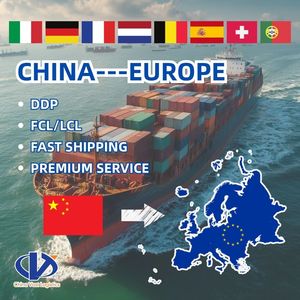
Professional Freight Forwarder Sea International Shipping Company to Europe France FCL LCL Cheaper Ocean Freight
LCL Express DDP Ocean Shipping Agent China to USA/Canada/UK/Europe/Australia Sea Freight Forwarder Logistics Service
Cheapest Ddp Door to Door Services Sea Shipping Agent Freight Forwarder From China to Usa Uk France Transport Agent
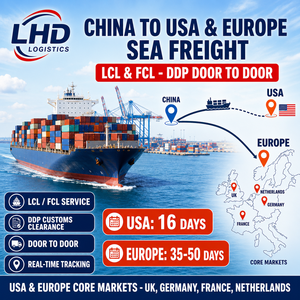
Best Competitive Fast Door to Door Ocean Shipping Agent DDP Delivery Freight Forwarder by Sea From China to USA UK
Why Leading Global Brands Partner with Our China-US Logistics Hub
Combining over 40 years of family-owned operational integrity with institutional U.S. customs licensing, CTPAT security validation, and coast-to-coast gateway assets.
Licensed U.S. Customs Brokerage
Eliminate regulatory bottlenecks at major U.S. ports of entry. As a direct U.S. Customs and Border Protection (CBP) entry filer, we execute immediate entry filings, ruling requests, and complex HTS tariff classifications.
- Direct ABI/ACE Automated Broker Interface
- In-House HTS Tariff Engineers
- Single-Entry & Continuous Customs Bonds
CTPAT Security Validation
Our supply chains are verified under the Customs Trade Partnership Against Terrorism (CTPAT). Enjoy priority processing, significantly reduced CBP examination rates, and accelerated front-of-the-line treatment.
- Up to 70% Reduction in Customs Physical Exams
- Secured Seals & Audit Trail Protocols
- Green Lane Priority Port Clearance
Coast-to-Coast Strategic Infrastructure
With brick-and-mortar operations in Staten Island (HQ), Lynbrook (NY), and Diamond Bar (CA), we provide seamless ocean port drayage across Port of NY/NJ, LA, Long Beach, and key inland rail hubs.
- Owned Drayage Fleets & Chassis Pools
- Transloading & De-consolidation Hubs
- Multilingual Desk: English, Spanish, Italian
China Transport Logistics White Paper: Technical Procurement & Execution
Navigating global supply chain dynamics demands a paradigm shift from traditional freight forwarding to strategic end-to-end orchestration. As a leading China transport logistics manufacturer and supplier network integrated with licensed U.S. customs brokerage, our operational framework bridges the critical gap between East Asian manufacturing hubs and Western sales channels.
When procuring freight services from major Chinese industrial zones—such as the Yangtze River Delta (Shanghai, Ningbo), Pearl River Delta (Shenzhen, Guangzhou), and the Bohai Rim (Qingdao, Tianjin)—importers face multifaceted regulatory risks. Optimization requires aligning trade Incoterms with precise vessel schedules, container booking strategies, and preemptive customs compliance.
Comparative Logistics Execution Framework
The following technical matrix evaluates primary shipping modes managed by our logistics network, outlining operational lead times, risk indexes, and duty filing protocols:
| Transport Mode | Average Transit (China to US/EU) | Cost Efficiency Index | Customs Risk Profile | Best Suited Cargo Profile |
|---|---|---|---|---|
| FCL Sea Freight (DDP) | 14 - 24 Days | Optimal (Highest) | Low (Single Shipper Bill of Lading) | High-volume industrial goods, bulky retail products, heavy machinery |
| LCL Consolidation (DDP) | 18 - 28 Days | High | Moderate (Shared container co-load risk) | Medium B2B shipments (1 to 15 CBM), inventory replenishment |
| Air Freight Charter / Express | 3 - 7 Days | Low (Premium Rate) | Very Low (Accelerated Air Clearance) | High-value electronics, seasonal apparel samples, time-critical launches |
| Intermodal Drayage + Rail | 18 - 30 Days | High | Low (Pre-cleared at coastal gateway) | Inland warehouse distributions (Midwest US, Eastern Europe) |
Deconstructing the DDP (Delivered Duty Paid) Advantage
In traditional FOB (Free on Board) transactions, buyers assume operational liability the moment cargo crosses the ship’s rail at Chinese loading ports. This subjects overseas buyers to unpredictable destination terminal charges, demurrage penalties, and complex local customs clearance delays. By deploying our integrated DDP Door-to-Door Model, our company assumes complete landed cost responsibility.
Our DDP logistics system encapsulates: factory pickup across China, export customs declarations in China, maritime or air transit, ISF 10+2 security filings, U.S. CBP customs clearance, payment of HTS duties/taxes, bonded warehouse transloading, and appointment-scheduled final mile container drayage to your distribution hub or Amazon FBA fulfillment facility.
Future Procurement & Technological Trends in China Logistics
How digital transformation, environmental mandates, and regulatory changes are reshaping global trade lanes from China.
1. Smart Telematics & Digital Twin Tracking
Static tracking numbers are obsolete. Procurement trends favor container-level IoT telemetry, providing real-time visibility into internal container temperatures, humidity, shock impact, and dynamic GPS ocean vessel rerouting notifications.
2. Green Maritime Corridors & Carbon Taxing
With the implementation of EU CBAM (Carbon Border Adjustment Mechanism) and IMO 2030 decarbonization goals, shipping lines are shifting toward LNG, e-methanol, and biofuel vessel fleets. Importers will require verified carbon footprint audit reporting per shipment.
3. Algorithmic HTS & AI Customs Pre-Audits
Regulatory agencies like U.S. CBP are leveraging machine learning to flag valuation misdeclarations and Section 301 duty evasions. Utilizing licensed brokers with automated AI-assisted HTS validation significantly reduces customs hold risks.
Frequently Asked Questions for China Logistics Procurement
Detailed technical answers to common operational challenges encountered when importing cargo from China.
Why is engaging a Licensed U.S. Customs Broker critical when purchasing DDP terms from China?
Under U.S. trade law, the Importer of Record (IOR) remains legally responsible for ultimate customs valuation, accurate HTS classification, and duty payment regardless of purchase contract terms. Many overseas freight agents use non-compliant third-party IORs or misclassify products to cut costs under DDP. Partnering with our licensed U.S. customs broker ensures that your DDP shipments are filed directly through your legal entity or via compliant customs bonds, mitigating risks of retroactive CBP audits, severe liquidated damages, or cargo confiscation.
What is the ISF (10+2) filing deadline, and how does your network prevent penalties?
The Importer Security Filing (ISF 10+2) must be electronically transmitted to U.S. CBP at least 24 hours prior to the cargo being loaded onto the ocean vessel at the foreign port of departure (e.g., Shanghai, Shenzhen). Failure to submit, late submission, or inaccurate data elements trigger an automatic $5,000 penalty per violation from CBP. Our automated system syncs with Chinese manufacturing loading schedules to ensure 100% compliant ISF submission prior to origin gate-in.
How do you optimize container drayage to prevent costly port Demurrage and Detention?
Port Demurrage occurs when a container remains inside the marine terminal past its free time (typically 3–5 days), while Detention applies to overdue empty container returns. Our strategic drayage hubs in Staten Island (NY) and Diamond Bar (CA) utilize dual-transaction port dispatch, automated terminal gate tracking, and private off-dock chassis yards. This infrastructure allows us to pull containers within 24 hours of vessel discharge, completely bypassing demurrage fees.
What is the operational difference between FCL and LCL ocean freight for China shipments?
Full Container Load (FCL) reserves an entire 20ft, 40ft, or 40ft High Cube container exclusively for your goods. It offers faster transit, zero risk of cross-contamination from other cargo, and lower freight cost per cubic meter once volume exceeds 15 CBM. Less than Container Load (LCL) consolidates shipments from multiple vendors into a single container. LCL is ideal for smaller orders (1–14 CBM) but requires extra lead time at origin consolidation depots and destination CFS (Container Freight Station) warehouses.
How does CTPAT certification benefit my supply chain security and clearance speed?
As a validated CTPAT (Customs Trade Partnership Against Terrorism) partner, our operations adhere to stringent U.S. federal supply chain security criteria. For importers, this translates to placing your shipments in CBP's "trusted trader" category. Benefits include a 50% to 70% reduction in random physical inspections, priority queue placement if an inspection is required, and expedited processing during port congestion emergencies.
Transform Your China Supply Chain Today
Connect directly with our senior customs brokers and global freight planners. Obtain a comprehensive landed cost analysis, HTS pre-classification audit, or instant ocean/air DDP rate quote.
Contact Us