Featured Global Logistics & Freight Services
Seamless Door-to-Door (DDP), FCL, LCL, and Express Shipping Solutions from China to Worldwide Destinations

Why Partner With Our Logistics Network
Blending Over 40 Years of Family-Owned Integrity with Cutting-Edge Global Shipping Capabilities
Licensed U.S. Customs Brokerage
In-house licensed U.S. Customs Brokers interface directly with CBP via Automated Broker Interface (ABI), guaranteeing expedited filings, precise HTS code audits, and minimal customs hold ratios.
CTPAT Certified Supply Chain Security
As a validated CTPAT partner, our clients benefit from reduced U.S. Customs examination rates, front-of-the-line processing during operational disruptions, and heightened security across global trade corridors.
Strategic East & West Coast Gateways
With operational hubs in Staten Island & Lynbrook (NY) serving Port of NY/NJ and East Coast airports, plus Diamond Bar (CA) overseeing LA/Long Beach ports, we maintain total coast-to-coast coverage.
Multilingual Global Control Desk
Eliminate communication barriers. Our control tower team speaks fluent English, Spanish, and Italian, facilitating seamless coordination between Chinese manufacturers, ocean carriers, and destination buyers.
Precision Drayage & Demurrage Defense
Integrated container drayage fleet connectivity guarantees immediate container pull upon vessel discharge, eliminating costly port demurrage, detention fees, and terminal storage surcharges.
Value-Added Landed Cost Modeling
We provide full transparency into total landed cost prior to origin departure—factoring in ocean freight tariffs, duty rates, harbor maintenance fees (HMF), merchandise processing fees (MPF), and inland carriage.
1. Architectural Framework of Modern China-to-Global Wholesale Supply Chains
Navigating the complexities of international trade requires an architectural approach to global logistics. As a premier China Wholesale Global Logistics Supplier & Exporter network, operating alongside established U.S. customs brokers such as Cordaro Shipping Co., Inc., we provide global buyers with high-precision freight forwarding architectures tailored for resilience, cost optimization, and total legal compliance.
The global trade ecosystem has shifted from basic port-to-port maritime transport to deeply integrated end-to-end supply chain strategies. Importers in the United States, European Union (France, Italy, Germany), United Kingdom, Canada, and Australia require absolute certainty in lead times, landed cost structures, and regulatory clearances. Achieving this predictability involves mastering the intricacies of maritime logistics, air freight velocity, and customs brokerage under federal oversight frameworks like 19 CFR (U.S. Code of Federal Regulations) and Union Customs Code (UCC) protocols in Europe.
Strategic Insight: Successful B2B procurement relies heavily on selecting the correct Incoterm. Shifting from traditional FOB (Free on Board) to DDP (Delivered Duty Paid) transfers logistics operational risks to specialized forwarders, locking in landed margins before goods leave the factory floor in Ningbo, Shenzhen, or Shanghai.
2. Delivery Models: DDP (Delivered Duty Paid) vs. Traditional Terms
In B2B wholesale procurement, the transition toward DDP (Delivered Duty Paid) services represents a major evolution in buyer purchasing behavior. Historically, overseas buyers purchased under FOB terms, assuming full responsibility for booking vessel space, arranging export clearance, managing import customs entries, and securing last-mile container drayage.
Mechanism of DDP Ocean & Air Shipping
Under a turnkey DDP logistics framework, the freight forwarder handles every link in the supply chain journey:
- Origin Freight Consolidation: Collecting Full Container Loads (FCL) or Less than Container Loads (LCL) directly from supplier manufacturing plants across major industrial clusters in Guangdong, Zhejiang, and Jiangsu provinces.
- China Export Clearance: Processing customs declarations, export licenses, and commodity inspections with China Customs (GACC).
- International Main Carriage: Securing vessel allocations with Tier-1 ocean alliances (2M, Ocean Alliance, THE Alliance) or premium air cargo charters.
- Destination Customs Clearance: Preparing entry documentation, executing ISF (Importer Security Filing 10+2), filing formal entry 7501, and remitting applicable HTS duties, Section 301 tariffs, MPF, and HMF fees to U.S. Customs and Border Protection (CBP).
- Final Drayage & Warehouse Delivery: Deploying specialized container chassis fleets to haul containers from marine terminals (e.g., Port of NY/NJ, Port of Los Angeles/Long Beach, Genoa, Naples, Le Havre) directly to commercial warehouses or Amazon FBA Fulfillment Centers.
3. Ocean Freight Modes: FCL vs. LCL Strategic Selection Matrix
Selecting the optimal maritime transport mode is critical to keeping ocean freight costs low while meeting inventory distribution schedules. Below is an engineering evaluation comparing Full Container Load (FCL) and Less than Container Load (LCL) strategies:
Full Container Load (FCL) Logistics
FCL is the gold standard for high-volume wholesale shipments. By securing exclusive use of a 20GP, 40GP, or 40HC (High Cube) ISO ocean container, shippers achieve maximum volumetric efficiency and minimize physical cargo handling risk. FCL ocean containers are sealed at origin factories and remain unopened until arrival at the destination warehouse, significantly reducing cargo damage and pilferage risks.
Less than Container Load (LCL) Consolidation
For mid-tier procurement volumes (typically ranging from 1 CBM to 15 CBM), LCL consolidation offers an agile, pay-as-you-go alternative. Experienced freight forwarders combine cargo from multiple buyers at origin Container Freight Stations (CFS). Upon ocean transit completion, the container is transferred to a destination CFS for devanning, customs release, and final distribution. This avoids paying for unutilized container space while maintaining fixed weekly departure schedules.
4. Future Global Procurement & Logistics Trends (2025–2030)
Global logistics is undergoing a technological and regulatory transformation. B2B exporters and buyers must adapt to emerging trade dynamics to maintain competitive advantages:
A. AI-Driven Control Towers and Predictive Routing
Modern freight forwarding relies heavily on predictive supply chain analytics. Real-time telemetry, IoT container monitoring, and machine-learning algorithms allow logistics controllers to predict port congestion, anticipate weather delays, and dynamically reroute shipments across alternative gateways (e.g., diverting West Coast cargo to Gulf or East Coast ports during peak seasons).
B. Carbon Neutrality & Green Freight Corridors
Decarbonization mandates are changing international transport standards. Ocean carriers are deploying dual-fuel methanol and LNG-powered container vessels. Importers are increasingly required to measure scope 3 supply chain emissions. Partnering with forwarders that offer accredited carbon accounting and green corridor routing ensures compliance with international environmental standards.
C. Automated Customs Auditing & Duty Mitigation
Customs authorities worldwide are replacing manual document reviews with automated algorithmic inspections. Advanced compliance strategies utilize AI-powered HTS tariff auditing, First Sale Rule valuation optimization, and automated Duty Drawback claims to legally minimize duty payments and prevent customs delays.
5. Risk Mitigation: ISF Compliance, Demurrage Defense & CTPAT Security
Operational vulnerabilities in ocean transport can quickly trigger heavy financial penalties if not properly managed by qualified logistics professionals.
Importer Security Filing (ISF 10+2) Timelines
For ocean imports bound for the United States, CBP mandates the submission of the ISF at least 24 hours prior to cargo loading onto the vessel at the foreign port. Failure to file, late filings, or inaccurate data submissions subject the importer of record to liquidated damages of $5,000 per violation. Partnering with a licensed U.S. Customs Broker ensures 100% filing accuracy well ahead of vessel loading deadlines.
Mitigating Port Demurrage and Detention
Container demurrage (fees charged by ocean terminals for containers remaining on-site past free time) and detention (fees for holding equipment outside the port) can rapidly accumulate to thousands of dollars per container. Robust forwarders combat these risks using dedicated drayage networks, pre-clearing customs entries prior to vessel berth, and utilizing automated container tracking systems to pull containers the moment they are discharged.
Frequently Asked Questions (FAQ)
Expert Answers to Key Questions on International Freight, Customs Clearance, and Wholesale Shipping from China
Why is a Licensed U.S. Customs Broker necessary for importing goods from China?
Commercial shipments entering the United States with a value exceeding $2,500 generally require a formal customs entry. A Licensed U.S. Customs Broker possesses the legal authority and technical expertise under 19 CFR to prepare and submit electronic entries to CBP, secure customs bonds, determine correct HTS classification codes, ensure PGA (Partner Government Agency) compliance, and pay duties on behalf of the importer—preventing costly cargo seizures and legal penalties.
What is the difference between DDP (Delivered Duty Paid) and DAP (Delivered at Place)?
Under DDP terms, the seller/forwarder assumes total responsibility for the entire transport chain, including all export clearance, ocean/air freight, destination customs clearance, payment of import duties, taxes (VAT/GST), and final delivery to the buyer's door. Under DAP terms, the seller delivers the cargo to the destination location ready for unloading, but the buyer remains responsible for completing import customs clearance and paying all applicable destination duties and taxes.
How is ocean freight shipping time calculated from China to North America and Europe?
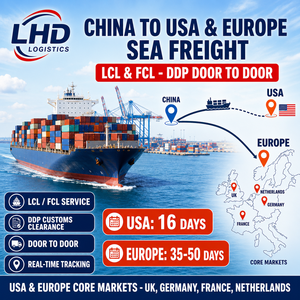
Total transit time consists of ocean transit plus port handling and customs clearance. Standard ocean port-to-port transit times are typically: China to U.S. West Coast (LA/Long Beach): 12–16 days; China to U.S. East Coast (NY/NJ via Panama Canal): 24–28 days; China to European Base Ports (Genoa, Naples, France, UK): 22–30 days. Factoring in origin pickup, customs filing, and destination drayage adds 5 to 7 days for total door-to-door delivery timetables.
What specific benefits does CTPAT certification offer to global buyers?
CTPAT (Customs Trade Partnership Against Terrorism) is a voluntary U.S. CBP supply chain security program. Importing through a CTPAT-certified freight forwarder reduces the likelihood of physical cargo examinations by U.S. Customs, secures priority examination status when inspections do occur, grants access to FAST (Free and Secure Trade) lanes, and provides dedicated CBP supply chain security specialists to resolve operational bottlenecks.
How do I choose between FCL and LCL ocean shipping for my wholesale order?
The general rule of thumb relies on cargo volume and urgency. If your total shipment volume exceeds 15 CBM (Cubic Meters) or requires strict security without intermediate handling, FCL (Full Container Load) using a 20ft container is the most cost-effective and secure choice. If your cargo volume is between 1 CBM and 14 CBM, LCL (Less than Container Load) allows you to pay only for the exact volume utilized, optimizing your operational cash flow.
Optimize Your Global Logistics & Landed Costs Today
Connect with our expert freight forwarding and U.S. customs brokerage teams. Request a tailored DDP freight quote, optimize your HTS classifications, or schedule a supply chain audit now.
Inquire Now