Featured China Ocean Freight & DDP Door-to-Door Services
Direct factory-to-door maritime forwarding services with integrated tariff management, ISF compliance, and carrier allocation guarantees across major trade lanes.
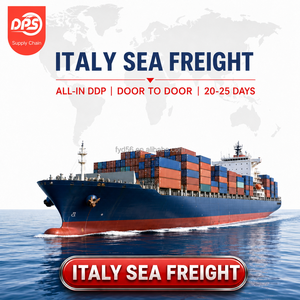
Shipping Agent Italy Sea Freight From China to Genoa Naples DDP Door to Door FCL LCL Cargo Forwarder Express Service
Reliable DDP Sea Freight Forwarder From China To Worldwide | FCL Door-to-Door Shipping Agent For Amazon FBA Logistics
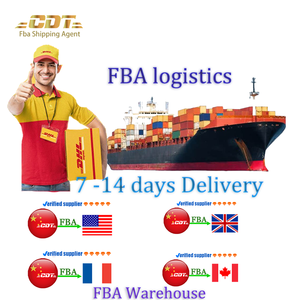
Top Sea Freight Forwarder Agent Shipping DDP Door to Door Transport Maritime International China to Canada Usa Italy Germany UK
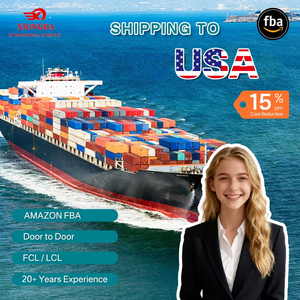
Fast Delivery Logistics Forwarder 24-Hour Track Ocean Sea Freight Forwarder Transitaire Shipping Agent From China to USA by Sea
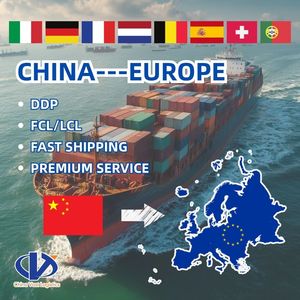
Professional Freight Forwarder Sea International Shipping Company to Europe France FCL LCL Cheaper Ocean Freight
LCL Express DDP Ocean Shipping Agent China to USA/Canada/UK/Europe/Australia Sea Freight Forwarder Logistics Service
Cheapest Ddp Door to Door Services Sea Shipping Agent Freight Forwarder From China to Usa Uk France Transport Agent
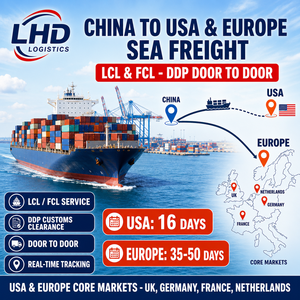
Best Competitive Fast Door to Door Ocean Shipping Agent DDP Delivery Freight Forwarder by Sea From China to USA UK
Why Top Global Importers Partner with Our China Forwarding Network
Combining over 40 years of U.S. licensed customs brokerage with direct Chinese manufacturing supply chain integration.
Direct Licensed U.S. Customs Brokerage
Unlike virtual freight intermediaries, our operations are anchored by licensed U.S. Customs Brokers (CBP direct EDI integration). We prepare formal entries, execute mandatory ISF 10+2 submissions 24 hours prior to loading, and manage complex HTS code classifications to ensure total statutory compliance and zero port-of-entry delays.
CTPAT Certified Supply Chain Security
Our validated CTPAT status (Customs Trade Partnership Against Terrorism) provides enterprise importers with tangible competitive edges: reduced U.S. Customs examination frequencies, prioritized processing during port surges, and seamless green-lane clearance across all major East Coast and West Coast ocean terminals.
Dual-Coast U.S. Drayage Infrastructure
With dedicated operational hubs in Staten Island and Lynbrook, NY (serving Port of NY/NJ) and Diamond Bar, CA (supporting the Ports of Los Angeles and Long Beach), we control final-mile container drayage directly. This eliminates third-party markup fees and strictly guards against costly port demurrage and detention charges.
Macro Trends Shaping China Ocean Forwarding & Maritime Supply Chains
An in-depth evaluation of structural disruptions, environmental mandates, and technological transformations in Asia-to-Global shipping lanes for 2026 and beyond.
The global ocean logistics ecosystem is undergoing a fundamental paradigm shift. Supply chain directors sourcing from Chinese factories no longer look for simple port-to-port transportation; they require resilience engineering, decarbonization tracking, and regulatory immunity. As carrier alliances restructure and regulatory bodies enforce stricter ESG standards, understanding macro development trends is vital for enterprise procurement.
1. Decarbonization Mandates & IMO 2030 Green Corridor Integration
International Maritime Organization (IMO) carbon intensity indicators (CII) and the extension of the European Union Emissions Trading System (EU ETS) to maritime transport have transformed vessel deployment strategy. China's top ocean forwarding suppliers are adapting rapidly by securing allocations on green-fuel dual-engine (Methanol & LNG) container vessels.
B2B importers must now evaluate ocean freight options not only by TEU (Twenty-Foot Equivalent Unit) cost, but also by CO2 emissions per ton-kilometer. Leading Chinese ocean forwarders now offer validated Carbon Offset Reporting Modules, allowing enterprise buyers to meet corporate sustainability goals without sacrificing transit velocity.
2. Smart Container Deployment & IoT Digital Twin Integration
The traditional "black box" nature of maritime shipping has been dismantled by real-time telematics. Next-generation ocean forwarding relies on smart containers equipped with GPS, temperature, humidity, and shock-detection sensors transmitting via satellite networks.
| Logistics Capability | Traditional Ocean Forwarding | Modern Smart Forwarding (Factory-Direct) |
|---|---|---|
| Cargo Visibility | Milestone-based EDI updates (Delayed) | Real-time continuous GPS & Telematics tracking |
| Customs Integration | Manual invoice review at port arrival | Automated pre-clearance via direct CBP/EZS EDI link |
| Rate Structure | Volatile spot market pricing | Index-linked hedged freight contracts with guaranteed space |
| Demurrage Risk | High risk due to uncoordinated drayage | Automated free-time alerts & pre-booked dray drivers |
3. Carrier Alliance Re-alignments & Capacity Discipline
The restructuring of major shipping vessel-sharing agreements (VSAs)—such as the evolution of the Ocean Alliance and Gemini Cooperation—has dramatically altered direct port call schedules from China's premier manufacturing zones (Pearl River Delta, Yangtze River Delta, and Bohai Rim). Specialized ocean forwarders maintain multi-alliance service contracts, shielding buyers from carrier blanked sailings (canceled voyages) and capacity squeezes during peak quarter surges.
Future Sourcing & Freight Procurement Trends for Global Buyers
Actionable strategies for procurement executives to optimize Total Landed Cost (TLC) and insulate supply chains from geopolitical volatility.
Sourcing goods from Chinese wholesale factories requires an integrated logistics-first procurement mindset. Shipping costs, tariffs, customs duties, and port charges often exceed the net manufacturing cost of the physical product. Global buyers must adopt four key procurement strategies:
Transition to Full DDP Risk-Shift Models
Importers are increasingly abandoning traditional FOB (Free On Board) terms in favor of end-to-end DDP (Delivered Duty Paid). Under DDP, the forwarding factory partner assumes financial responsibility for maritime transit, customs clearance, duty disbursements, and drayage. This shifts operational risk away from the buyer and ensures fixed landed costs prior to vessel departure.
Pre-Emptive HTS Code & Tariff Pre-Audits
With tariff structures evolving rapidly under trade policy shifts, conducting pre-shipment Harmonized Tariff Schedule (HTS) audits is critical. Advanced forwarding partners work directly with factory engineers in China to review material compositions, ensuring accurate classification, preventing punitive Section 301 duties where exemptions apply, and avoiding CBP compliance holds.
Agile LCL Consolidation Hub Routing
To reduce capital tie-up in high inventory levels, mid-market enterprises are leveraging multi-factory LCL (Less than Container Load) consolidation. Ocean forwarders collect smaller product runs from multiple suppliers across Yiwu, Shenzhen, and Ningbo, consolidating them into single dedicated FCL containers at origin hubs to optimize freight density and reduce warehouse handling expenses.
Frequently Asked Questions: China Ocean Forwarding & Sourcing
Expert answers from licensed customs brokers and maritime logistics professionals regarding regulatory compliance, container booking, and tariff management.
What is the exact requirement for ISF (10+2) filing when shipping from China to the United States?
The Importer Security Filing (ISF 10+2) is a mandatory U.S. Customs and Border Protection (CBP) regulation for ocean cargo. The filing consists of 10 data elements provided by the importer/forwarder (including Manufacturer Name/Address, Seller Name/Address, Buyer Name/Address, Importer of Record Number, Consignee Number, Country of Origin, and Commodity HTS US Number) and 2 data elements from the ocean carrier (Stowing Plan and Container Status Messages).
Crucial Rule: The ISF must be submitted electronically to CBP at least 24 hours before the container is loaded onto the vessel at the Chinese port of origin (e.g., Shanghai or Shenzhen). Failure to file on time or submitting inaccurate data results in mandatory liquidated damages of $5,000 per violation from CBP.
How do I choose between FCL (Full Container Load) and LCL (Less than Container Load) shipping?
The decision between FCL and LCL depends primarily on cargo volume, weight, and urgency:
- FCL (Full Container Load): Best when your shipment exceeds 15 CBM (Cubic Meters) or fills a standard 20ft container (approx. 28-30 CBM capacity) or 40ft/40ft HC container (approx. 65-75 CBM capacity). FCL offers faster transit times because the container is sealed at the factory and moved directly to destination without deconsolidation steps. It also significantly reduces handling damage risks.
- LCL (Less than Container Load): Ideal for smaller volume shipments between 1 CBM and 15 CBM. You share container space with other cargo and pay strictly for the volumetric space utilized. However, LCL requires origin consolidation and destination deconsolidation at Container Freight Stations (CFS), adding 3 to 5 business days to total transit time.
What is included in a DDP (Delivered Duty Paid) ocean freight quote from China?
A comprehensive DDP quote covers all costs from the supplier's warehouse door in China to your final commercial address or Amazon FBA center in the destination country. This includes:
- Factory pickup and export customs clearance in China.
- Origin port loading, terminal handling charges (THC), and documentation fees (Bill of Lading).
- International ocean freight shipping charges.
- Destination port handling fees, ISF filing, and import customs entry brokerage.
- Payment of all import duties, merchandise processing fees (MPF), harbor maintenance fees (HMF), and applicable Section 301 tariffs.
- Final-mile container drayage or pallet delivery via truck to your destination door.
How can importers minimize demurrage and detention expenses at destination ocean ports?
Port Demurrage is charged when a container remains inside the ocean port terminal beyond allowed free time, while Detention occurs when the container is taken outside the port for unloading but not returned empty within agreed grace periods. To minimize these costs:
- Ensure customs entry and documents are transmitted electronically 5 days prior to vessel arrival (Pre-Clearance).
- Work with forwarders maintaining direct terminal drayage fleets and priority appointment slots.
- Negotiate extended destination free time (e.g., requesting 10-14 days instead of standard 4-5 days) directly into ocean carrier service contracts for high-volume accounts.
Why is CTPAT certification important when selecting an ocean freight partner?
CTPAT (Customs Trade Partnership Against Terrorism) is a voluntary supply chain security program led by U.S. CBP. Working with a CTPAT-certified freight forwarder and customs broker grants your shipments prioritized customs processing, significantly lowers physical inspection (X-ray and tailgate exam) rates, and grants direct access to dedicated CTPAT liaison officers in case of port emergencies.
What documentation is mandatory for smooth Chinese ocean freight export processing?
Standard export compliance from Chinese ports requires five core commercial documents:
- Commercial Invoice: Specifying complete itemized descriptions, unit values, currency, and Incoterms.
- Packing List: Detailing net/gross weight, total CBM, carton dimensions, and packaging types.
- Ocean Bill of Lading (B/L): Either a Master Bill of Lading (MBL) from the vessel operator or House Bill of Lading (HBL) from the freight forwarder.
- Certificate of Origin (CO): Necessary for duty preference verifications and regulatory checks.
- MSDS (Material Safety Data Sheet): Mandatory for cargo containing battery components, liquids, chemicals, or magnetic materials.
Optimize Your China Ocean Freight Route & Landed Costs Today
Connect directly with licensed U.S. customs brokers and senior maritime freight engineers. Get a transparent, all-inclusive DDP, FCL, or LCL quote tailored to your factory's production schedule.