Verified Wholesale Shipping Solutions & Freight Services
Direct ocean export solutions designed for enterprise buyers, wholesale importers, and international manufacturers demanding transparent landed costs, fast transit times, and compliant clearance.
Italy & Southern Europe DDP Door-to-Door Ocean Freight
Direct FCL & LCL container transport connecting major Chinese export hubs to Genoa, Naples, and La Spezia with integrated EU customs clearance and inland drayage.
Global Amazon FBA & E-Commerce Ocean Express Services
Tailored FCL/LCL ocean shipping engineered specifically for cross-border e-commerce sellers and Amazon FBA fulfillment centers across North America and Europe.
Transatlantic & Multilateral DDP Maritime Forwarding
End-to-end door-to-door ocean freight solutions covering Canada, USA, UK, Germany, and Italy. Complete coverage of import duties, VAT filing, and last-mile delivery.
Expedited Trans-Pacific Ocean Freight to US Gateways
Fast-boat sea freight lines (EXX/Matson style express options) from Shanghai/Yantian to Los Angeles & Long Beach with guaranteed berth priority and 24h container availability.
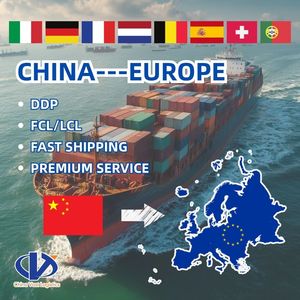
European FCL/LCL Consolidated Ocean Shipping (France/Germany)
Cost-optimized consolidation logistics for European buyers. Weekly container groupage services into Havre, Rotterdam, Hamburg, and Antwerp with seamless customs dispatch.
Global LCL Express & Ocean Groupage Logistics Solution
High-frequency Less-than-Container Load (LCL) consolidation service connecting tier-1 and tier-2 Chinese industrial cities directly to USA, UK, Europe, and Australia destinations.
Turnkey DDP Ocean Shipping & Destination Customs Clearance
All-inclusive door-to-door ocean freight packages that eliminate tariff complexity, customs delays, and destination demurrage for importers purchasing on wholesale terms.
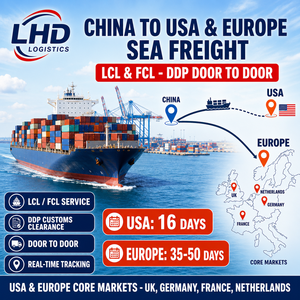
Fast-Track US/UK Door Ocean Cargo Dispatch & Drayage
Premium ocean freight routing combined with priority port discharge and pre-arranged drayage trucking to ensure rapid distribution across American and British commercial centers.
Future Procurement Trends in Wholesale Ocean Transport
Strategic shift from transactional spot-rate purchasing to index-linked resilience, decarbonized maritime routes, and algorithmic supply chain transparency.
The landscape of global maritime logistics and China wholesale ocean transport is undergoing a structural paradigm shift. Importers, brand owners, and global distributors purchasing goods on wholesale FOB or EXW terms from Chinese manufacturing clusters (such as the Yangtze River Delta and Pearl River Delta) are no longer prioritizing nominal spot freight rates in isolation. Instead, modern procurement strategies focus on total landed cost predictability, supply chain continuity, and regulatory compliance.
Core Market Shift: According to global trade indicators, over 68% of enterprise importers are migrating from volatile spot-market bookings to index-linked long-term contracts bundled with guaranteed chassis allocations and destination drayage SLAs to avoid demurrage and detention spirals.
Key Strategic Trends Shaping Ocean Freight Procurement
Index-Linked Rate Structuring
Wholesale buyers are shifting toward hybrid contract models anchored to published container indices (SCFI/FBX) with dynamic Bunker Adjustment Factors (BAF) to smooth out peak season surcharges (PSS) and General Rate Increases (GRI).
End-to-End DDP Integration
Rather than managing decoupled contracts with origin forwarders, ocean carriers, customs brokers, and drayage truckers, importers prefer turnkey DDP (Delivered Duty Paid) frameworks where a single accountable entity manages compliance from factory gate to final warehouse door.
Predictive Risk Management
Incorporating predictive ocean transit analytics and automated milestone alerts to mitigate costly port bottlenecks at major destination gateways such as the Port of NY/NJ, Los Angeles, Long Beach, and Felixstowe.
Comparative Matrix: Traditional Freight vs. Modern Integrated Procurement
| Procurement Dimension | Legacy Spot Market Strategy | Modern Wholesale Ocean Transport Framework |
|---|---|---|
| Cost Optimization Basis | Lowest initial port-to-port ocean freight quote | Total Landed Cost (TLC) including tariff, drayage & free-time |
| Customs Risk Allocation | Importers handle customs clearance via 3rd party broker | In-house Licensed Customs Brokerage seamlessly integrated |
| Container Allocation | Subject to roll-overs during peak shipping windows | Guaranteed equipment space with Tier-1 ocean carrier contracts |
| Visibility & Tracking | Manual tracking via disparate carrier websites | Centralized API data feeds with IoT real-time vessel monitoring |
| Compliance Verification | Basic ISF filing prior to vessel departure | Pre-clearance HTS auditing, CTPAT security validation & ISF 10+2 |
Maritime & Logistics Technological Development Trends
How decarbonization mandates, smart containerization, digital documentation, and automated customs data flows are restructuring China's wholesale export supply chain.
Decarbonization & Green Shipping Corridors
Global regulatory bodies, including the International Maritime Organization (IMO 2023 Strategy) and the European Union’s Emissions Trading System (EU ETS), are placing stringent carbon efficiency standards on ocean liners. Ships operating between major Chinese ports (Ningbo-Zhoushan, Shanghai, Shenzhen) and Western markets must now adhere to strict Carbon Intensity Indicator (CII) targets.
As a result, major ocean shipping lines are deploying LNG-fueled, Methanol-powered, and dual-fuel mega-container ships. Wholesale exporters and forwarders are increasingly tasked with providing scope 3 carbon reporting for every TEU (Twenty-Foot Equivalent Unit) transported across ocean trade lanes.
Technology Impact Highlight
"The adoption of green corridors and electronic Bills of Lading (e-B/L) is projected to shorten international shipping documentation processing cycles from 5-7 business days down to less than 2 hours, fundamentally eliminating port documentation delays."
IoT Smart Container Telematics
Modern container fleets are now equipped with real-time GPS, temperature, humidity, and shock sensors. Importers gain end-to-end visibility over sensitive cargo, such as electronics, high-value consumer goods, and industrial machinery.
Automated Customs Pre-Clearance
By leveraging digital data pipelines, importer documentation (ISF 10+2, commercial invoice data, packing lists) is processed and audited prior to vessel loading in China, enabling immediate customs release upon port arrival.
Dynamic Drayage Optimization
AI-driven drayage scheduling matches container offload timestamps with nearby chassis availability and truck routing, preventing expensive port storage, demurrage, and detention fees.
Why Enterprise Shippers Partner With Us
Combining 40+ years of institutional freight forwarding expertise with U.S. Licensed Customs Brokerage, CTPAT security validation, and coast-to-coast operational hubs.
Navigating international ocean logistics requires more than just booking container space; it demands absolute compliance, robust operational control, and active risk mitigation. Our integrated infrastructure ensures that your wholesale shipments moving out of China are protected against unnecessary delays, unexpected duties, and supply chain disruptions.
-
✓Licensed U.S. Customs Brokerage: Direct, in-house filing with U.S. Customs and Border Protection (CBP), eliminating intermediary brokers and streamlining entry resolution.
-
✓CTPAT Certified Partner: Customs-Trade Partnership Against Terrorism certification ensures validated supply chain security, resulting in reduced CBP exam rates and priority inspections.
-
✓Coast-to-Coast Strategic Presence: Headquartered in Staten Island, NY with additional offices in Lynbrook, NY and Diamond Bar, CA, supporting ocean imports at both East Coast and West Coast gateways.
-
✓24/7 Multilingual Support Desk: Dedicated operational staff fluent in English, Spanish, and Italian, facilitating real-time communication across Asian, American, and European time zones.
Staten Island, NY (Headquarters)
4398 Victory Blvd., Staten Island, NY 10314. Central command for ocean import clearance, bond administration, and East Coast port operations (Port of NY & NJ).
Diamond Bar, CA (West Coast Hub)
Strategic management of trans-Pacific ocean cargo moving through the nation's busiest container gateways: Port of Los Angeles & Port of Long Beach.
Lynbrook, NY Office
Specialized regional office focusing on air cargo imports, rapid customs clearance, and regional distribution networks across Long Island & New York metro area.
China Ocean Transport Procurement FAQ
Technical guidance and answers to critical compliance, tariff, and shipping questions commonly faced by international wholesale buyers and importers.
While U.S. law allows importers of record to file their own customs entries, commercial ocean shipments valued over USD 2,500 require a formal entry supported by an active Customs Bond, accurate Harmonized Tariff Schedule (HTS) classification, valuation declaration, and duty settlement. Utilizing a licensed U.S. Customs Broker ensures entries are submitted error-free to U.S. Customs and Border Protection (CBP), preventing expensive cargo holds, liquidated damages, and customs penalties.
The Importer Security Filing (ISF, commonly known as 10+2) is a mandatory U.S. CBP requirement for all ocean container cargo bound for the United States. The filing contains 10 key data elements provided by the importer/forwarder and 2 data sets from the ocean carrier. It must be filed at least 24 hours prior to the vessel being loaded at the foreign port of departure in China. Failure to file, late filing, or inaccurate filing can result in mandatory CBP liquidated damages of USD 5,000 per violation, along with hold orders at the destination port.
The choice between FCL and LCL depends primarily on cargo volume, weight, and urgency:
- FCL (Full Container Load): Ideal when shipment volume exceeds 15 CBM (Cubic Meters) or fills a standard 20ft container (approx. 28-30 CBM capacity) or 40ft container (approx. 58-65 CBM). FCL offers faster transit times, zero handling risk during transit, and lower per-unit freight cost.
- LCL (Less than Container Load): Cost-effective for smaller wholesale shipments between 1 CBM and 15 CBM. Cargo is consolidated with other goods at origin CFS (Container Freight Station) warehouses. While LCL optimizes inventory carrying cost for smaller batches, it involves extra handling and 3-5 days of additional CFS processing time at destination.
Under FOB (Free on Board), the Chinese seller is responsible only for local inland transport, export documentation, and loading the cargo onto the vessel at the Chinese port. The buyer assumes all costs, risks, ocean freight booking, destination clearance, duty payments, and final delivery once cargo passes the ship's rail. Under DDP (Delivered Duty Paid), the freight forwarder handles the entire door-to-door journey, taking full responsibility for ocean transport, customs clearance, import tariffs/taxes, and inland trucking, delivering cargo directly to your warehouse for an all-inclusive price.
CTPAT (Customs-Trade Partnership Against Terrorism) is a voluntary U.S. CBP supply chain security program. Working with a CTPAT-certified freight forwarder and customs broker provides significant operational benefits, including significantly lower container examination rates (MET/VACIS exams), priority processing during customs holds, front-of-line inspection status, and access to expedited FAST lanes for land drayage. This translates directly to reduced demurrage exposure and faster container turnaround times.
Demurrage (charged for containers remaining inside the port terminal past free time) and Detention (charged for delays in returning empty containers back to the ocean line) can quickly destroy profit margins. Key mitigation strategies include: (1) Filing ISF 10+2 and entry docs at least 48 hours prior to vessel arrival; (2) Securing extended free-time agreements (e.g., 7 to 14 days) with carriers prior to departure; (3) Utilizing pre-arranged local drayage teams with dual-transaction chassis guarantees; and (4) Pre-clearing high-risk HTS classifications before vessel berth.