Featured OEM Port Logistics & Freight Services
Precision-engineered freight forwarder networks, port-to-door DDP routing, and direct vessel carrier allocations connecting major Asian manufacturing nodes to global destination markets.
- Complete DDP Duty-Paid Customs Handling
- Priority Express Air & Ocean Routing
- Dedicated Miami Gateway Distribution
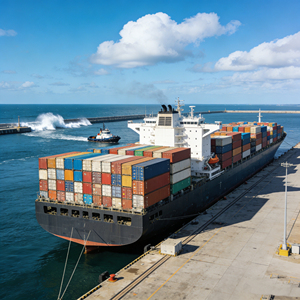
- Direct Carrier Berth Allocations
- Coverage across All Caribbean Ports
- Flexible FCL Bill of Lading Options
- Multi-Origin Consolidation (Dongguan/Tianjin)
- FBA Warehouse Direct Appointments
- Competitive Contract Volume Rates

- Accelerated 5-Day Origin Dispatch SLA
- Optimized Less-Than-Container Space
- Full De-consolidation & Tracking
- Standardized FCL (20GP, 40GP, 40HQ) Equipment
- European Mediterranean/Atlantic Gateways
- Guaranteed Equipment Placement

- Direct Express Routes to Long Beach & EU Hubs
- Streamlined Terminal Container Handling
- Fixed Space Allocation Commitments
- Oceania Trade Lane Express Connections
- Biosecurity & Quarantine Clearance Support
- End-to-End Landed Cost Calculations

- Middle East & Americas Multimodal Hubs
- Integrated Air & Ocean Charter Capabilities
- Complex Customs Documentation Solutions
Over 40 Years of Licensed Customs Brokerage & Port Infrastructure
Operating at the intersection of regulatory strictness and logistical efficiency, Cordaro Shipping Co., Inc. delivers trusted OEM logistics management backed by official licenses, security validations, and cross-border operational expertise.
Licensed U.S. Customs Brokerage
Direct electronic integration with U.S. Customs and Border Protection (CBP). We handle formal entries, complex HTS Code classifications, valuation declarations, and customs bond placements to mitigate hold delays.
CTPAT Certified Partner
Validated under the Customs Trade Partnership Against Terrorism security program. Our supply chain security protocols ensure prioritized CBP inspection handling, reduced exam rates, and fortified integrity from origin to destination.
Bi-Coastal U.S. Drayage Infrastructure
Strategic physical presence at East Coast (Port of NY & NJ - Staten Island & Lynbrook HQ) and West Coast hubs (Ports of LA & Long Beach - Diamond Bar Office) to optimize terminal free-time and control drayage overheads.
Strategic Blueprint: Custom OEM Port Logistics & Global Supply Chain Evolution
An authoritative analysis of regulatory compliance, port congestion mitigation, automated customs entry pipelines, and landed cost optimization for international procurement managers.
1. The Shift Toward Custom OEM Contract Logistics in Global Trade
In modern global trade, cross-border procurement has evolved beyond simple transactional ocean freight. Importers, OEM manufacturers, and global brand owners require highly specialized Port Logistics Manufacturers and Exporter networks capable of providing customized end-to-end operational visibility. As geopolitical tensions, tariff reclassifications, and port bottlenecks continue to strain global networks, reliance on generic freight forwarders introduces unacceptable margin volatility.
A true OEM logistics strategy integrates factory-floor dispatch protocols directly with ocean carrier vessel space allocations and destination port drayage systems. By configuring tailored origin loading schedules in key manufacturing regions such as Dongguan, Tianjin, Ningbo, and Shenzhen, enterprise importers achieve predictable vessel departure windows and minimize expensive origin dwell times.
ISF 10+2 Timing Compliance Protocols
Under U.S. CBP regulations, the Importer Security Filing (ISF) must be submitted at least 24 hours prior to cargo loading at the foreign port. Failure to file accurately results in mandatory $5,000 liquidated damages per violation and severe port holds upon U.S. arrival.
HTS Classification & Duty Engineering
Every imported commodity demands precise Harmonized Tariff Schedule (HTS) alignment. Professional customs brokerage ensures legitimate duty minimization through proper sub-heading analysis, Section 301 exemption audits, and anti-dumping risk evaluations.
2. Macro Industry Trends: Technological & Operational Disruption
The global port logistics industry is undergoing a structural transition driven by digital integration, regulatory scrutiny, and environmental mandates. Sourcing executives must adapt their supply chain architectures to leverage these five macro trends:
- Automated Customs Entry Processing: Paper-based customs entries have been superseded by real-time Automated Broker Interface (ABI) data pipelines. Importers utilizing automated brokers secure pre-clearance status while vessels are still at sea, enabling direct port-to-drayage transfers immediately upon vessel discharge.
- Decoupling via Multi-Gateway Routing: Reliance on a single port gateway creates systemic fragility. Leading OEM supply chains deploy split-routing models—allocating cargo between West Coast entry points (LA/Long Beach) for speed, and East Coast gateways (Port of NY/NJ, Miami) or Gulf ports to protect downstream distribution against regional labor or rail disruptions.
- Green Freight Corridors & Carbon Accounting: Maritime regulations, including the IMO 2030 decarbonization framework and the EU Emissions Trading System (ETS), are shifting freight cost structures. Exporters offering optimized LCL consolidation and fuel-efficient vessel routing help buyers lower Scope 3 greenhouse gas compliance liabilities.
- DDP (Delivered Duty Paid) Transparency: Global buyers increasingly mandate total landed cost clarity before placing purchase orders. Advanced freight forwarders combine ocean transportation, tariff payment, marine insurance, and final-mile drayage into consolidated DDP pricing structures.
3. Strategic Procurement Framework: 2026–2030 Sourcing Guide
To insulate business operations from freight market volatility, supply chain directors should execute a structured, four-phase procurement blueprint when onboarding custom OEM port logistics partners:
Phase A: Audit & Landed Cost Modeling
Conduct a comprehensive line-item audit of historical ocean freight rates, terminal handling charges (THC), demurrage risk exposure, and customs entry fees to establish a baseline landed cost metric.
Phase B: Partner Qualification & E-E-A-T Verification
Verify that your logistics service provider holds active U.S. Customs Brokerage licenses, official FMC (Federal Maritime Commission) NVOCC status, and CTPAT security validation to ensure institutional compliance.
Phase C: Equipment & Space Commitments
Establish dual-contracting strategies: balance fixed-rate named-account service contracts for core baseline volumes with flexible spot market allocations to absorb seasonal demand spikes.
Phase D: Integrated Drayage & Free-Time Management
Negotiate extended port free-time (7 to 10 days minimum) and coordinate pre-cleared drayage dispatch teams to eliminate demurrage (port storage fees) and detention (equipment drop charges).
By implementing this structured procurement framework, global enterprise buyers achieve resilient lead times, lower landed costs, and complete compliance across complex international trade corridors.
Frequently Asked Questions: OEM Port Logistics & Customs Brokerage
Get authoritative answers from licensed U.S. customs brokers regarding trade regulations, ISF filings, FCL/LCL optimization, and drayage management.
While U.S. law allows individuals to clear personal goods, commercial shipments valued over USD 2,500 require a formal entry filing backed by a continuous or single-entry customs bond, accurate Harmonized Tariff Schedule (HTS) product classification, valuation verification, and duty payments. A licensed U.S. Customs Broker, such as Cordaro Shipping Co., Inc., possesses the legal authority and Automated Broker Interface (ABI) infrastructure to transmit entry data directly to U.S. Customs and Border Protection (CBP). Working with a licensed broker eliminates the risk of incorrect entry declarations, cargo holds, seizure of goods, and severe monetary penalties.
The Importer Security Filing (commonly known as ISF 10+2) is a mandatory U.S. CBP security requirement for ocean freight entering the United States. It requires importers or their authorized customs brokers to submit 10 specific data elements (including manufacturer site, seller, buyer, ship-to party, container stuffing location, and importer of record number) along with 2 carrier data elements at least 24 hours prior to the cargo being loaded onto the vessel at the foreign port of departure. Failure to comply with ISF regulations—including late filings, inaccurate descriptions, or unapproved amendments—results in automatic CBP liquidated damages fines of $5,000 per violation, along with mandatory hold inspections upon vessel arrival at the U.S. port.
The decision between FCL and LCL depends on cargo volume, weight, lead-time urgency, and landed cost parameters:
• Full Container Load (FCL): Most cost-effective when total cargo volume exceeds 13 to 15 cubic meters (CBM) for a 20-foot container or 28 to 30 CBM for a 40-foot container. FCL provides faster transit times because the container is sealed at the factory origin and dispatched directly to your warehouse without stopping at origin or destination consolidation warehouses (CFS).
• Less than Container Load (LCL): Ideal for smaller shipments (typically between 1 CBM and 12 CBM) where paying for a dedicated container is not economically viable. LCL consolidates your cargo with other goods in a shared container. While offering low initial freight costs, LCL includes additional origin/destination CFS handling fees and adds 3 to 5 days to overall transit times for deconsolidation.
Our logistical infrastructure operates strategically across both the East and West Coasts of the United States. On the East Coast, our headquarters in Staten Island, NY, and secondary office in Lynbrook, NY, manage ocean and air freight moving through the Port of New York and New Jersey, JFK International Airport, and Newark Liberty International Airport. On the West Coast, our Diamond Bar, CA, facility manages trans-Pacific trade channels entering through the Port of Los Angeles and Port of Long Beach. Through our established nationwide carrier network, we coordinate seamless container drayage, rail transfers, and final-mile warehouse deliveries across all 50 states.
CTPAT (Customs Trade Partnership Against Terrorism) is a voluntary, premier supply chain security program led by U.S. Customs and Border Protection. As a validated CTPAT-certified partner, Cordaro Shipping Co., Inc. demonstrates strict compliance with physical, digital, and procedural security standards. For importers, shipping through a CTPAT-certified partner results in significantly reduced CBP examination rates (up to 4x to 6x lower inspection frequency), priority processing during mandatory exams, front-of-the-line inspection queue privileges, and dedicated access to CBP CTPAT Supply Chain Security Specialists in the event of port disruptions.
Demurrage (fees charged by the ocean terminal for containers remaining inside the port beyond free time) and Detention (fees charged by carriers for holding empty equipment outside the port) can rapidly undermine profit margins. Preventing these fees requires a proactive three-step strategy: First, ensure pre-cleared customs status by submitting ISF and entry documentation 4 to 5 days prior to vessel arrival. Second, negotiate extended port free-time (minimum 7 to 10 calendar days) directly within master carrier ocean contracts. Third, deploy local drayage teams with dual-transaction capabilities to pull import containers out of the terminal immediately upon discharge and promptly return empty equipment to origin depots.