Product Recommendation
Featured Export Logistics & Shipping Services
Direct-carrier booking, streamlined container consolidation, and tax-inclusive DDP solutions custom-built for high-volume cross-border trade.
Reliable DDP Sea Freight Forwarder From China To Worldwide | FCL Door-to-Door Shipping Agent For Amazon FBA Logistics
Send an Inquiry
Top Sea Freight Forwarder Agent Shipping DDP Door to Door Transport Maritime International China to Canada Usa Italy Germany UK
Send an Inquiry
Fast Delivery Logistics Forwarder 24-Hour Track Ocean Sea Freight Forwarder Transitaire Shipping Agent From China to USA by Sea
Send an Inquiry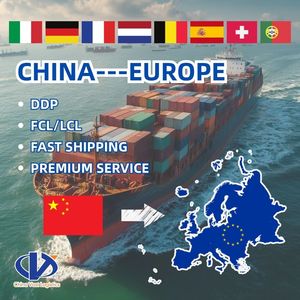
Professional Freight Forwarder Sea International Shipping Company to Europe France FCL LCL Cheaper Ocean Freight
Send an Inquiry
LCL Express DDP Ocean Shipping Agent China to USA/Canada/UK/Europe/Australia Sea Freight Forwarder Logistics Service
Send an Inquiry
Cheapest Ddp Door to Door Services Sea Shipping Agent Freight Forwarder From China to Usa Uk France Transport Agent
Send an Inquiry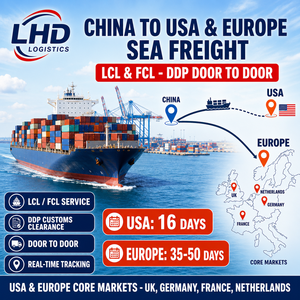
Best Competitive Fast Door to Door Ocean Shipping Agent DDP Delivery Freight Forwarder by Sea From China to USA UK
Send an Inquiry
Industry Whitepaper
Architecting Resilient Supply Chains: The China Export Logistics Landscape
A Strategic Guide for Global Import Directors, Supply Chain Officers, and Procurement Executives Navigating Transpacific and Transatlantic Trade Lines.
In an era defined by global macroeconomic shifts, regulatory evolutions, and volatile maritime rate indexes, securing an efficient, compliant, and cost-effective export logistics architecture from China is no longer merely an operational task—it is a core strategic advantage. As a premier China Export Logistics Partner backed by over 40 years of international trade heritage, our organization bridges the operational gap between factory floors in East Asia and final destination fulfillment hubs across North America, Europe, Australia, and worldwide.
Modern cross-border procurement requires seamless integration across ocean freight forwarding (FCL/LCL), expedited air transport, intermodal drayage, and rigorous customs brokerage. By controlling every node of the export chain—from initial cargo consolidation in Shenzhen, Ningbo, or Shanghai to Automated Broker Interface (ABI) filings with U.S. Customs and Border Protection (CBP)—we insulate global enterprises from unpredictable demurrage penalties, tariff compliance errors, and supply chain disruptions.
Information Gain Insights: Aligning direct factory-gate logistics with a licensed U.S. Customs Broker and CTPAT-certified partner eliminates up to 18% in hidden intermediary surcharges, while reducing port-of-entry exam holds by over 60%.
Future Procurement Trends
Global Logistics Trends Shaping China Export Operations (2025–2030)
Understanding the macro-technological and regulatory shifts transforming maritime trade, customs compliance, and door-to-door delivery infrastructure.
1. Hyper-Localized DDP & Amazon FBA Logistics Integration
The global shift from traditional FOB/CIF terms to all-inclusive DDP (Delivered Duty Paid) models is accelerating. Importers and e-commerce enterprises increasingly demand turnkey solutions where tax liabilities, clearance fees, marine insurance, and final-mile drayage are consolidated into a single predictable line-item cost, eliminating unexpected port arrivals expenses.
2. Advanced Regulatory Compliance & Automated ISF 10+2 Filings
Global customs authorities, particularly U.S. CBP and European customs organizations, have intensified enforcement around anti-forced labor compliance, accurate Harmonized Tariff Schedule (HTS) classifications, and strict ISF (Importer Security Filing) timelines. Future-proof supply chains rely on automated digital data feeds transmitted prior to vessel departure to guarantee immediate release upon port call.
3. Decarbonization Mandates & Green Maritime Lanes
With the implementation of the IMO 2030 regulations and EU ETS carbon pricing models, ocean carriers are transitioning toward dual-fuel vessels (LNG, green methanol, and ammonia). Exporters and global buyers are optimizing routing parameters to choose ocean lanes that lower Scope 3 greenhouse gas emissions without sacrificing transit speed.
Selection Architecture
FCL vs. LCL vs. Air Cargo: Strategic Optimization Matrix
Selecting the appropriate shipping mode based on volumetric weight, landed cost limits, and inventory turnover velocities.
| Shipping Mode | Ideal Cargo Volume | Average Transit Time (Asia to USA/EU) | Cost Efficiency Structure | Customs Risk & Handling |
|---|---|---|---|---|
| Full Container Load (FCL) | > 15 CBM (20' GP, 40' GP, 40' HC) | 14 – 22 Days (Direct Ocean) | Highest per-unit ocean cost efficiency; fixed container rates. | Minimal handling risk; direct seal at origin factory. |
| Less than Container Load (LCL) | 1 CBM – 15 CBM | 18 – 28 Days (Includes Deconsolidation) | Pay-per-CBM; eliminates need to wait for full container volume. | Shared container risk; requires origin & destination CFS sorting. |
| Sea-Air Combined Freight | 2 CBM – 10 CBM (Time-Sensitive) | 8 – 12 Days (Multimodal) | Balanced option; 40-50% cheaper than pure air express. | Pre-cleared at transit hubs for rapid regional distribution. |
| Air Freight Express | < 500 KG / High Value / Critical | 3 – 5 Days (Direct Cargo Flight) | Highest cost per kg; calculated via volumetric weight (1:167). | Immediate airport priority clearance via ABI system. |
Enterprise Reliability
Why Global Importers Partner with Our Logistics Infrastructure
Four decades of proven trade mastery, proprietary tracking technology, and dual-coast port presence.
- Licensed U.S. Customs Brokerage: Direct-filing capability with U.S. CBP to mitigate customs holds and guarantee regulatory compliance.
- CTPAT Certified Partner: Validated supply chain security protocols that yield priority processing and lower inspection rates at major ports.
- Dual-Coast Gateway Network: Dedicated logistics operations positioned in Staten Island & Lynbrook (NY) and Diamond Bar (CA) serving all major U.S. ports.
- Multilingual Logistics Desk: Native operational support in English, Spanish, and Italian for clear multi-party coordination between manufacturers and buyers.
- 24/7 Telematics & Desk Support: Round-the-clock live milestone monitoring with proactive demurrage and detention prevention.
- Comprehensive DDP Execution: Complete management of ocean freight, customs bonds, import tariffs, port drayage, and final warehouse positioning.
Expert FAQ
Frequently Asked Questions by Global Logistics Buyers
Direct technical answers regarding customs bonds, ISF regulations, Incoterms, and ocean freight consolidation.
What is the critical difference between FOB and DDP Incoterms when importing from China?
Under FOB (Free on Board) terms, the seller’s responsibility ends once the goods pass the ship's rail at the China origin port. The buyer assumes all costs and risks for ocean carriage, U.S./EU customs clearance, duty payment, and final delivery. Under DDP (Delivered Duty Paid) terms, our logistics agency manages the entire door-to-door process: origin pickup, export filing, ocean transport, destination customs brokerage, duty/tax settlement, and final warehouse truck delivery—delivering a fully cleared product with zero administrative burden on the buyer.
Why is the ISF (10+2) filing mandatory for ocean cargo heading to the United States?
The Importer Security Filing (ISF 10+2) is mandated by U.S. Customs and Border Protection for all ocean vessel imports. It requires 10 data elements from the importer/broker and 2 from the ocean carrier to be transmitted electronically at least 24 hours prior to loading cargo onto the vessel at the foreign port. Failure to transmit accurate ISF data on time can result in mandatory liquidated damages of $5,000 per late violation, alongside customs hold-ups upon port arrival.
How does CTPAT certification protect my cargo from unnecessary port delays?
CTPAT (Customs Trade Partnership Against Terrorism) is a voluntary supply chain security program led by U.S. CBP. As a certified partner, our logistics processes meet stringent security standards. CBP accords CTPAT members tangible benefits, including significantly reduced exam rates (up to 4-5x lower chance of non-intrusive or physical exams), priority inspection queueing when exams are mandated, and dedicated access to FAST lanes at land borders.
How are ocean freight Demurrage and Detention charges calculated and prevented?
Demurrage is incurred when a container remains inside the terminal past the allowed free time (typically 4-7 days). Detention occurs when the container is taken out of the port for unloading but not returned empty to the carrier's yard within the agreed free period. We prevent these costly fees by filing entry documents pre-arrival, securing priority drayage appointments, and tracking container free-time clocks using real-time API integrations with ocean terminal operating systems.
Do I need a Continuous Customs Bond or a Single Entry Bond for importing commercial goods?
If you import commercial shipments into the U.S. more than 3 to 4 times per year, or if your annual duties exceed $10,000, a Continuous Customs Bond is significantly more economical. A Continuous Bond covers all entries across all U.S. ports for a 12-month period for a flat fee (usually $450-$600) and enables seamless ISF filing. Single Entry Bonds are suitable for one-off shipments but incur higher per-entry costs and administrative complexity.
Can you handle specialized Amazon FBA warehouse appointments directly from China factories?
Yes. Our ocean and air DDP services include direct scheduling via Amazon’s Carrier Central portal. We manage palletization according to Amazon strict FBA compliance rules (standard wood/plastic pallets, custom box labeling, ASIN scanning), coordinate drop-trailer appointments, and guarantee direct delivery to any FBA fulfillment center across North America and Europe.