Premier Freight & Logistics Management Portfolio
Turnkey DDP, FCL, LCL, and Multimodal Transport Services Engineered by Leading China Freight Forwarders & Licensed U.S. Customs Brokers.

Shipping Agent Italy Sea Freight From China to Genoa Naples DDP Door to Door FCL LCL Cargo Forwarder Express Service
- Direct Maritime Routes to Genoa & Naples
- Complete EU Tariff & VAT Clearance
- Door-to-Door (DDP) Express Handling
Reliable DDP Sea Freight Forwarder From China To Worldwide | FCL Door-to-Door Shipping Agent For Amazon FBA Logistics
- Amazon FBA Palletization & Prep
- Global Destination Delivery Network
- Fixed All-Inclusive Duty & Freight Pricing
Top Sea Freight Forwarder Agent Shipping DDP Door to Door Transport Maritime International China to Canada Usa Italy Germany UK
- Coverage across US, CA, UK & EU
- Multi-modal Vessel Space Commitments
- Automated Customs Bond Compliance
Fast Delivery Logistics Forwarder 24-Hour Track Ocean Sea Freight Forwarder Transitaire Shipping Agent From China to USA by Sea
- 24/7 Satellite Telemetry Telecommunication
- Accelerated Transpacific Sailing Schedules
- Expedited Port Drayage & Clearance
Professional Freight Forwarder Sea International Shipping Company to Europe France FCL LCL Cheaper Ocean Freight
- Direct Consolidation Hubs in France & EU
- Optimized LCL Volume Discounting
- Tier-1 Carrier Ocean Freight Contracts
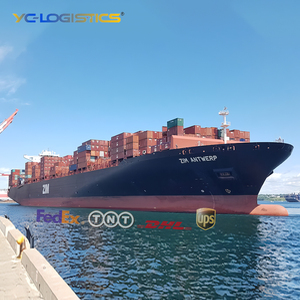
LCL Express DDP Ocean Shipping Agent China to USA/Canada/UK/Europe/Australia Sea Freight Forwarder Logistics Service
- Weekly Scheduled Container Consolidation
- Australia & North America DDP Channels
- Zero Destination Fee Guarantees
Cheapest Ddp Door to Door Services Sea Shipping Agent Freight Forwarder From China to Usa Uk France Transport Agent
- Scalable Volume Rates for B2B Importers
- End-to-End Warehousing & Forwarding
- Integrated Customs Clearance Escrow
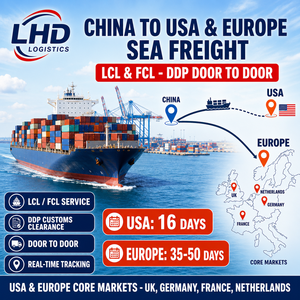
Best Competitive Fast Door to Door Ocean Shipping Agent DDP Delivery Freight Forwarder by Sea From China to USA UK
- Dedicated Transpacific & Transatlantic Berths
- Automated ISF 10+2 & AMS Transmissions
- Guaranteed Container Terminal Offloading
Modern China-to-Global Logistics & Freight Forwarding Ecosystem
Navigating cross-border supply chains originating from major Chinese manufacturing clusters (such as the Pearl River Delta, Yangtze River Delta, and Bohai Rim) requires an intricate synthesis of multimodal freight execution, strict regulatory adherence, and digital milestone visibility. As international commerce transitions from transactional freight brokerage toward integrated risk management, choosing a verified China logistics management manufacturer and exporter combined with a Licensed U.S. Customs Broker forms the backbone of commercial resilience.
Information Gain Metric: Traditional freight forwarding often isolates port-to-port ocean carriage from destination customs clearance, leading to costly demurrage, unexpected detention penalties, and supply chain bottlenecks. Our integrated framework bridges origin factory dispatch directly to U.S. Customs entry filing, guaranteeing full landed cost predictability.
Comparative Matrix: Incoterms 2020 Structural Risk Vector Analysis
Selecting the optimal shipping term directly impacts liability, cargo control, and overall operational efficiency. Below is an executive comparison of primary cross-border structures:
| Incoterm Structure | Origin Customs Clearance | Maritime Freight Control | Destination Customs Entry | Risk Transfer Point | Financial Predictability |
|---|---|---|---|---|---|
| DDP (Delivered Duty Paid) | Managed by Shipper/Broker | Forwarder Contracted | Licensed Broker Escrow | Buyer Warehouse Door | Maximum (All-Inclusive) |
| FOB (Free on Board) | Managed by Manufacturer | Buyer Appointed Agent | Buyer Nominated Broker | Vessel Boarding at Origin | Moderate (Variable Freight) |
| CIF (Cost, Insurance & Freight) | Managed by Manufacturer | Manufacturer Appointed | Buyer Independent Filing | Vessel Rail at Port of Origin | Low (Hidden Terminal Fees) |
Future Procurement & Logistics Evolution (2026-2030)
Global logistics management is undergoing a paradigm shift driven by legislative mandates, dynamic tariff adjustments, and technological integration. Enterprise procurement directors must realign their freight strategies around four pivotal industry vectors:
1. Automated ISF 10+2 & Pre-Clearance Systems
With U.S. Customs and Border Protection (CBP) enforcing heightened scrutiny on Importer Security Filings (ISF), automated real-time transmission at least 24 hours prior to foreign vessel loading is mandatory. Missing or delayed filings incur liquidated damages of up to USD $5,000 per violation. Future-proof procurement requires pre-clearing ocean freight while containers are still en route across the Pacific or Transatlantic channels.
2. Green Maritime Corridors & IMO 2030 Compliance
Sustainability is no longer optional. Decarbonization regulations, including the FuelEU Maritime initiative and IMO greenhouse gas reduction strategies, are pushing ocean carriers toward dual-fuel methanol and LNG vessels. Importers partnering with carriers offering verified Scope 3 carbon offsets and eco-friendly routing will secure preferential tax and regulatory treatment across European and North American ports.
3. Amazon FBA & Omnichannel Algorithmic Injection
E-commerce logistics demands direct integration with Amazon Fulfillment Centers (AWD/FBA) and third-party logistics (3PL) nodes. Modern DDP shipping agents leverage automated appointment scheduling (CARP), ocean container floor-loading optimization, and rapid palletization to bypass long receiver check-in queues, minimizing out-of-stock risk during high-volume peak seasons.
4. Supply Chain Security via CTPAT Validation
Cargo moving through Customs-Trade Partnership Against Terrorism (CTPAT) validated logistics channels experiences significantly reduced CBP inspection rates, priority processing during port congestion, and access to expedited FAST lanes. Securing a certified logistics pipeline protects importers from unexpected physical exam holds costing thousands in demurrage.
Why Partner With Cordaro Shipping Co., Inc.?
For over four decades, Cordaro Shipping Co. has provided unparalleled cross-border expertise, integrating licensed U.S. Customs Brokerage with comprehensive international ocean, air, and drayage management. Our family-owned heritage guarantees direct accountability and tailored service.
Licensed U.S. Customs Broker
Direct electronic entry transmission to U.S. CBP. Specialized HTS tariff classification, duty binding rulings, and section 301 compliance.
CTPAT Security Certified
Validated supply chain security protocols minimizing customs examination frequencies and expediting container releases across all U.S. ports.
Coast-to-Coast U.S. Hubs
Strategic office locations in Staten Island, NY (Headquarters), Lynbrook, NY, and Diamond Bar, CA servicing ocean gateways in NY/NJ, LA, and Long Beach.
Multilingual Operations Staff
Seamless communication in English, Spanish, and Italian to coordinate complex multi-party international documentation with foreign suppliers.
Dedicated Container Drayage
Integrated port drayage fleet ensuring immediate pickup upon container discharge, eliminating expensive demurrage and storage accumulation.
24/7 Global Track & Dispatch
Round-the-clock human support and satellite tracking updates for high-value, time-critical ocean and air import shipments.
Frequently Asked Questions by Global Importers
Expert answers regarding customs clearance, DDP terms, freight forwarding, and U.S. border compliance.
Do I need a licensed U.S. customs broker to import goods into the United States?
While commercial entities may legally attempt self-entry, any shipment valued over USD $2,500 requires a formal entry filing backed by a continuous or single-entry Customs Bond, precise Harmonized Tariff Schedule (HTS) classification, proper valuation declaration, and PGA (Partner Government Agency) approvals. Utilizing a licensed U.S. Customs Broker like Cordaro Shipping mitigates risks of cargo holds, costly demurrage charges, and CBP regulatory penalties.
What is an Importer Security Filing (ISF 10+2) and when must it be submitted?
The Importer Security Filing (ISF), commonly known as "10+2", is a strict CBP requirement for all ocean containerized cargo bound for the United States. It requires 10 data elements from the importer (such as manufacturer name, buyer, stuffing location, and HTS numbers) and 2 from the ocean carrier. The filing must be transmitted and accepted at least 24 hours prior to loading the cargo aboard the vessel at the foreign origin port. Failure to file accurately or on time results in an automatic $5,000 fine per violation.
How do I determine whether to ship via Full Container Load (FCL) or Less than Container Load (LCL)?
FCL is the standard choice when your cargo volume reaches 15 cubic meters (CBM) or more, filling a significant portion of a 20ft or 40ft container. FCL provides faster transit, reduced touchpoints, and superior security since the container remains sealed from origin to destination. LCL consolidates smaller cargo volumes (1 to 14 CBM) into shared containers, making it cost-effective as you pay only for space utilized. Our logistics planners evaluate volume, weight, transit urgency, and landed cost to recommend the ideal ocean option.
What primary U.S. port gateways are supported by Cordaro Shipping?
Cordaro Shipping provides comprehensive coast-to-coast coverage. Our East Coast headquarters in Staten Island and regional office in Lynbrook, NY manage shipments arriving through the Port of New York and New Jersey, Boston, Baltimore, and major airport hubs (JFK/EWR). Our West Coast office in Diamond Bar, California handles high-volume transpacific cargo arriving through the Ports of Los Angeles and Long Beach. Through our global partner network, we manage imports and exports across 100+ countries.
What distinct advantages does CTPAT certification provide for my supply chain?
CTPAT (Customs Trade Partnership Against Terrorism) is a voluntary U.S. Customs security program. Working with a CTPAT-certified partner like Cordaro Shipping validates that your supply chain meets stringent security criteria. Benefits include significantly lower CBP examination rates, expedited processing when inspections do occur, front-of-the-line priority during port disruptions, and enhanced overall supply chain integrity.
How does DDP (Delivered Duty Paid) ocean shipping streamline importing from China?
Under DDP terms, the freight forwarder and seller assume complete responsibility for origin pickup, export documentation, international sea carriage, U.S. customs brokerage, duty/tax payment, and final drayage delivery to your facility. Importers receive a single, transparent invoice without unexpected port fees or tariff surprises, allowing precise calculation of retail and wholesale profit margins.
Ready to Optimize Your Global Supply Chain?
Connect with our licensed U.S. Customs Brokers and international freight logistics specialists today. Receive immediate access to competitive ocean container rates, customs classification support, and customized DDP solutions.