Recommended International Freight Solutions
Explore our premium door-to-door, DDP, ocean consolidation, and time-critical air freight logistics offerings engineered for global trade compliance.

Shipping Agent Italy Sea Freight From China to Genoa Naples DDP Door to Door FCL LCL Cargo Forwarder Express Service
Reliable DDP Sea Freight Forwarder From China To Worldwide | FCL Door-to-Door Shipping Agent For Amazon FBA Logistics
Top Sea Freight Forwarder Agent Shipping DDP Door to Door Transport Maritime International China to Canada Usa Italy Germany UK
Fast Delivery Logistics Forwarder 24-Hour Track Ocean Sea Freight Forwarder Transitaire Shipping Agent From China to USA by Sea
Professional Freight Forwarder Sea International Shipping Company to Europe France FCL LCL Cheaper Ocean Freight
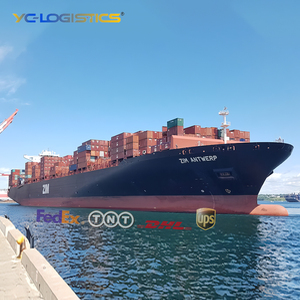
LCL Express DDP Ocean Shipping Agent China to USA/Canada/UK/Europe/Australia Sea Freight Forwarder Logistics Service

Cheapest Ddp Door to Door Services Sea Shipping Agent Freight Forwarder From China to Usa Uk France Transport Agent
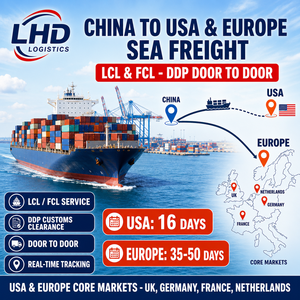
Best Competitive Fast Door to Door Ocean Shipping Agent DDP Delivery Freight Forwarder by Sea From China to USA UK
40+ Years of U.S. Customs Brokerage & Global Logistics Mastery
Combining the rigorous compliance standards of a licensed U.S. Customs Broker with a robust worldwide NVOCC air and ocean forwarding network.
Licensed U.S. Customs Brokerage
Direct Electronic Data Interchange (EDI) integration with U.S. Customs and Border Protection (CBP). We handle Remote Location Filing (RLF), HTS classification audits, and PGA clearance (FDA, EPA, DOT, USDA).
CTPAT Security Validation
As a validated Customs Trade Partnership Against Terrorism (CTPAT) partner, our shipments enjoy reduced CBP examination rates, front-of-the-line inspection processing, and priority access during port congestion.
Coast-to-Coast U.S. Gateways
Strategic hubs in Staten Island & Lynbrook, NY (supporting JFK/EWR & Port of NY/NJ) and Diamond Bar, CA (supporting LAX & Ports of LA/Long Beach) ensure continuous coverage across time zones.
Multilingual Operations Desk
Eliminate cross-border miscommunications. Our logistics specialists communicate fluently in English, Spanish, and Italian, bridging overseas factory teams directly with North American buyers.
High-Velocity Air Charter & BSA
Secured Block Space Agreements (BSA) with major tier-1 passenger and freighter airlines. From consolidated air freight to full aircraft charters, we guarantee capacity during peak seasonal demand spikes.
Dedicated Container Drayage
Asset-backed and contract drayage fleets offering immediate port terminal pull, chassis provision, bonded transfers, and drop-and-hook facility deliveries to eliminate demurrage and detention fees.
Executive Trends in Global Air Freight Procurement (2025–2030)
The global air cargo market is undergoing a structural paradigm shift driven by geopolitical realignment, nearshoring dynamics, e-commerce velocity requirements, and strict decarbonization mandates. Procurement executives must transition from transactional spot-market buying to strategic, resilient supply chain architectures.
Key Structural Shifts Reshaping Air Procurement
Modern supply chain directors are restructuring their procurement frameworks based on three foundational shifts:
1. Transition from Spot Rates to Hybrid Indexation
Relying purely on spot air freight rates exposes enterprises to extreme volatility during Q4 peak seasons or geopolitical disruptions (e.g., Red Sea shipping rerouting). Top exporters are adopting 60/40 hybrid structures: securing 60% of core volume via annual Block Space Agreements (BSAs) and sourcing 40% via dynamic spot indexing to balance budget predictability with market flexibility.
2. Shift to Volumetric Density Optimization
Airlines charge based on chargeable weight (the greater of actual gross weight or dimensional weight calculated at 1:6000 or 1:5000 ratios). Exporters and air freight factories are deploying automated packaging compression, lightweight composite palletization, and custom crating to maximize volumetric density—effectively reducing billable air weight by up to 18% per shipment.
Comparative Matrix: Freight Modes & Strategic Applications
To assist procurement managers in optimizing mode selection, the following operational matrix contrasts standard international transit parameters:
| Transport Mode | Avg. Transit Time | Cost Index / Kg | Volumetric Ratio | Best Used For | Customs Clear Speed |
|---|---|---|---|---|---|
| Express Air Freight | 1 – 3 Days | High ($$$$) | 1:5000 (167 kg/m³) | Emergency stockout, high-value electronics, pharmaceuticals | Immediate / Pre-cleared |
| Standard Air Cargo (BSA) | 4 – 7 Days | Medium-High ($$$) | 1:6000 (167 kg/m³) | High-value seasonal goods, automotive components, fashion launch | 12 – 24 Hours |
| Sea-Air Hybrid Corridor | 12 – 16 Days | Moderate ($$) | Flexible | Mid-tier consumer goods, cost-sensitive fast fashion | 24 – 36 Hours |
| Ocean Freight (FCL) | 25 – 40 Days | Low ($) | Container volume | Heavy industrial equipment, bulk raw materials, low-margin inventory | 24 – 48 Hours |
| Ocean Freight (LCL DDP) | 30 – 45 Days | Economy ($) | Per CBM basis | Small-to-medium batch supplier shipments, e-commerce replenishment | Deconsolidation + 48h |
Next-Generation Technology & Compliance Development Trends
The convergence of automated customs clearance, real-time IoT visibility, and stringent regulatory oversight is transforming global logistics from a reactive operational cost center into a strategic competitive advantage.
1. Automated ABI & ISF Integration
Manual paperwork is the leading cause of customs delays and liquidated damages. Advanced freight forwarders leverage API-driven Automated Broker Interface (ABI) pipelines that connect overseas origin factories directly with U.S. Customs. Importer Security Filings (ISF 10+2) are transmitted automatically prior to loading, mitigating the threat of $5,000 CBP penalty fines.
2. IoT & Real-Time Telematics
Modern air cargo containers (ULDs) and high-value crates are increasingly equipped with 5G cellular and Bluetooth Low Energy (BLE) sensor arrays. Shippers receive granular live telemetry regarding ambient temperature, humidity, shock impact, tilt angle, and exact GPS location throughout transit, ensuring product integrity for delicate or cold-chain goods.
3. SAF & Sustainable Logistics Mandates
Environmental regulations such as the EU Corporate Sustainability Due Diligence Directive (CSDDD) and U.S. Scope 3 carbon emission reporting are accelerating the adoption of Sustainable Aviation Fuel (SAF). Leading air freight exporters provide audited CO2e emissions reports and SAF carbon offset certificates directly within shipping manifests.
The Importance of Tariff Engineering & Section 301 Mitigation
Navigating modern international trade requires rigorous duty management. Utilizing specialized U.S. Customs Brokerage expertise allows importers to execute legal Tariff Engineering—modifying product finishing or assembly procedures to qualify for lower Harmonized Tariff Schedule (HTS) duty subheadings, utilizing Section 321 De Minimis rules where appropriate, or establishing Bonded Warehousing and Foreign Trade Zones (FTZ) to defer duties indefinitely.
End-to-End Factory-to-Door Execution Blueprint
A standardized 5-stage logistics workflow ensuring complete visibility, tariff optimization, and seamless physical handovers.
Pre-Shipment Audit
Review of commercial invoices, packing lists, HTS classification verification, and pre-filing valuation checks prior to dispatch from foreign supplier factories.
Carrier BSA Booking
Space allocation on tier-1 air carriers or ocean vessels, export customs declaration clearance, and master airway bill (MAWB) or ocean bill of lading (BOL) issuance.
ISF & Entry Filing
Electronic transmission of ISF 10+2 to U.S. CBP 24 hours prior to foreign loading, accompanied by formal entry summary filing (Entry Type 01 or 11).
Drayage & Delivery
Immediate airport ground handling transfer or port terminal drayage pull, followed by final mile bonded truck delivery straight to customer facilities.
Frequently Asked Procurement & Customs Questions
Expert clarification on complex international shipping, regulatory compliance, and customs clearance protocols.