Featured Freight & Logistics Solutions
Verified door-to-door, ocean freight, and customs clearance services tailored for seamless enterprise procurement across major global trade corridors.
Shipping Agent Italy Sea Freight From China to Genoa Naples DDP Door to Door FCL LCL Cargo Forwarder Express Service
Reliable DDP Sea Freight Forwarder From China To Worldwide | FCL Door-to-Door Shipping Agent For Amazon FBA Logistics
Top Sea Freight Forwarder Agent Shipping DDP Door to Door Transport Maritime International China to Canada Usa Italy Germany UK
Fast Delivery Logistics Forwarder 24-Hour Track Ocean Sea Freight Forwarder Transitaire Shipping Agent From China to USA by Sea
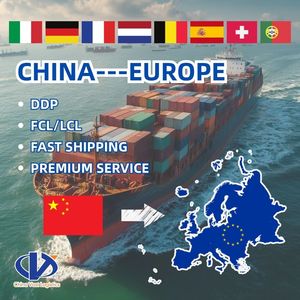
Professional Freight Forwarder Sea International Shipping Company to Europe France FCL LCL Cheaper Ocean Freight
LCL Express DDP Ocean Shipping Agent China to USA/Canada/UK/Europe/Australia Sea Freight Forwarder Logistics Service
Cheapest Ddp Door to Door Services Sea Shipping Agent Freight Forwarder From China to Usa Uk France Transport Agent
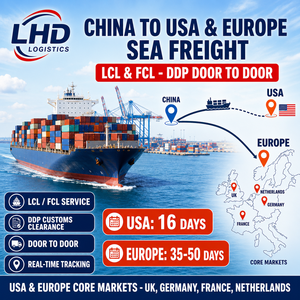
Best Competitive Fast Door to Door Ocean Shipping Agent DDP Delivery Freight Forwarder by Sea From China to USA UK
1. Executive Strategic Benchmark: Navigating Global Supply Chain Complexity
Modern international trade requires more than simple cargo moving from origin to destination; it demands precise regulatory execution, risk mitigation, and end-to-end transparent visibility. As global logistics networks face tariff fluctuations, geopolitical adjustments, and evolving customs directives, enterprise importers and exporters must align with proven, licensed logistics partners.
Building a resilient logistics operational framework necessitates an integrated approach combining maritime freight forwarding (Full Container Load - FCL and Less than Container Load - LCL), expedited air cargo management, specialized container drayage, and comprehensive Delivered Duty Paid (DDP) logistics workflows. Organizations that master these disciplines secure predictable landed costs and superior inventory turnover.
Core Competency Modules & Value Engineering
Deploying specialized logistics infrastructure across international trade corridors.
Licensed Customs Brokerage
Direct electronic transmission of formal entries to U.S. Customs and Border Protection (CBP). Our internal licensed customs brokers oversee HTS line-item classifications, valuation assessments, and partner government agency clearances (FDA, USDA, DOT) to guarantee total compliance.
CTPAT Tier Security Validation
Certified under the Customs Trade Partnership Against Terrorism framework, offering validated security protocols that significantly lower physical exam rates, unlock priority clearance lanes, and streamline supply chain entry times.
Intermodal Drayage & Port Ops
Dedicated drayage fleets stationed adjacent to East Coast (Staten Island/Port of NY & NJ) and West Coast (Diamond Bar/LA & Long Beach) terminals to eliminate demurrage, minimize detention penalties, and ensure rapid warehouse turnarounds.
2. Technical Analysis: Strategic Selection of Freight Delivery Terms (DDP vs. FOB vs. CIF)
Selecting the optimal International Commercial Term (Incoterm) dictates legal risk, insurance responsibility, and landed cost calculation accuracy. For cross-border enterprise sourcing—particularly between Asian manufacturing hubs and North American/European destination markets—understanding the balance between CIF, FOB, and DDP is vital for CFOs and procurement directors alike.
| Incoterm Framework | Customs & Duty Responsibility | Freight & Transit Risk | Ideal Enterprise Use Case |
|---|---|---|---|
| FOB (Free On Board) | Buyer handles import clearance & tariffs | Transfers to buyer once loaded on ocean vessel | Established importers with local customs brokers & contracted carrier rates |
| CIF (Cost, Insurance & Freight) | Buyer handles import entry & port charges | Seller covers transit to destination ocean port | Bulk commodity movements where seller holds volume ocean vessel contracts |
| DDP (Delivered Duty Paid) | Seller/Forwarder manages end-to-end clearance & duties | Seller/Forwarder assumes risk until warehouse door delivery | E-commerce sellers, Amazon FBA suppliers, and turnkey procurement programs |
Optimizing Ocean Freight: FCL vs. LCL Consolidated Operations
When engineering ocean shipping solutions, volume efficiency governs structural costs. Full Container Load (FCL) shipping utilizing standard 20ft, 40ft, and 40ft High Cube (HC) containers provides maximum security and speed by bypassing third-party consolidation hubs. For smaller freight batches, Less than Container Load (LCL) consolidates multiple enterprise cargoes into shared containers, lowering capital expenditure while maintaining fixed vessel sailing schedules.
3. Strategic Procurement Trends in Global Supply Chain Logistics (2025–2030)
To sustain competitive advantages, global buyers and suppliers must adapt to macro structural trends reshaping international logistics infrastructure. Our operational data highlights four core procurement vectors that will define supply chain leadership over the coming decade:
A. Regulatory Hyper-Compliance & Automated ISF Integration
Customs authorities worldwide are escalating data requirements. U.S. Customs and Border Protection (CBP) continues to strictly enforce mandatory Importer Security Filing (ISF 10+2) rules, levying $5,000 penalties for non-compliant ocean shipments. Future-ready procurement relies on automated, API-connected broker platforms that submit 10 critical data elements 24 hours prior to foreign vessel loading.
B. Nearshoring and Multi-Gateway Diversification
Concentrating import operations through a single maritime gateway introduces critical vulnerability to port congestion and labor stoppages. Modern supply chain architectures distribute risk by maintaining active customs clearance workflows across both East Coast (Port of New York & New Jersey) and West Coast (Ports of Los Angeles and Long Beach) entry hubs.
C. Turnkey DDP Solutions for Cross-Border E-Commerce
The rapid expansion of global B2B cross-border transactions and Amazon FBA warehouse fulfillment has normalized DDP door-to-door delivery demands. Buyers increasingly refuse to navigate complex local customs clearance, choosing instead suppliers that provide all-inclusive unit landed pricing directly to their final distribution nodes.
D. Advanced Carbon Tracking & Sustainable Maritime Routing
International Maritime Organization (IMO) decarbonization targets are driving ocean carriers to optimize vessel routes, switch to dual-fuel engines, and publish accurate carbon intensity metrics. Leading logistics partners now provide detailed scope 3 emissions reporting to support corporate ESG disclosures.
4. Enterprise E-E-A-T Framework: Why Cordaro Shipping Co. Leads the Logistics Industry
Under Google's Search Quality Rater Guidelines, operational E-E-A-T (Experience, Expertise, Authoritativeness, and Trustworthiness) is essential when assessing high-stakes business and supply chain service providers. For more than four decades, Cordaro Shipping Co., Inc. has exemplified these principles in international trade operations.
- 40+ Years of Hands-On Field Experience: Founded as a family-owned logistics enterprise, our firm brings unmatched real-world insight into resolving complex customs disputes, managing port strikes, and navigating shifting tariff regimes.
- Licensed & In-House Customs Experts: Unlike standard non-vessel operating common carriers (NVOCCs) that outsource documentation, our licensed U.S. customs brokers directly manage entries, HTS code verification, and duty payments with U.S. Customs.
- Verified CTPAT Security Partnership: Our CTPAT certification grants our clients lower inspection rates, priority entry processing, and expedited security reviews during supply chain disruptions.
- Strategic Coastal Gateway Footprint: Operating key administrative offices in Staten Island, NY, Lynbrook, NY, and Diamond Bar, CA, we maintain physical operational control at major U.S. oceanic and air ports.
- Multilingual Support Infrastructure: Seamlessly serving international clients across North America, Asia, and Europe, our staff provides 24/7 support in English, Spanish, and Italian to resolve multi-time-zone supply chain challenges instantly.
Frequently Asked Questions (Procurement & Compliance FAQ)
Expert technical clarity on critical customs, freight forwarding, and international shipping procedures.
Do I need a licensed customs broker to import goods into the United States?
While importers may legally attempt self-entry filing, standard commercial shipments valued over USD 2,500 generally require a formal entry backed by a valid customs bond, precise HTS code assignment, accurate valuation, and compliance with partner government agencies (PGA). A licensed U.S. customs broker prepares, signs, and electronically transmits these complex filings directly to CBP, drastically minimizing the legal risk of costly holds, cargo seizures, or punitive fines.
What is ISF (10+2) and when must it be submitted to customs authorities?
The Importer Security Filing (ISF), commonly known as 10+2, is a mandatory maritime security mandate enforced by U.S. Customs and Border Protection. It requires ocean freight importers to submit 10 structural data elements (such as manufacturer name, seller, buyer, container stuffing location, and importer of record number) along with 2 carrier data streams at least 24 hours prior to cargo loading onto the ocean vessel at the foreign port. Failure to file accurately or on time can result in automatic liquidated damages of USD 5,000 per violation.
Should my company choose Full Container Load (FCL) or Less than Container Load (LCL)?
The decision hinges on total cargo volume, weight, transit sensitivity, and overall cost structure. Full Container Load (FCL) is the most economical choice once your cargo volume exceeds approximately 15 cubic meters (CBM) or fills a standard 20ft/40ft container, offering dedicated vessel space, faster port handling, and reduced risk of cargo damage. Less than Container Load (LCL) consolidates your smaller shipments with other commercial cargo into a single container, allowing you to pay exclusively for the specific volume used. Our logistics engineers run side-by-side cost analyses to determine the optimal route.
Which primary U.S. trade gateways and port networks are covered?
Cordaro Shipping provides comprehensive coverage across all key U.S. import and export gateways. Our East Coast headquarters in Staten Island, NY, along with our Lynbrook office, manage high-density cargo through the Port of New York and New Jersey, Port of Baltimore, and major East Coast international airports (JFK, EWR). On the West Coast, our office in Diamond Bar, California coordinates trans-Pacific container traffic moving through the Ports of Los Angeles and Long Beach. Through our established agent network, we orchestrate seamless transport across 100+ countries worldwide.
How does CTPAT certification benefit overseas suppliers and domestic buyers?
CTPAT (Customs Trade Partnership Against Terrorism) is a voluntary U.S. CBP public-private supply chain security program. Working with a CTPAT-certified freight forwarder like Cordaro Shipping signals to customs authorities that your supply chain adheres to stringent security criteria. Consequently, your cargo qualifies for prioritized processing, significantly reduced physical examination frequencies, shorter wait times at border crossings, and dedicated assistance from specialized CBP supply chain security specialists during global logistics disruptions.
Optimize Your Global Logistics Pipeline Today
Connect directly with our licensed customs brokers and freight forwarding architects to secure competitive DDP rates, reduce customs delays, and elevate your supply chain efficiency.
Get a Quote Now