Premier Global Ocean Shipping & DDP Freight Solutions
End-to-end full container load (FCL), less-than-container load (LCL), and expedited door-to-door maritime services engineered for enterprise global trade.
China to Genoa & Naples DDP Ocean Freight & FCL/LCL Forwarding Express Service
Get a Quote
Worldwide DDP Sea Shipping & FCL Door-to-Door Amazon FBA Logistics Solution
Get a Quote
Expedited China to USA Ocean Freight with Real-Time 24-Hour Container Telemetry
Get a Quote
International Ocean Shipping to Europe & France: Cost-Optimized FCL & LCL Services
Get a Quote
Multi-Destination LCL Express DDP Shipping: USA, Canada, UK, Europe & Australia
Get a Quote
Turnkey DDP Door-to-Door Ocean Forwarding: Trans-Pacific & Trans-Atlantic Corridors
Get a Quote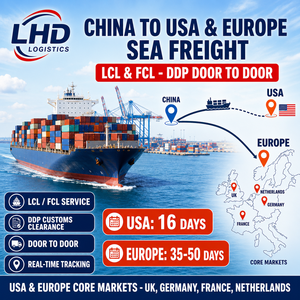
Priority Sea Freight & Fast-Clearance DDP Logistics from China Gateways to USA & UK
Get a Quote
Premium International Maritime Transport: Turnkey DDP Execution across G7 Economies
Get a Quote1. Enterprise Strengths & Compliance Resilience (E-E-A-T Architecture)
In modern global commerce, selecting an ocean freight manufacturer and exporting logistics partner goes far beyond evaluating base ocean freight rates per TEU (Twenty-foot Equivalent Unit). The global supply chain operates under high regulatory scrutiny, volatile fuel surcharges (IMO 2023 Low Sulfur Directives), and complex customs entry requirements. Building on four decades of logistics mastery through the legacy of Cordaro Shipping Co., our enterprise shipping architecture delivers verified regulatory protection and structural cost efficiency.
Our operational authority rests upon three core pillars of compliance excellence:
Licensed U.S. Customs Brokerage
Direct electronic interface with U.S. Customs and Border Protection (CBP) via the Automated Commercial Environment (ACE) system. We manage ISF 10+2 filings, entry summaries (CBP Form 7501), complex Harmonized Tariff Schedule (HTS) classifications, and anti-dumping/countervailing duty (AD/CVD) mitigations.
CTPAT Certified Partner
As a validated Customs Trade Partnership Against Terrorism partner, our cargo movement benefits from reduced CBP examination rates, front-of-the-line inspection privileges, and access to expedited Free and Secure Trade (FAST) lanes across major ports.
Dual-Coast Gateway Control
Headquartered in Staten Island, NY, with tactical offices in Lynbrook, NY, and Diamond Bar, CA, we maintain direct physical and digital command over the Port of NY & NJ, Port of Los Angeles, and Port of Long Beach, preventing costly demurrage and detention.
2. Macro Development Trends in Ocean Freight Forwarding (2025–2030)
The ocean freight industry is undergoing a structural transition driven by decarbonization mandates, artificial intelligence, and regional supply chain reconfiguration. Navigating maritime transport over the coming decade requires understanding five disruptive macro trends:
Decarbonization & EU ETS Compliance
The maritime sector is enforcing strict compliance with the International Maritime Organization's (IMO) Carbon Intensity Indicator (CII) and Energy Efficiency Existing Ship Index (EEXI). Additionally, the inclusion of maritime shipping in the European Union Emissions Trading System (EU ETS) requires importers to account for carbon allowance surcharges across European trade corridors.
IoT-Driven Smart Container Telemetry
Traditional vessel tracking is being replaced by container-level IoT sensors providing real-time telemetry on GPS location, internal ambient temperature, humidity, shock impact, and container door status. This infrastructure is essential for high-value cold chain logistics, pharmaceutical transport, and precision manufacturing components.
AI-Powered Predictive Berth Scheduling
Machine learning models now analyze port congestion indices, weather patterns, and terminal crane density to dynamically reroute ocean vessels and secure container drayage appointments days before vessel arrival, eliminating port storage charges.
| Technology / Trend | Traditional Freight Approach | Next-Gen Ocean Freight Architecture | Enterprise Impact |
|---|---|---|---|
| Carbon Tracking | Post-hoc estimation spread-sheet | Automated CO2e per-TEU audit report (IMO/EU ETS) | Complete ESG & Scope 3 compliance |
| Customs Filing | Manual entry processing post-departure | Automated pre-departure ISF 10+2 & ACE filing | Zero CBP customs hold risk |
| Tracking Accuracy | Milestone updates at ocean ports | Real-time IoT GPS + Telemetry streams | End-to-end inventory visibility |
| Route Optimization | Static single-lane ocean transit | Dynamic multi-port drayage & rail routing | 15% to 22% reduction in total transit times |
3. Strategic Procurement Framework for Enterprise Cargo Importers
Global procurement teams must transition from reactive spot-market booking to a structured, resilient ocean freight procurement model. In an era marked by geopolitical shifts, canal bottlenecks, and capacity shifts, procurement leaders should deploy the following strategies:
1. Incoterms 2020 Optimization (DDP vs. FOB/CIF Breakdown)
While many buyers default to FOB (Free on Board) to maintain routing control, procurement under DDP (Delivered Duty Paid) managed by an experienced international freight forwarder shifts the legal risk, duty calculation, customs audit liability, and inland transportation management onto professional logistics managers. This guarantees transparent, predictable landed costs prior to goods leaving the supplier's warehouse.
2. Demurrage & Detention Risk Mitigation Protocol
Port demurrage (fees assessed while the container sits inside the terminal) and detention (fees charged for holding equipment past free time) can quickly erode product profit margins. Strategic procurement mandates securing 10 to 14 days of combined free time at destination, coupled with automated terminal container tracking and dedicated drayage capacity commitments.
3. Hybrid FCL / LCL Cargo Allocation Strategy
Enterprise shippers often incur unnecessary costs by holding order fulfillment until a full container load (FCL 40ft HC) is populated. By integrating scheduled LCL (Less-than-Container Load) consolidation streams across key lanes (such as Ningbo/Shanghai to Genoa, or Shenzhen to Los Angeles), enterprises maintain continuous stock replenishment, lowering warehouse inventory holding costs while maintaining high supply chain agility.
Frequently Asked Procurement & Customs FAQs
Expert technical insights from licensed U.S. customs brokers and ocean freight operational directors.
Why is a Licensed U.S. Customs Broker critical for ocean freight importing?
While importers are legally permitted to file customs entries independently, commercial import shipments valued above $2,500 require formal entries supported by a customs bond, precise HTS classification, and full regulatory valuation. A licensed U.S. Customs Broker acts as the legal liaison between the importer and U.S. Customs and Border Protection (CBP), ensuring strict compliance with FDA, USDA, EPA, and CTPAT mandates, preventing costly port holds, cargo seizures, and severe administrative penalties.
What is the Importer Security Filing (ISF 10+2) and what happens if it is filed late?
The Importer Security Filing, commonly known as ISF 10+2, is a mandatory CBP regulation for all ocean freight destined for the United States. It requires 10 data elements from the importer (such as Manufacturer Name, Buyer, Importer of Record, Consignee, Stuffing Location) and 2 from the ocean carrier (Stow Plan and Container Status Messages). It must be transmitted to CBP at least 24 hours prior to the cargo being loaded onto the vessel at the foreign port. Failure to file, late filings, or inaccurate submissions trigger automatic CBP liquidated damages fines of $5,000 per violation up to a maximum of $10,000 per shipment.
How do I determine whether to ship via Full Container Load (FCL) or Less-Than-Container Load (LCL)?
The decision between FCL and LCL hinges on cargo volume, weight, transit urgency, and landed cost economics. FCL (utilizing 20' GP, 40' GP, or 40' HC containers) is the optimal choice when your cargo volume exceeds 15 cubic meters (CBM) or when shipping fragile, high-value goods that require dedicated container sealing from origin to destination. LCL consolidates your smaller shipments (from 1 CBM to 14 CBM) into a shared container, ensuring you pay strictly for the cubic space utilized. Our engineering team calculates exact breakeven points based on current ocean spot and contract rates.
What specific role does CTPAT certification play in securing supply chains?
CTPAT (Customs Trade Partnership Against Terrorism) is a voluntary, joint public-private supply chain security program led by U.S. CBP. Working with a CTPAT-certified freight forwarder and customs broker guarantees that your cargo is handled through validated, secure supply chain protocols. Benefit highlights include drastically lower CBP physical inspection rates (reductions of up to 50-80%), priority processing during random inspections, business continuity prioritizations during emergency port closures, and expedited inland drayage clearance.
What is included in a complete DDP (Delivered Duty Paid) ocean freight service?
A true DDP (Delivered Duty Paid) ocean shipping contract represents the maximum level of logistics integration. It includes origin export pickup, warehouse loading, export customs clearance, ocean shipping, destination port handling, customs brokerage, payment of all import duties and tariffs (including HTS duties and merchandise processing fees), and final-mile container drayage or truckload delivery directly to your destination warehouse. DDP provides enterprise buyers with absolute landed cost predictability.
How are demurrage and detention fees managed during peak port congestion?
Demurrage occurs when an ocean container remains inside the ocean terminal past the allowed free time (typically 4-5 days), while detention is charged when an empty container is retained past the free time outside the port. We mitigate these risks by continuously monitoring port vessel arrivals, pre-clearing customs entries prior to vessel berth, securing guaranteed drayage chassis capacity, and leveraging active coast-to-coast container yard facilities in New York, New Jersey, and California.
Transform Your Ocean Freight Logistics Efficiency Today
Partner with an established ocean freight manufacturer, export specialist, and licensed customs broker to secure competitive shipping rates, compliant fast-track clearances, and reliable door-to-door delivery.