Featured Air Freight & Multimodal Freight Portfolio
Direct chartering, consolidated air cargo, and door-to-door DDP logistics optimized for the Ghanaian trade ecosystem.
Shipping Agent Italy Sea Freight From China to Genoa Naples DDP Door to Door FCL LCL Cargo Forwarder Express Service
Inquire Now
Reliable DDP Sea Freight Forwarder From China To Worldwide | FCL Door-to-Door Shipping Agent For Amazon FBA Logistics
Inquire Now
Top Sea Freight Forwarder Agent Shipping DDP Door to Door Transport Maritime International China to Canada Usa Italy Germany UK
Inquire Now
Fast Delivery Logistics Forwarder 24-Hour Track Ocean Sea Freight Forwarder Transitaire Shipping Agent From China to USA by Sea
Inquire Now
Professional Freight Forwarder Sea International Shipping Company to Europe France FCL LCL Cheaper Ocean Freight
Inquire Now
LCL Express DDP Ocean Shipping Agent China to USA/Canada/UK/Europe/Australia Sea Freight Forwarder Logistics Service
Inquire Now
Cheapest Ddp Door to Door Services Sea Shipping Agent Freight Forwarder From China to Usa Uk France Transport Agent
Inquire Now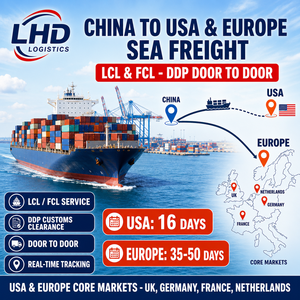
Best Competitive Fast Door to Door Ocean Shipping Agent DDP Delivery Freight Forwarder by Sea From China to USA UK
Inquire NowNavigating Air Freight Logistics in Ghana: Market Architecture & Strategic Sourcing
An operational guide for international procurement directors, supply chain managers, and Ghanaian importers utilizing Kotoka International Airport (ACC) as a West African commercial hub.
Ghana's position as the secretarial headquarters of the African Continental Free Trade Area (AfCFTA) has transformed its aviation infrastructure into a pivotal logistics artery for West Africa. As global manufacturers and regional distributors expand operations across Accra, Tema, Kumasi, and Takoradi, the demand for high-reliability air freight suppliers and manufacturers has grown exponentially. In high-value, time-critical sectors—such as gold extraction equipment, pharmaceutical cold chains, industrial spare parts, and agricultural exports—air freight provides the indispensable velocity required to maintain continuous production and supply chain resilience.
Navigating the Ghanaian air cargo landscape requires a granular understanding of local regulatory frameworks, aviation terminal operations, and customs clearing systems. Kotoka International Airport (IATA: ACC, ICAO: DGAA) serves as the primary gateway, housing dedicated air cargo terminals operated by Ghana Airports Company Limited (GACL) alongside specialized ground handling agents including Aviance Ghana, Swissport, and Ghana Cargo Center Limited (KACL). Succeeding in this market demands not merely freight movement, but seamless synchronization between international air carrier allocations, IATA-standard Unit Load Devices (ULDs), and the Ghana Revenue Authority’s (GRA) Integrated Customs Management System (ICUMS).
Air Freight Scenarios Across Ghana’s Key Industrial Sectors
Tailored supply chain strategies addressing the specific logistical demands of Ghanaian commerce and infrastructure projects.
Mining & Heavy Extraction Machinery
Ghana is Africa’s leading gold producer. Mining operations in Tarkwa, Obuasi, and Prestea rely heavily on charter and scheduled air cargo for emergency machinery parts, drill bits, and hydraulic components. Unplanned downtime costs mining firms thousands of dollars per hour; priority air freight direct to Kotoka with express tarmac dispatch provides immediate operational continuity.
Pharmaceuticals & Temperature-Controlled Biologics
Supplying Ghana’s growing healthcare facilities and regional distribution centers demands strict cold-chain compliance (2°C to 8°C and 15°C to 25°C). Utilizing temperature-monitored active ULD containers and rapid FDA Ghana clearing protocols at Kotoka Air Cargo Terminal ensures delicate vaccines, active pharmaceutical ingredients (APIs), and diagnostic kits retain 100% efficacy.
High-Value Agri-Export & Perishables
Ghana’s horticultural exporters shipping fresh pineapples, chili peppers, and processed cocoa derivatives to European and North American markets require precise outbound air charter allocations. Optimized air freight booking minimizes post-harvest loss, guarantees shelf-life integrity, and complies with stringent EU/USDA phytosanitary standards.
Telecom Infrastructure & Data Center Hardware
With Accra emerging as a digital technology hub in West Africa, telecommunication network expansion and data center construction require fast transit for sensitive fiber-optic components, server racks, and wireless transmission hardware. Air consolidation services reduce transit risks while ensuring capital projects meet tight launch schedules.
Offshore Oil & Gas Equipment (Takoradi Hub)
Supporting operations in the offshore Jubilee and TEN oilfields via Takoradi Airport and Accra air corridors requires specialized dangerous goods (DG) handling and express hot-shot air charters for critical valve assemblies, subsea pumps, and safety instrumentation.
Fast-Moving Consumer Goods & E-Commerce
Meeting consumer expectations in the Greater Accra metropolis demands responsive replenishment cycles. Cross-border e-commerce parcels and luxury consumer merchandise utilize consolidated DDP air freight, achieving rapid customs release and door-step distribution.
Ghanaian Aviation & Air Logistics Trends (2026-2030)
Key macroeconomic and technological shifts reshaping air cargo procurement, trade compliance, and regional distribution in West Africa.
1. Full Optimization of GRA’s ICUMS System
Ghana’s Integrated Customs Management System (ICUMS), developed by UNI-PASS, has completely digitized customs clearance at Kotoka International Airport. The system unifies Pre-Arrival Assessment Reporting (PAAR), duty calculation, tax exemptions, and clearance permits into a single electronic window. Forwarders and suppliers who pre-lodge digital Bill of Lading/Air Waybill manifests prior to flight touchdown achieve same-day cargo release, drastically lowering airport storage charges.
2. AfCFTA Expansion & Regional Cargo Feeder Networks
As the administrative host of AfCFTA, Accra is increasingly serving as an air cargo transshipment hub. Air freight suppliers are leveraging Kotoka Airport for multi-modal "Sea-Air" and "Air-Air" feeder logistics—receiving long-haul cargo flights from Asia, Europe, and North America, then distributing goods via regional air carriers to landlocked West African nations such as Burkina Faso, Mali, and Niger.
3. Modernization of Cold-Chain & Perishable Warehousing
Substantial private and public investments in the Kotoka Cargo Hub (including Swissport’s expanded warehouse footprint and KACL cold facilities) have introduced sensor-driven temperature tracking, automated vacuum cooling, and solar-powered backup generators. This infrastructure growth protects temperature-sensitive imports from thermal spikes during tarmac offloading.
4. Growth in Sea-Air Hybrid Logistics Solutions
To combat rising pure-air freight spot rates while avoiding standard ocean shipping delays into Tema Port, Ghanaian importers are adopting hybrid Sea-Air transport modes. Ocean freight containers arriving at major hubs are routed via express air freight for the final West African leg, providing a cost-effective compromise between velocity and landing expense.
Air Freight Logistics Options for Ghana Importers
Technical comparison of transport modes to assist procurement officers in balancing speed, payload size, and total landed cost.
| Transport Service Mode | Typical Transit Time (Origin to ACC) | Optimal Cargo Weight / Volume | ICUMS Clearance Complexity | Cost Profile & Landed Efficiency |
|---|---|---|---|---|
| Express Priority Air Freight | 1 - 3 Days | Under 500 kg (High Value / Critical) | Pre-arrival electronic manifest release | Premium rate / Highest speed for emergency spares |
| Consolidated Air Cargo (LAL) | 4 - 7 Days | 100 kg to 3,000 kg | Standard HAWB / MAWB entry filing | Highly cost-effective balance for planned imports |
| Full Air Cargo Charter | 24 - 48 Hours Direct | 5,000 kg to 100,000+ kg (Project Payload) | Specialized tarmac clearing & GRA escort | High fixed cost / Maximum capacity & absolute control |
| Sea-Air Hybrid Service | 10 - 14 Days | 1,000 kg to 10,000 kg | Combined Seaport / Airport clearance manifest | Saves 40-50% vs pure air; 2x faster than ocean |
| DDP Door-to-Door Air Courier | 3 - 5 Days | 1 kg to 200 kg | Integrated courier duty settlement | All-inclusive price; zero administrative burden |
Frequently Asked Questions: Air Freight Procurement in Ghana
Expert answers regarding customs duties, ICUMS procedures, volumetric calculations, and airport terminal guidelines.
How are import duties and taxes calculated for air cargo entering Ghana via Kotoka Airport?
Import duties in Ghana are processed through ICUMS based on the CIF (Cost, Insurance, and Freight) value of the shipment converted into Ghana Cedis (GHS) at the official GRA exchange rate. Standard import tariffs range from 0% to 20% depending on the Harmonized System (HS) Code. Additional statutory levies apply, including Value Added Tax (VAT), National Health Insurance Levy (NHIL), Ghana Education Trust Fund (GETFund), COVID-19 Health Recovery Levy, African Union (AU) Levy, and ECOWAS Trade Liberalization Scheme (ETLS) levies where applicable. Working with an experienced licensed broker guarantees accurate HS classification and duty optimization.
What is the standard chargeable weight formula for international air cargo?
Air freight rates are charged on whichever is greater: actual gross weight or volumetric (dimensional) weight. The international IATA volumetric weight calculation standard is: Volumetric Weight (kg) = [Length (cm) × Width (cm) × Height (cm)] / 6000. For express courier services, a divisor of 5000 is often applied. Optimizing protective packaging to reduce excess volume can significantly reduce total air freight expenses.
What documentation is required for seamless ICUMS customs clearance at Kotoka Airport?
To ensure zero clearance delays at the airport terminal, the importer or supplier must submit: (1) Air Waybill (MAWB / HAWB), (2) Detailed Commercial Invoice stating item descriptions and country of origin, (3) Packing List, (4) Tax Identification Number (TIN) / Ghana Card PIN of the importer, (5) Import Declaration Form (IDF) generated via ICUMS, and (6) Mandatory sector permits (e.g., Ghana FDA for drugs/food, Standards Authority certification, or Environmental Protection Agency permits for hazardous items).
Can hazardous materials or dangerous goods (DG) be air-shipped to Ghana?
Yes, provided the cargo strictly complies with IATA Dangerous Goods Regulations (DGR). This requires a certified Shipper’s Declaration for Dangerous Goods, specialized UN-rated protective packaging, correct hazard labeling, and prior approval from the civil aviation authority and destination airport handling agents. Certain reactive chemicals used in mining or lithium batteries must travel on dedicated cargo freighter aircraft rather than passenger flights.
How does Delivered Duty Paid (DDP) air freight benefit Ghanaian businesses?
DDP shipping transfers all freight costs, customs clearance fees, insurance, GRA duties, and final truck delivery responsibilities to the freight provider. For Ghanaian buyers, DDP eliminates surprise landing charges, prevents exchange rate fluctuations during tax assessment, and removes the operational headache of coordinating local customs brokers and airport drayage carriers.
Why Partner with Our Global Freight Infrastructure?
Combining over four decades of international freight forwarding pedigree with deep local market intelligence across West Africa.
Licensed & CTPAT-Certified Security
Operating with full regulatory credentials, including CTPAT certification and licensed customs brokerage status. Our global supply chain operations undergo rigorous audits to ensure physical and digital security across all trade lanes.
Direct Carrier Allocations & Charters
We hold block-space agreements (BSAs) with primary air carriers operating routes into Kotoka International Airport (ACC). Whether booking belly-capacity on scheduled flights or commissioning heavy-lift freighter charters, we guarantee space availability.
Multilingual Control Tower (24/7)
Our dedicated logistics specialists provide round-the-clock tracking, milestone updates, and proactive exception management in English, Spanish, and Italian—bridging communication between overseas manufacturers and Ghanaian consignees.
Optimize Your Air Freight Supply Chain to Ghana
Consult with our senior logistics architects today to establish fast, fully compliant, and cost-effective air cargo solutions customized for the Ghanaian market.