OEM Bonded Logistics & Freight Services
Direct operational infrastructure linking Costa Rican industrial Free Trade Zones with global supply chains across North America, Europe, and Asia.
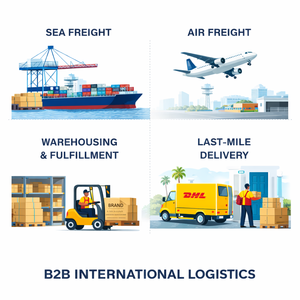
European DDP Door-to-Door LCL & Express Forwarding
- Transit Mode: Ocean LCL / Air Express
- Customs: Full Duty Paid Clearance
- Coverage: France, Germany, EU Hubs
1688 OEM Freight Consolidation & Direct LCL Rates
- Service: Source-to-Factory Freight
- Routing: China to Costa Rica / UK / EU
- Handling: Multi-Vendor Consolidation
FMC Licensed NVOCC Transshipment & DDP Solutions
- Compliance: FMC Bonded & Licensed
- Experience: 15+ Years Global Freight
- Transparency: Itemized Landed Quotes
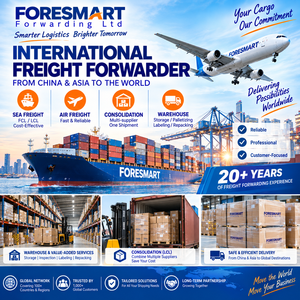
Multi-Port Industrial Cargo Consolidation & Forwarding
- Hubs: Shenzhen, Guangzhou, Ningbo
- Destinations: San José, Caldera, Limón
- Optimization: Container Space Maxing
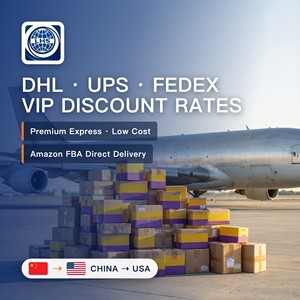
Depósito Fiscal Bonded Warehousing & Drayage Fleet
- Storage: Tax-Deferred Customs Storage
- Drayage: Dedicated Container Trucking
- Security: 24/7 CTPAT Compliant Premises
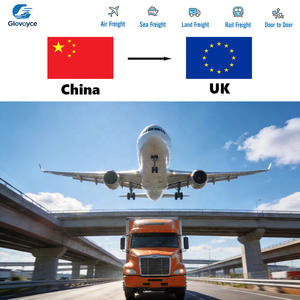
Multimodal Air-Truck DDP Express & Drop Shipping
- Speed: Accelerated Transit Windows
- Flexibility: Direct-to-Factory Drop Ship
- Fulfillment: Automated Pick & Pack
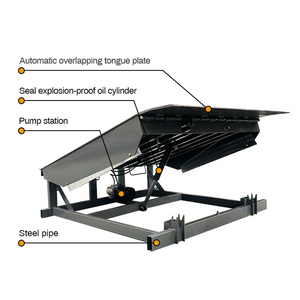
Industrial Bonded Logistics Dock Loading Infrastructure
- Equipment: Anti-Rust Hydraulic Docks
- Capacity: Heavy Duty OEM Container Cargo
- Standard: ISO High-Safety Shock Resistant
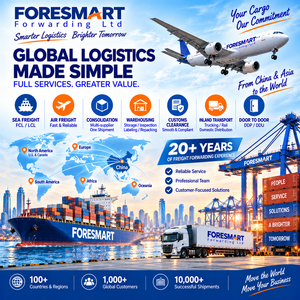
Comprehensive FCL/LCL Ocean Freight Consolidation
- Capacity: 20GP / 40GP / 40HQ / 45HQ
- Management: Origin-to-Destination Agent
- Tracking: Real-Time Milestone Monitoring
1. Navigating Costa Rica’s Strategic Bonded Logistics & Free Trade Zone Ecosystem
Over the past decade, Costa Rica has transformed into Central America’s preeminent advanced manufacturing and medical device hub. Spurred by the expansion of the Free Trade Zone Regime (Régimen de Zona Franca - RZF), global original equipment manufacturers (OEMs) in sectors such as life sciences, precision electronics, and clean-tech require highly sophisticated bonded logistics frameworks. A bonded logistics facility—operating as a tax-deferred Depósito Fiscal—allows foreign and domestic manufacturing suppliers to import raw materials, sub-assemblies, and specialized machinery without triggering immediate customs duties or import taxes (VAT).
For multinational brands leveraging nearshoring under CAFTA-DR (Dominican Republic-Central America Free Trade Agreement), seamless integration between overseas production centers (e.g., China, Southeast Asia, Europe) and Costa Rican manufacturing complexes like Coyol Free Zone, Global Park, and Ultrapark is vital. Utilizing custom OEM bonded logistics suppliers ensures that incoming raw components are cleared efficiently through Costa Rica's electronic customs platform, TICA (Tecnología de Información para el Control Aduanero), while maintaining zero tax leakage during value-added processing and subsequent re-exportation.
2. Integrated OEM Supply Chain Architecture: From Port Entry to Free Zone Assembly
Efficient bonded supply chains in Costa Rica rely on a synchronized multi-modal transport network. Raw materials and machinery enter predominantly via two major sea gateways—Port of Moín/Limón on the Caribbean coastline (handling transatlantic and US East Coast traffic) and Port of Caldera on the Pacific coast (handling transpacific ocean cargo from Asia). Airfreight movements are channeled through Juan Santamaría International Airport (SJO) in Alajuela.
| Costa Rica Entry Point | Primary Transport Mode | Key OEM Sectors Served | Bonded Transit Corridor |
|---|---|---|---|
| Port of Moín (Limón) | Ocean Container (FCL / LCL) | Agro-tech, Heavy Equipment, Consumer Goods | Route 32 to Central Valley Bonded Parks |
| Port of Caldera | Ocean Container (FCL Transpacific) | Electronics, Auto Components, Industrial Tools | Route 27 direct to Alajuela & Heredia FTZs |
| SJO Airport (Alajuela) | Air Cargo / Express Parcel | Medical Devices, Semiconductor Chips, Pharma | Inter-park Direct Bonded Drayage Trucking |
By partnering with a licensed customs broker and CTPAT-validated freight consolidator, international suppliers achieve total end-to-end visibility. From original bill of lading issuance to final delivery inside bounded FTZ park gates, bonded truck drayage prevents customs seals from being broken prematurely, completely safeguarding the duty-free status of the cargo.
Micro-Localized Application Scenarios in Costa Rica
Real-world operational implementations demonstrating how custom OEM bonded logistics drive supply chain efficiency across Costa Rica's industrial hubs.
Medical Device Clean-Room Supply (Coyol Free Zone)
Challenge: Importing high-precision medical-grade polymers and specialized diagnostic sensors from Asia into Alajuela without triggering import duties prior to sterilization and clean-room assembly.
Bonded Solution: Under bonded transit status, ocean containers arrive at Caldera, pass under customs seal via Route 27 directly to a bonded warehouse in Coyol. Duty assessment is deferred until the final finished medical product is exported directly to North American hospital buyers under CAFTA-DR preferential rates.
Microelectronics Nearshoring Hub (Heredia & Cartago)
Challenge: Managing high-frequency, low-volume air shipments of silicon wafers, micro-connectors, and PCB assemblies required for just-in-time (JIT) electronic unit manufacturing.
Bonded Solution: Pre-cleared air freight imported through SJO Airport is transferred immediately into an OEM bonded staging warehouse. Components are released in micro-batches into Heredia Free Zones synchronized with daily factory production schedules.
Agro-Industrial Cold Chain Bonded Storage (Limón Gateway)
Challenge: Maintaining strict climate-controlled environments for imported agricultural packaging material, specialized fertilizers, and heavy processing machinery destined for pineapple and coffee exporters.
Bonded Solution: Deployment of anti-rust hydraulic dock loading platforms and climate-controlled bonded storage near Moín. Heavy equipment and raw input goods remain stored duty-free until seasonal harvest peaks demand rapid dispatch to local processing plants.
Future Trends Reshaping Costa Rica Bonded Logistics (2025–2030)
1. Nearshoring 2.0 & CHIPS Act Spillover
With the United States designated Costa Rica as a strategic partner under the International Technology Security and Innovation (ITSI) Fund, semiconductor testing and packaging investments are soaring. Bonded logistics suppliers are rapidly upgrading facilities with ESD-safe storage and automated inventory tracking tailored for microelectronics OEMs.
2. Green Corridor Logistics & Carbon Neutrality
Costa Rica’s national mandate for decarbonization has prompted bonded logistics parks to introduce electric container drayage trucks, solar-powered bonded warehouses, and eco-certified packaging systems, enabling multinational tenants to meet strict Scope 3 emission targets.
3. Digitalization of Customs & TICA Interoperability
The integration of AI-driven predictive customs filing and real-time IoT tracking across the Caldera-San José-Limón transit corridors has cut average clearance times from 48 hours to under 4 hours for verified CTPAT and AEO (Authorized Economic Operator) shipments.
4. Expansion of Regional Distribution Centers (RDC)
Multinational companies are moving beyond standard assembly, transforming Costa Rican bonded warehouses into Central American distribution hubs. Tax-deferred status allows companies to hold inventory in San José before disaggregating fulfillment shipments to Panama, Guatemala, and Honduras.
Why Global OEMs Partner with Our Bonded Logistics Infrastructure
Navigating complex international shipping rules requires an experienced, highly credentialed operational partner. With over 40 years of specialized expertise in U.S. customs brokerage, FMC-licensed ocean freight forwarding, and Latin American cross-border logistics, our organization provides unmatched stability and security.
- FMC Licensed NVOCC & CTPAT Certified: Verified compliance against rigorous U.S. CBP and international supply chain security criteria, ensuring fast-track clearance and minimum inspection hold rates.
- End-to-End Landed Cost Transparency: Guaranteed zero-hidden-fee pricing structure spanning origin consolidation (Asia/Europe), ocean/air transport, customs bonds, local drayage, and FTZ warehouse positioning.
- High-Tech Infrastructure: Outfitted with heavy-duty anti-rust hydraulic dock platforms, climate-monitored storage bays, and automated pick-and-pack facilities built specifically for sensitive OEM cargo.
- Multilingual Operational Command: Dedicated account management team fluent in English, Spanish, and Italian to facilitate flawless communication between overseas component suppliers, local factory managers, and customs authorities.
Frequently Asked Questions: Costa Rica Bonded Logistics
Clear answers to crucial customs, bonded warehousing, and freight forwarding questions for buyers and logistics directors operating in Costa Rica.
What is the primary operational advantage of using a Depósito Fiscal (Bonded Warehouse) in Costa Rica?
A Depósito Fiscal allows businesses to store imported goods, machinery, and raw assembly components on Costa Rican soil without paying customs duties or VAT (Value Added Tax) up front. Taxes are deferred until goods are officially entered into the local economy. If goods are processed in a Free Trade Zone and exported to foreign markets, local import tariffs are completely waived.
How does the CAFTA-DR agreement impact OEM shipments passing through Costa Rica?
Under CAFTA-DR, qualifying manufactured products that meet regional value content (RVC) rules enjoy duty-free or reduced-tariff access when imported into the United States or participating Central American countries. Bonded logistics providers help OEMs strictly document origin traceability during raw material staging to guarantee CAFTA-DR tariff exemption compliance upon re-export.
What documentation is required to transfer ocean freight from Port of Caldera to a Free Trade Zone?
The transfer requires a Master Bill of Lading (MBL) consigned to the customs broker or bonded carrier, a Commercial Invoice, a detailed Packing List, and an electronic customs transit declaration registered in the TICA system (DTA - Declaración de Tránsito Aduanero). The container must remain sealed until authorized bonded transport delivers it to the FTZ destination.
Should OEM suppliers choose FCL or LCL consolidation for shipments originating in Asia?
Full Container Load (FCL 20GP/40HQ) is recommended for high-volume raw materials due to faster transit, lower per-unit cost, and minimal handling. However, for high-value components or JIT production replenishment, Less than Container Load (LCL) or Air Freight combined with bonded origin consolidation is optimal, allowing suppliers to pay only for the volume utilized while maintaining continuous supply lines.
What is ISF 10+2 and why does it matter for Costa Rica to US cargo transshipment?
If cargo assembled in Costa Rica is shipped to or transits through a U.S. port, U.S. Customs and Border Protection requires an Importer Security Filing (ISF 10+2) to be submitted at least 24 hours prior to vessel loading at the port of origin (e.g. Limón or Caldera). Failure to file accurately can result in fines up to USD $5,000 per violation and major port delays.
Optimize Your Costa Rica Bonded Supply Chain Today
Connect directly with our senior customs brokers and logistics engineers to build a resilient, tax-optimized OEM freight solution tailored to your operational requirements.
Get a Quote