Specialized New Zealand Customs Clearance & Freight Products
Precision-engineered logistics solutions for seamlessly clearing goods through Auckland, Tauranga, Lyttelton, and CentrePort Wellington with total regulatory compliance.
DDP Ocean Freight & Customs Entry Clearance
Reliable FCL & LCL Sea Freight Clearance
Licensed Customs Brokerage & HTS Advisory
Express Air Cargo & Priority Border Clearance
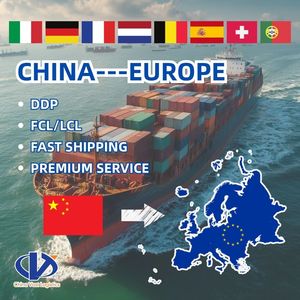
MPI Biosecurity & Quarantine Clearance
LCL Consolidated Cargo & Deconsolidation
Turnkey Door-to-Door Freight & Landed Cost Control
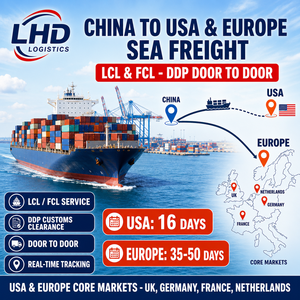
Port Drayage & Container Terminal Haulage
Strategic Architecture of New Zealand Customs Clearance & Regulatory Framework
Importing commercial merchandise into New Zealand requires navigating one of the world’s most stringent and technologically advanced border management systems. Governed primarily by the Customs and Excise Act 2018 and overseen by the New Zealand Customs Service (NZCS) in conjunction with the Ministry for Primary Industries (MPI), achieving seamless border velocity demands a highly structured, error-free compliance architecture.
As a specialized manufacturer and global supply partner dedicated to the New Zealand trade corridor, our customs brokerage operational model centers around direct integration with the Trade Single Window (TSW). TSW acts as the single electronic gateway jointly operated by Customs and MPI, allowing for concurrent assessment of tariff classifications, valuation declarations, and biosecurity hazard profiles before your freight touches a Kiwi port.
Information Gain Insight: Unlike generic global markets, New Zealand enforces dual border enforcement where biosecurity holds by MPI pose a significantly higher financial risk than fiscal tariff disputes. Pre-lodgement of electronic entries 5 to 7 days prior to vessel arrival at Port of Tauranga or Ports of Auckland eliminates up to 94% of unexpected quay storage charges.
1. The Dual-Agency Border Protocol: NZCS vs. MPI
Commercial shipments exceeding NZD $1,000 require a formal Import Entry Clearance declaration. Customs collects Import Duty and the 15% Goods and Services Tax (GST), while concurrently validating preferential treatment under established Free Trade Agreements (such as the China-NZ FTA, CPTPP, or UK-NZ FTA). Simultaneously, MPI evaluates the cargo under specific Import Health Standards (IHS) to guard against ecological vectors, requiring meticulous cleanliness verification and timber packaging declarations compliant with ISPM 15 standards.
Localized Application Scenarios Across Primary New Zealand Sectors
Understanding regional commercial dynamics within New Zealand allows our entry clearance services to be customized for specific industry verticals. Below are the primary application scenarios engineered to streamline trade throughput:
1. High-Tech Manufacturing & Industrial Equipment
Importing heavy industrial machinery into regions like Canterbury or Waikato requires exact HTS sub-heading classification to qualify for Tariff Concessions. Our team files precise Concession Requests to legally bypass standard 5% import duties on machinery with no local New Zealand alternative.
2. Retail FMCG & E-Commerce Fulfillment
For high-volume consumer shipments arriving at Auckland distribution centers, we implement automated batch-lodgement through TSW. This ensures rapid GST calculation, immediate release from Customs Controlled Areas (CCA), and rapid courier onboarding for national delivery.
3. Agri-Tech & Renewable Infrastructure Projects
Infrastructure project cargo moving through CentrePort Wellington or Lyttelton Port requires strict MPI biosecurity clearance. We oversee pre-shipment heat treatment certifications and BMSB (Brown Marmorated Stink Bug) compliance docs for off-shore origin verification.
4. Automotive Parts & Aftermarket Logistics
Automotive supply chains require rapid clearance of specialized components. By utilizing pre-approved Client Codes and Supplier Codes within TSW, we minimize hold rates and guarantee predictable transit windows to automotive assembly and service hubs across the North & South Islands.
Future Trends: The Evolution of New Zealand Trade & Border Controls (2024–2030)
As international supply chains shift toward real-time transparency and zero-emission goals, the New Zealand border environment is undergoing systematic digital and regulatory transformation. Importers and overseas suppliers must align with three macro trends defining the future of Kiwi customs clearance:
1. AI-Driven Automated Border Risk Profiling
The NZCS and MPI are progressively implementing advanced machine learning models into the Trade Single Window system. Future entry lodgements will experience real-time algorithmic document audits. Discrepancies between commercial invoice descriptions, packing lists, and declared Harmonized System codes will automatically trigger physical inspections, rendering manual workarounds obsolete.
2. Expansion of Seasonal Biosecurity (BMSB) Protocols
Due to shifting global climate patterns, MPI is expanding its seasonal Brown Marmorated Stink Bug (BMSB) measures to encompass additional origin countries and broader commodity lists. Future import clearance mandates will require offshore treatment verification to be cryptographically validated prior to vessel departure, preventing expensive vessel turning-away events at NZ waters.
3. Carbon Border Accounting & Green Supply Chain Traceability
New Zealand’s commitment to net-zero carbon emissions by 2050 is driving the inclusion of scope 3 transport emissions auditing into border documentation. Progressive Kiwi buyers are requesting detailed environmental profiles alongside standard customs entry certificates. Our forward-looking customs brokerage framework integrates carbon expenditure reporting into standard shipping documentation.
Frequently Asked Questions: Purchasing & Entry Clearance in New Zealand
Clear, direct solutions to common regulatory and financial queries raised by procurement specialists and international shippers trading with New Zealand:
Our Corporate Infrastructure & Competitive Technical Advantage
Backed by over four decades of global logistics mastery, our enterprise operational framework provides unmatched security, compliance, and velocity for cargo entering New Zealand ports:
Direct Electronic TSW Connectivity
Our customs lodgement systems maintain a direct EDI bridge with New Zealand’s Joint Border Management System (JBMS), guaranteeing rapid data transmission and real-time clearance status updates.
Dedicated Licensed Customs Brokers
Every declaration is audited by senior certified customs specialists with deep expertise in HTS classification, valuation laws, and biosecurity protocols, preventing compliance penalties.
End-to-End Landed Cost Transparency
We eliminate surprise hidden fees by providing accurate pre-shipment landed cost calculations—including duty, GST, port fees, and drayage—enabling precise budgeting for Kiwi buyers.
Robust Global Logistics Network
Integrating ocean freight forwarding, express air cargo, and port container drayage under a single managed SLA, we ensure accountability from factory floor to warehouse door.
Optimize Your Customs Clearance in New Zealand Today
Partner with a trusted leader in global freight forwarding, entry clearance manufacturing, and border compliance. Secure reliable clearance times, eliminate unexpected port fees, and protect your supply chain velocity.