Featured Global Shipping & Logistics Services
Explore our core international freight forwarding options, tailored for seamless DDP, FCL, and LCL transit from major Asian and European industrial centers to North American destinations.
Shipping Agent Italy Sea Freight From China to Genoa Naples DDP Door to Door FCL LCL Cargo Forwarder Express Service
Send an Inquiry
Reliable DDP Sea Freight Forwarder From China To Worldwide | FCL Door-to-Door Shipping Agent For Amazon FBA Logistics
Send an Inquiry
Top Sea Freight Forwarder Agent Shipping DDP Door to Door Transport Maritime International China to Canada Usa Italy Germany UK
Send an Inquiry
Fast Delivery Logistics Forwarder 24-Hour Track Ocean Sea Freight Forwarder Transitaire Shipping Agent From China to USA by Sea
Send an Inquiry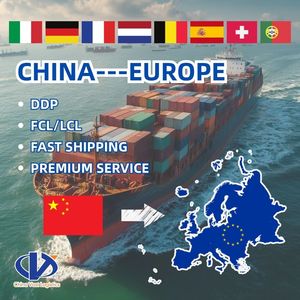
Professional Freight Forwarder Sea International Shipping Company to Europe France FCL LCL Cheaper Ocean Freight
Send an Inquiry
LCL Express DDP Ocean Shipping Agent China to USA/Canada/UK/Europe/Australia Sea Freight Forwarder Logistics Service
Send an Inquiry
Cheapest Ddp Door to Door Services Sea Shipping Agent Freight Forwarder From China to Usa Uk France Transport Agent
Send an Inquiry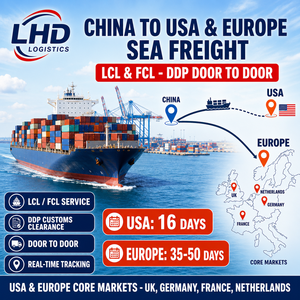
Best Competitive Fast Door to Door Ocean Shipping Agent DDP Delivery Freight Forwarder by Sea From China to USA UK
Send an InquiryArchitecting End-to-End Factory-to-Door Logistics for North America
In modern global trade, international freight forwarding is no longer merely moving cargo from Port A to Port B. It requires an integrated supply chain architecture connecting overseas manufacturing plants directly with U.S. commercial distribution centers.
Factory-Direct Integration
We work directly with overseas production floors to synchronize cargo ready dates (CRD) with vessel schedules, eliminating unnecessary storage costs at export origin hubs.
- Origin cargo inspection & staging
- Multi-factory LCL consolidation
- Export clearance pre-audit
Trans-Pacific & Trans-Atlantic Lanes
Leveraging direct FMC service contracts with tier-one ocean alliances to secure space allocations, competitive spot/contract rates, and priority equipment access during peak season surges.
- Fixed-day vessel departures
- Guaranteed space contracts
- Direct fast-craft services (11-14 day transit)
In-House U.S. Customs Brokerage
Operating with licensed U.S. Customs Brokers who handle electronic entry filings, HTS code verification, Section 301 duty calculations, and partner government agency (PGA) releases.
- Automated ACE pre-filing
- Anti-Dumping / Countervailing audit
- Remote Location Filing (RLF) nationwide
Localized U.S. Port Application Scenarios & Supply Chain Nodes
Navigating North American logistics corridors requires dedicated operational expertise tailored to specific U.S. entry points, inland intermodal networks, and regional warehouse clusters.
West Coast Gateway (LA / Long Beach / Oakland)
Serving as the primary trans-Pacific conduit for Asian industrial outputs, high-tech components, e-commerce goods, and consumer durables bound for West Coast regional distribution hubs.
- Off-dock drayage & peel-pile optimization
- On-dock rail dispatch to Midwest ramps
- Over-weight container chassis availability
- Fast transloading in Colton & Inland Empire
East Coast Hubs (Port of NY/NJ, Savannah, Norfolk)
Critical entry points for transatlantic trade lanes from Europe, Southeast Asian ocean routes via Suez, and Latin American maritime traffic directly into dense East Coast consumer markets.
- Staten Island & Lynbrook operational coverage
- Direct pier pickup & warehouse cross-docking
- Fast-track bonded trucking to Tri-State buyers
- Cold-chain reefer monitoring at terminal gates
Inland Point Intermodal (Chicago, Dallas, Atlanta)
Connecting coastal ocean terminals to America’s industrial heartland via Class-1 rail providers (BNSF, UP, CSX, NS), minimizing long-haul highway trucking friction and transit costs.
- IPI Bill of Lading single-document issuance
- Ramp drayage & destination free-time audits
- Final-mile liftgate & white-glove facility delivery
- Demurrage clock management at inland ramps
Navigating U.S. Import Regulations & Modern Trade Dynamics
Staying ahead of regulatory shifts, tariff adjustments, and technological advancements is essential for maintaining resilient, cost-effective import pipelines into the United States.
Section 301 Tariff & HTS Code Audits
With U.S. trade policy imposing specialized tariffs on foreign manufactured goods, precise Harmonized Tariff Schedule (HTS) classification prevents overpayment of duties and avoids CBP penalty notices.
Mandatory ISF 10+2 Enforcement
U.S. Customs and Border Protection requires the Importer Security Filing (ISF) to be transmitted 24 hours prior to foreign vessel loading. Our automated protocols safeguard importers from $5,000 liquidated damage claims.
CTPAT Security & Priority Queuing
As a validated CTPAT partner company, we offer U.S. importers significantly reduced CBP inspection rates, front-of-line examination handling, and accelerated release during port congestion events.
| Logistics Capability Parameter | Traditional Freight Forwarders | Cordaro Global Factory Supply Chain Solution |
|---|---|---|
| U.S. Customs Filing Authority | Outsourced to 3rd-party brokers (delays & markup) | Direct Licensed U.S. Customs Broker in-house |
| ISF 10+2 Filing Compliance | Manual entry (risk of $5,000 late penalties) | Automated pre-departure clearance system |
| Security Certification | Standard commercial handling | Validated CTPAT Supply Chain Security Partner |
| U.S. Gateway Support | Single-coast regional representation | Dual-Coast Command (NY/NJ East & LA/LB West) |
| Language & Multilingual Service | English-only call desk | Multilingual Professionals (English, Spanish, Italian) |
Why U.S. Importers Trust Cordaro Shipping Co.
For over four decades, Cordaro Shipping Co., Inc. has bridged the gap between foreign manufacturing entities and domestic U.S. trade networks, prioritizing accountability, regulatory compliance, and client profitability.
40+ Years Family-Owned Legacy
Founded on values of integrity and personal accountability, our company has navigated through decades of global trade evolution, containerization trends, and regulatory overhauls without losing our dedicated customer focus.
Bi-Coastal Operational Offices
With strategic office installations in Staten Island (NY), Lynbrook (NY), and Diamond Bar (CA), our logistics coordinators manage active vessel arrivals, port drayage, and customs releases in real-time on both oceanic seaboards.
Multilingual Communication Desk
Trade is inherently global. Our operational staff communicates fluently in English, Spanish, and Italian, eliminating international communication friction between overseas factories and U.S. receiving teams.
Frequently Asked Questions by U.S. Importers
Clear, authoritative insights to common questions encountered by global buyers, overseas factories, and procurement managers importing cargo into the United States.
Q1: Do I need a licensed U.S. customs broker to import goods into the United States?
While importers may legally file their own entries, commercial shipments valued over USD 2,500 generally require a formal entry supported by an official customs bond, accurate HTS classification, valuation, and duty payment. A licensed U.S. customs broker prepares and submits these electronic filings directly to CBP on your behalf, minimizing the risk of cargo holds, inspections, and costly demurrage fees.
Q2: What is ISF (10+2) and when must it be filed for ocean cargo?
The Importer Security Filing (ISF, commonly known as 10+2) is a mandatory U.S. Customs requirement for all maritime container shipments entering the United States. It must be successfully transmitted to CBP at least 24 hours prior to the cargo being loaded onto the vessel at the foreign port of export. Non-compliance or late filing can result in liquidated damages of $5,000 per violation.
Q3: Should I select FCL (Full Container Load) or LCL (Less than Container Load)?
Full Container Load (FCL) is optimal when your freight volume fills most of a 20-foot or 40-foot ocean container, offering faster ocean transit, reduced port handling, and lower risk of cargo damage. Less than Container Load (LCL) consolidates your shipment with other cargo, allowing you to pay exclusively for the cubic space (CBM) you utilize. Our team provides side-by-side cost analyses to determine the best choice based on volume, weight, and timeline.
Q4: Which U.S. customs gateways and ports does Cordaro Shipping cover?
Our East Coast headquarters in Staten Island and office in Lynbrook support cargo moving through the Port of New York and New Jersey as well as major East Coast air freight gateways (JFK, EWR). Our Diamond Bar office in California manages West Coast cargo moving through the Ports of Los Angeles and Long Beach. Through our global partner network, we coordinate shipments across 100+ countries nationwide.
Q5: What advantage does shipping with a CTPAT-certified company provide?
CTPAT (Customs Trade Partnership Against Terrorism) is a voluntary supply chain security program led by U.S. Customs and Border Protection. As a CTPAT-certified partner, Cordaro Shipping has satisfied rigorous security standards, resulting in significantly lower CBP examination rates, priority processing during inspections, and expedited cargo movement through U.S. ports of entry.
Q6: How can we prevent unexpected port demurrage and detention charges?
Demurrage and detention fees occur when containers remain at port terminals or warehouses past their permitted free time. We mitigate these costs by executing pre-clearance filings before vessel arrival, pre-ordering drayage chassis, monitoring container free time in real-time, and arranging fast off-dock drayage immediately upon vessel discharge.
Streamline Your International Supply Chain to the United States
Partner with an FMC-licensed NVOCC and licensed U.S. Customs Brokerage with over 40 years of proven trade compliance. Get competitive ocean freight rates, seamless DDP door-to-door logistics, and zero-headache customs releases.
Send an Inquiry