
Export Solutions & Consolidation Products
Featured Transpacific Ocean Freight & DDP Services
High-frequency Less Than Container Load (LCL) consolidation lanes, Amazon FBA door-to-door delivery, and licensed customs clearance tailored for Seattle importers.
Reliable DDP Sea Freight Forwarder From China To Worldwide | FCL Door-to-Door Shipping Agent For Amazon FBA Logistics
Top Sea Freight Forwarder Agent Shipping DDP Door to Door Transport Maritime International China to Canada Usa Italy Germany UK
Fast Delivery Logistics Forwarder 24-Hour Track Ocean Sea Freight Forwarder Transitaire Shipping Agent From China to USA by Sea
Professional Freight Forwarder Sea International Shipping Company to Europe France FCL LCL Cheaper Ocean Freight
LCL Express DDP Ocean Shipping Agent China to USA/Canada/UK/Europe/Australia Sea Freight Forwarder Logistics Service
Cheapest Ddp Door to Door Services Sea Shipping Agent Freight Forwarder From China to Usa Uk France Transport Agent
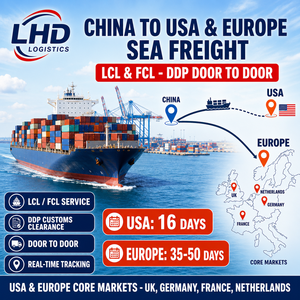
Best Competitive Fast Door to Door Ocean Shipping Agent DDP Delivery Freight Forwarder by Sea From China to USA UK
Strategic Supply Chain Analysis
Navigating Transpacific LCL Consolidation to the Seattle Gateway
An executive overview of Pacific Northwest port infrastructure, container freight station (CFS) economics, and origin factory-to-destination warehouse optimization.
Direct Gateway Dynamics: Terminal 5 & Terminal 18
The Northwest Seaport Alliance (NWSA)—encompassing the ports of Seattle and Tacoma—serves as the primary marine conduit for Pacific Northwest trade. Importers operating within the Puget Sound basin leverage direct ocean loops from major Asian manufacturing hubs (Shanghai, Ningbo, Shenzhen, Yantian, and Qingdao). Shipping Less Than Container Load (LCL) to Seattle avoids the severe congestion often encountered at Southern California gateways (Los Angeles/Long Beach), providing faster berth-to-gate turnaround and immediate rail/drayage access.
Origin Factory Consolidation & CFS Operations
For mid-sized enterprises and growing e-commerce brands, shipping full 20ft or 40ft containers is not always economically feasible or aligned with lean inventory management. Our factory network across Guangdong, Zhejiang, and Jiangsu provinces consolidates cargo at specialized Container Freight Stations (CFS). Cargo is measured, palletized, shrink-wrapped, and stuffed into shared ocean containers under strict load-density protocols, ensuring zero volumetric waste and minimal cargo shift during oceanic transit.
Single-Accountability Licensed Customs Brokerage
Navigating U.S. Customs and Border Protection (CBP) demands precise Harmonized Tariff Schedule (HTS) classification, accurate valuation, and timely Importer Security Filing (ISF 10+2). Cordaro Shipping Co., Inc.—a family-owned, licensed U.S. Customs Broker with over 40 years of hands-on experience—integrates clearance directly with your LCL movement. This eliminates hand-off friction between foreign forwarders and local brokers, dramatically lowering the risk of CBP holds, VACIS exams, or liquidated damages.
| Shipment Profile Metric | Less Than Container Load (LCL) | Full Container Load (FCL) | Strategic Advantage for Seattle Market |
|---|---|---|---|
| Economic Breakeven Volume | 1 CBM to 15 CBM | 15 CBM to 68 CBM | Optimizes working capital; importers pay strictly for utilized volume (CBM/KG). |
| Transit Duration (China Main Ports → Seattle) | 14 – 18 Ocean Days (+2 Days De-consolidation) | 12 – 15 Ocean Days (Direct Discharge) | Seattle ocean lanes save 4-7 days compared to overland transload from SoCal. |
| Warehouse & Storage Strategy | Direct CFS Transload to Kent Valley Warehouses | Direct Pier Drayage to Off-Dock Yard | Rapid de-consolidation at Seattle/Tacoma CFS eliminates costly container demurrage. |
| Customs Entry Complexity | Individual HBL Clearance via Broker ACE System | Single Master BL Entry Filing | Cordaro's CTPAT certification expedites release of individual house bills of lading. |
| Amazon FBA / Regional Fulfillment Fit | High (BFI4, BFI5, GEG1 Direct Inbound) | Moderate (Requires Large Inventory Spikes) | Allows scheduled, smaller replenishments directly to Pacific Northwest fulfillment centers. |
Regional Commercial Applications
Micro-Localized Applications Across Greater Seattle Industries
Tailored ocean freight consolidation solutions supporting the unique supply chain architectures of Pacific Northwest commercial ecosystems.
Tech, Hardware & Component Logistics (Redmond & Bellevue Corridor)
The Eastside tech corridor demands high-precision, low-latency supply chains for specialized electronics, server racks, IoT sensors, and prototype hardware components. Manufacturing factories in Shenzhen and Suzhou consolidated under our LCL service arrive at Seattle ports with pre-cleared customs documentation. By utilizing strict anti-static palletization and shock-isolated handling at our CFS facilities, we ensure high-value hardware reaches R&D campuses without transit-induced calibration failures.
- ✓ Climate-monitored & ESD-safe origin stuffing
- ✓ Rapid customs release via pre-filed ISF 10+2
- ✓ Last-mile liftgate white-glove delivery in Bellevue/Redmond
Amazon FBA & Cross-Border E-Commerce (Kent Valley Hubs)
Seattle is the epicenter of world e-commerce. Local Amazon sellers, multi-channel merchants, and regional distributors rely on consistent inventory flow into Kent, Renton, and Sumner distribution hubs. Our DDP (Delivered Duty Paid) LCL freight model streamlines ocean carriage, export documentation, US import clearance, and final appointment scheduling directly into Amazon FBA centers (including BFI4, BFI5, and GEG1). Sellers eliminate stockouts while maintaining healthy cash flow by shipping frequent 2–5 CBM batches rather than waiting for full container fills.
- ✓ Automated FBA carton & pallet labeling compliance
- ✓ All-inclusive landed cost calculation (Freight + Duty + Taxes)
- ✓ Preferred carrier scheduling into PNW fulfillment nodes
Industrial Machinery & Sub-assemblies (Renton & Everett)
Pacific Northwest industrial operations—ranging from aerospace sub-suppliers to marine engineering firms—depend on imported precision castings, aluminum extrusions, and heavy tooling components. Our LCL service handles dense, high-weight cargo by utilizing heavy-duty wooden crate reinforcement and custom blocking/bracing. Importers benefit from precise HTS tariff classification, Section 301 duty auditing, and seamless drayage from Seattle terminals directly to manufacturing floors.
- ✓ ISPM-15 compliant heat-treated wooden crating
- ✓ Specialized flatboard & heavy-rigging drayage equipment
- ✓ Expert tariff classification for machinery & metals
Macro & Regional Logistics Trends
Key Industry Shifts Shaping Seattle’s Freight Landscape
How green maritime corridors, automated customs compliance, and near-dock warehousing are redefining Transpacific trade execution.
01
Green Maritime Corridors
The Port of Seattle and the NWSA are leading decarbonization initiatives along Pacific shipping routes. Carriers deploying dual-fuel LNG and methanol-powered vessels receive berthing priority. Importers partnering with environmental-compliant freight forwarders gain verifiable carbon offset reporting for corporate Scope 3 sustainability compliance.
02
Kent Valley Transloading
Escalating regional industrial real estate costs have driven a massive shift toward off-dock transloading. Consolidating small LCL lots into localized cross-dock facilities reduces container retention time at marine terminals, completely bypassing ocean carrier detention penalties and demurrage exposure.
03
Strict Section 301 Auditing
With U.S. customs scrutiny at historic highs, proper tariff classification for imports from China is mandatory. Advanced automated tariff auditing allows importers to explore legitimate tariff exclusion options, binding rulings, and duty drawback mechanisms prior to cargo departure.
04
Digital Visibility Platforms
Modern Seattle buyers demand real-time transparency. Sensor-driven container tracking, automated milestone alerts (AMS Transmission, Vessel Departure, Port Arrival, Customs Clearance, Gate-Out), and digital POD (Proof of Delivery) are now baseline requirements for competitive freight operations.
Expert Operational Insight for Seattle Importers: Ocean freight rate volatility makes rigid annual logistics planning obsolete. Leveraging dynamic LCL consolidation allows businesses to align inventory replenishment directly with real-time consumer demand in the Pacific Northwest—reducing holding costs by up to 28% compared to traditional bulk FCL strategies.
Why Partner With Us
The Cordaro Advantage: Heritage, Compliance & Global Reach
Combining the dedicated accountability of a family-owned enterprise with robust global carrier networks and U.S. Customs clearance authority.
40+ Years of U.S. Customs Experience
Founded on principles of integrity and personal accountability, Cordaro Shipping Co., Inc. has navigated evolving U.S. trade regulations for over four decades. Our licensed customs brokers directly manage entry filings, eliminating third-party broker markups and ensuring regulatory compliance with U.S. Customs and Border Protection (CBP), FDA, USDA, and EPA rules.
CTPAT Certified Supply Chain Security
As a validated CTPAT (Customs Trade Partnership Against Terrorism) partner, our supply chain processes meet stringent U.S. federal security standards. CTPAT status affords our clients tangible benefits, including significantly reduced inspection rates at the Port of Seattle, priority processing during security alerts, and expedited cargo movement through port gates.
Multilingual Logistics Desk & 24/7 Support
Global logistics operates across multiple time zones. Our specialized logistics desks communicate fluently in English, Spanish, and Italian, facilitating clear, error-free coordination between overseas factories, ocean carriers, and domestic logistics managers. Real human support is accessible 24/7 to resolve critical operational questions instantly.
Bicoastal Gateway Infrastructure
With operational headquarters in Staten Island and Lynbrook, NY, alongside dedicated West Coast operations in Diamond Bar, CA, and direct drayage partner networks in Seattle/Tacoma, we provide comprehensive coverage across every major U.S. port of entry. We seamlessly manage ocean imports, air freight exports, and nationwide container drayage.
Transparent DDP & Landed Cost Certainty
Unpredictable ancillary fees—such as terminal handling charges (THC), pier pass fees, fuel surcharges, and customs entry fees—can erode profit margins. Our DDP (Delivered Duty Paid) ocean freight service locks in predictable pricing upfront, consolidating ocean transit, customs duties, taxes, and final drayage into a clear, all-inclusive invoice.
Multimodal Sea-Air Hybrid Routing
When factory delays threaten delivery deadlines but full air freight is cost-prohibitive, we deploy customized sea-air hybrid solutions. Cargo is moved via fast ocean vessel to Pacific Coast gateways and transferred to domestic expedited air or express trucking networks, balancing speed and cost control.
Local Importer Frequently Asked Questions
Seattle Market Technical & Procurement FAQ
Addressing common operational, regulatory, and financial questions from Pacific Northwest buyers and overseas suppliers.
What is the typical ocean transit time for an LCL shipment from China factory origins to the Port of Seattle?
Direct ocean transit from primary China ports (Ningbo, Shanghai, Shenzhen) to the Port of Seattle (Terminal 5 / Terminal 18) typically takes 12 to 16 days depending on vessel routing. Container de-consolidation at the local Seattle Container Freight Station (CFS) requires an additional 24 to 48 hours. Once cleared by U.S. Customs, last-mile delivery to warehouses across Seattle, Bellevue, or Kent occurs within 1 to 2 business days.
How are LCL ocean freight rates calculated for cargo bound for Washington State?
LCL shipping is calculated on a "Weight or Measurement" (W/M) basis, using Revenue Tons (RT). The standard volumetric conversion ratio for ocean freight is 1 CBM (Cubic Meter) = 1,000 KG (2,204.6 lbs). You are billed whichever total is greater. Charges include the origin CFS consolidation fee, ocean freight carriage, destination CFS handling, U.S. Customs clearance, and local drayage/delivery.
What are the critical compliance rules regarding ISF (10+2) filings for LCL cargo entering Seattle?
The Importer Security Filing (ISF 10+2) must be successfully submitted to U.S. Customs and Border Protection (CBP) at least 24 hours before the vessel loads at the foreign port of origin. For LCL shipments, accurate House Bill of Lading (HBL) numbers are mandatory. Failure to file, late filing, or inaccurate data can result in automatic CBP fines of USD $5,000 per violation and immediate cargo holds upon arrival in Seattle.
Do I need a formal U.S. Customs Bond to import LCL freight into the Pacific Northwest?
Yes. For commercial imports valued over USD $2,500 (or any shipment subject to partner government agency oversight such as FDA, EPA, or USDA), CBP requires a customs bond. Importers can utilize a Continuous Customs Bond (ideal for multiple shipments per year) or a Single Entry Bond (SEB). Cordaro Shipping Co., Inc. can instantly issue customs bonds on your behalf to guarantee seamless clearance.
How does Cordaro Shipping handle DDP (Delivered Duty Paid) shipments to Amazon FBA warehouses in Washington State?
Our DDP service manages the complete supply chain from factory floor pick-up to Amazon warehouse intake. We handle origin consolidation, ocean transport, ISF submission, U.S. Customs entry, duty/tax payment, and final delivery via Amazon-partnered carrier truckload or LTL. We ensure full adherence to Amazon FBA labeling, palletization, and appointment booking criteria (serving hubs like BFI4 in Kent, BFI5, and GEG1).
What is the advantage of choosing CTPAT-certified logistics partners for Seattle imports?
CTPAT (Customs Trade Partnership Against Terrorism) certification indicates that your logistics provider has been thoroughly audited and validated by U.S. Customs. CTPAT partners experience significantly lower physical examination rates, priority placement in customs inspection queues, faster release times, and access to dedicated CBP threat liaison officers during supply chain disruptions.
Optimize Your Transpacific LCL Supply Chain Today
Connect with our licensed U.S. customs brokers and global freight experts to receive a detailed landed-cost evaluation and customized ocean consolidation strategy for the Seattle market.
Contact Our Logistics Team