Featured Port Logistics & Freight Forwarding Solutions
Optimized port-to-port and port-to-door freight architectures designed specifically for international manufacturers, factories, and exporters serving key Italian maritime gateways.
Port to Door Full Priority Express Shipping Logistics to Italy (Genoa / Trieste)
Streamlined DDP express cargo forwarding featuring automated customs filing, priority berth handling, and direct drayage to Italian industrial hubs.
Contact Us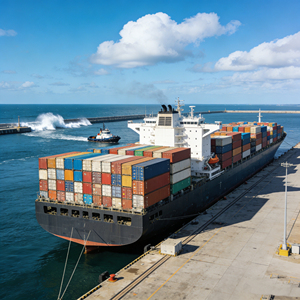
Port to Port Direct Vessel Shipping Agent to Mediterranean & Italian Ports
Reliable direct vessel allocation connecting major global factories directly to La Spezia, Venice, Naples, and Gioia Tauro container terminals.
Contact Us
Global Port-to-Port & Multimodal Forwarding Solutions (FCL / LCL Direct Line)
Flexible ocean freight consolidation with integrated bonded customs transit, tailored for high-tech components and industrial raw materials.
Contact Us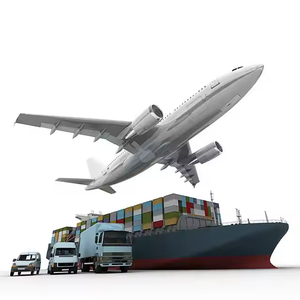
Premium Sea LCL & Ocean Express Freight Dispatch to Italian Industrial Corridors
Consolidated container shipping featuring expedited de-consolidation at Northern Italian logistics parks, reducing transit delays by 3-5 days.
Contact Us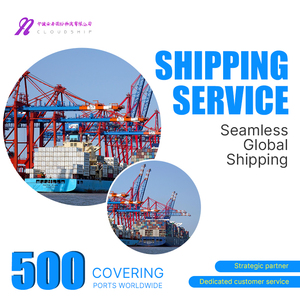
Full Container Load (20GP / 40GP / 40HQ) Marine Freight Services to Genoa & Salerno
Heavy-duty equipment and bulk container routing with guaranteed space allocation, carrier selection, and extended port free-time allowances.
Contact Us
Dedicated Port-to-Port Ocean Route: Global Gateways to Italy Genoa, Trieste & Livorno
End-to-end maritime logistics linking international export factories with Italy's premier sea terminals via optimized transshipment routes.
Contact Us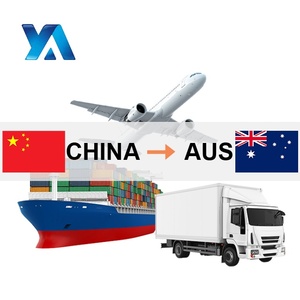
End-to-End Integrated Supply Chain Logistics & Drayage for Machinery Exporters
Specialized flat rack, open-top, and heavy chassis transport connecting marine berths directly with Italian manufacturing facilities.
Contact Us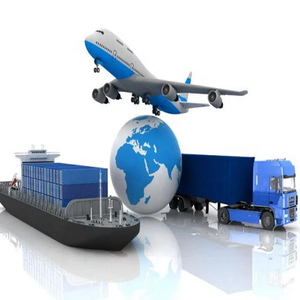
Global Container Ocean & Air Freight Rate Optimization for Italian Import/Export Hubs
Spot rate and long-term contract optimization providing transparent landed cost modeling for enterprise procurement divisions.
Contact UsStrategic Maritime Gateway Infrastructure for Italian Import/Export Trade
Italy occupies a vital strategic node in European supply chain architecture, serving as the southern maritime gateway for Central and Eastern European markets as well as the manufacturing backbone of Northern Italy. For overseas factories, global suppliers, and international freight forwarders, navigating the logistics landscape of Italian ports requires granular operational knowledge of both regional sea basins: the Ligurian/Tyrrhenian Sea on the West Coast and the Adriatic Sea on the East Coast.
Maritime shipments bound for Northern Italy’s industrial heartland—spanning Lombardy, Piedmont, Veneto, and Emilia-Romagna—primarily route through five key commercial container ports, each offering distinct geographical and operational advantages:
| Italian Marine Port | Geographical Basin | Primary Industrial Hinterland Served | Logistical Strengths & Key Capabilities |
|---|---|---|---|
| Port of Genoa (Genova) | Ligurian Sea | Milan, Turin, Switzerland, Southern Germany | Italy's largest container port by volume; direct rail links to major Northern Italian inland dry ports (Interporti). |
| Port of La Spezia | Ligurian Sea | Emilia-Romagna, Lombardy, Tuscany | High degree of automation; advanced intermodal rail integration (over 30% rail modal split); rapid customs processing. |
| Port of Trieste | Northern Adriatic Sea | Austria, Hungary, Slovakia, Czech Republic, Bavaria | International Free Port status with customs exemption zones; deep-water berths (18m); gateway to Central & Eastern Europe. |
| Port of Venice (Venezia) | Northern Adriatic Sea | Veneto, Friuli-Venezia Giulia, Trentino | Specialized in breakbulk, project cargo, agricultural commodities, and consolidated commercial container traffic. |
| Port of Gioia Tauro / Salerno | Tyrrhenian Sea | Southern Italy, Mediterranean Transshipment Hub | Premier mega-containership transshipment port bridging Suez Canal trade flows with Mediterranean coastal feeder networks. |
Modern port logistics for the Italian market extends far beyond vessel berth discharge. Critical operational success depends heavily on the seamless transfer of containers from quay terminals to inland intermodal hubs known locally as Interporti (such as Interporto di Verona Quadrante Europa, Interporto di Bologna, and Interporto di Milano-Rivalta Scrivia). Utilizing T1 bonded transit protocols allows international exporters to defer customs duty clearance until cargo arrives at destination inland bonded warehouses, drastically reducing port terminal dwell time and avoiding demurrage fees.
Localized Supply Chain Application Scenarios Across Italian Industrial Sectors
The Italian economic structure is characterized by highly specialized regional industrial districts (Distretti Industriali). Overseas factories and logistics providers must tailor their ocean and air freight routing to match the strict operational timelines of these localized ecosystems:
1. Industrial Automation & Machinery (Lombardy & Piedmont)
Manufacturing centers in Milan, Brescia, and Turin import high-value CNC components, robotics, and steel forgings. Logistics require Open-Top (OT) and Flat Rack (FR) container handling at the Port of Genoa, paired with specialized low-boy drayage chassis for over-dimensional factory delivery.
2. Luxury Fashion, Leather Goods & Textiles (Prato, Florence & Milan)
Time-sensitive luxury textile imports require garment-on-hanger (GOH) specialized containers and air-sea multimodal routing through Milan Malpensa (MXP) or rapid LCL de-consolidation at La Spezia, supporting strict seasonal fashion calendar deadlines.
3. Automotive & OEM Supply Chains (Piedmont & Emilia-Romagna)
Serving Italy’s renowned "Motor Valley" (Ferrari, Maserati, Lamborghini) and Stellantis assembly plants. Requires Just-In-Time (JIT) container drayage from port terminals, zero-tolerance clearance bottlenecks, and real-time GPS container tracking.
4. Ceramic Tiles & Construction Materials (Sassuolo District)
High-density heavy cargo shipping requiring strict 20ft heavy-payload container routing (up to 28 payload metric tons) routed via La Spezia and Ravenna ports directly into raw material processing factories in Modena and Reggio Emilia.
5. Agri-Food, Wine & Beverage Logistics (Veneto, Tuscany & South)
Cold chain logistics utilizing active 20'RF and 40'HR Reefer containers for temperature-sensitive food ingredients and wine export/import operations via Venice, Naples, and Livorno, adhering to strict EU Health Authority (USMAFF) controls.
6. Renewable Energy & Photovoltaic Infrastructure (Southern Italy)
Large-scale solar panel and battery storage imports entering Taranto and Sicilian ports. Logistics managed under DDP/DAP terms, incorporating customs classification for green technology equipment under tariff reduction programs.
Strategic Trends & Trade Compliance Shaping Italian Logistics
The regulatory and operational landscape for importing into Italy is undergoing significant structural changes driven by European Union mandates and global trade realignments. Exporters and factories must align with four primary industry trends:
- 1. Implementation of the EU Single Window Environment for Customs (EU CSW-CERTEX): Italy’s Customs and Monopolies Agency (Agenzia delle Dogane e dei Monopoli - ADM) has digitized port clearance processes through the AIDA electronic system. Pre-arrival processing (Sdoganamento in Mare) allows container ships to transmit customs manifests while still underway, enabling immediate green-lane release upon container discharge at Genoa or Trieste.
- 2. Carbon Border Adjustment Mechanism (CBAM) Compliance: Importers of carbon-intensive goods (steel, aluminum, fertilizers, cement) into Italian ports must report embedded direct and indirect greenhouse gas emissions. Logistics partners must now provide precise sea freight fuel emissions reporting to satisfy EU environmental customs audits.
- 3. Nearshoring & Mediterranean Hub Transformation: Supply chain re-configurations are driving increased trade volumes through Mediterranean ports over Northern European gateways (Rotterdam/Hamburg). Italian ports offer up to 4 to 6 days shorter sea transit times for trade originating from the Middle East, Asia, and North Africa.
- 4. Green Port Initiatives & Decarbonized Intermodal Transport: Italian port authorities are heavily investing in cold ironing (shore-side electricity for docked vessels) and electrification of terminal container gantry cranes. Preferential port routing is increasingly given to logistics operators utilizing electrified rail intermodal drayage.
Enterprise Advantages: Why Global Exporters & Buyers Partner With Us
Navigating cross-border freight requires a partner combining institutional compliance credentials with deep localized execution capabilities. As a licensed freight forwarder and U.S. Customs Brokerage firm with over 40 years of market presence, Cordaro Shipping Co. provides unique competitive strengths:
Native Italian Language & Regulatory Expertise
Our dedicated multilingual team speaks fluent English, Spanish, and Italian, bridging operational communications seamlessly between overseas supplier factories, ocean carriers, and Italian customs officials.
CTPAT Certified & Security Compliance
Validated under high supply chain security guidelines, ensuring expedited customs clearance, reduced physical inspection rates, and strict compliance alignment with EU AEO security frameworks.
Comprehensive DDP / DAP Door Delivery Control
From ocean bill of lading issuance to final-mile drayage across Italian highways, we manage full landed-cost calculations, duty payments, port terminal handling, and warehouse delivery.
Frequently Asked Questions: Italian Port Logistics & Procurement
Expert guidance on customs regulations, freight documentation, tariff structures, and port operations for international suppliers shipping to Italy.
What primary commercial documentation is required for customs entry into Italian ocean ports?
Commercial shipments entering Italian sea terminals (Genoa, La Spezia, Trieste, etc.) require a standard set of EU-compliant import documents: a Commercial Invoice detailing HS/TARIC codes, packing list, Master/House Bill of Lading (B/L), Certificate of Origin (where applicable for preferential tariff treatment under EU FTAs), and the Single Administrative Document (SAD / DAU - Documento Amministrativo Unico). Additionally, importers must possess a valid Economic Operators Registration and Identification (EORI) number linked to their Italian VAT (Partita IVA) account.
How does the T1 Bonded Transit document work for cargo moving to Italian dry ports (Interporti)?
The T1 document allows non-EU goods to move under customs seal from the coastal port of discharge (e.g., Genoa Quay) to an approved inland customs warehouse or Interporto (e.g., Verona or Bologna) without immediate payment of customs duties and Import VAT. Duty and VAT liabilities are suspended during transit and are only cleared once the container undergoes final formal customs entry at the destination inland dry port.
What are standard port free-time allowances in Italy, and how can detention charges be minimized?
Standard ocean carrier free-time for container storage and chassis equipment at Italian marine terminals typically ranges between 5 to 7 calendar days for standard dry containers, and 3 days for Reefer units. Exporters can minimize demurrage and detention exposure by negotiating extended free-time clauses (12-14 days) upfront, utilizing pre-cleared customs filings (Sdoganamento in Mare), and engaging pre-scheduled drayage carriers prior to vessel arrival.
Why is the Port of Trieste specifically advantageous for shipping to Central and Eastern Europe?
The Port of Trieste holds a unique historical international Free Port status based on international treaties. Goods arriving from overseas can be stored, handled, re-packaged, and processed within its free zones indefinitely without incurring EU customs duties or taxes until formally entered into the EU single market. Trieste also provides direct block-train rail connections directly into Central Europe (Austria, Germany, Czech Republic), bypassing highway traffic congestion.
What is the procedure for handling DDP (Delivered Duty Paid) shipments into Italy for overseas exporters?
Under DDP Incoterms, the seller assumes full financial and operational responsibility for door-to-door transportation, export/import customs clearance, duty payment, and Italian Import VAT settlement. Because non-EU sellers cannot directly pay Italian VAT without an established fiscal representation (Rappresentanza Fiscale) or direct EU VAT registration, partnering with an experienced freight forwarder with local Italian customs brokerage capability is mandatory to ensure compliant tax settlement.
Optimize Your Supply Chain Architecture for the Italian Market
Speak directly with our senior logistics specialists and customs brokers to structure cost-effective, compliant ocean and air freight routing for your factory exports to Italy.
Contact Us