Ireland Port Logistics & Direct Container Shipping Solutions
Optimized multimodal shipping routes, FCL/LCL vessel space allocation, express freight forwarding, and specialized port drayage servicing Irish importers and global industrial manufacturers.
Port to Door Priority Express DDP Shipping & Logistics Agent
- Direct express ocean & door-to-door delivery
- Complete DDP tax & import entry clearance
- Real-time telemetry tracking & priority dispatch
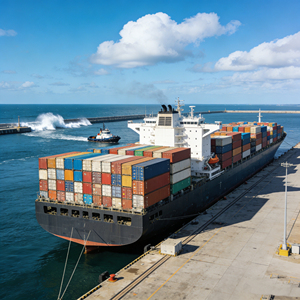
Port to Port Direct Vessel Cargo Forwarder & Vessel Booking
- Direct feeder & mainline liner container contracts
- Minimized port transshipment dwell times
- Dedicated port drayage & terminal handling
FBA & Commercial Ocean Freight Forwarding Port-to-Port
- Optimized container loading (20GP, 40GP, 40HQ)
- Direct entry to European & Irish logistics hubs
- Transparent tariff classification & documentation
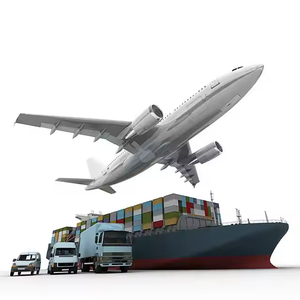
Marine LCL Consolidation & Express Sea Shipping Services
- Cost-efficient Less-than-Container Load grouping
- 5-Day expedited dispatch options available
- De-consolidation & localized warehouse delivery
Full Container Load (FCL) Global Ocean Freight Solutions
- Competitive spot & long-term contract rates
- Equipment availability across global export origin ports
- Comprehensive maritime cargo insurance coverage

Multimodal Port-to-Port Container Transit & Drayage
- Seamless transit connecting Asia, US & EU ports
- Automated Customs ISF & SAD electronic filing
- 24/7 dedicated port coordinator assistance
Global Supply Chain Port Services & Container Handling
- Strategic port drayage & intermodal rail routing
- End-to-end cargo visibility & milestone updates
- Specialized out-of-gauge & breakbulk logistics
International Port-to-Port Air/Sea Freight & Customs Agent
- Flexible multi-gateway ocean & air routing
- Pre-clearance customs processing & bond oversight
- Tailored logistics for industrial machinery & tech
Strategic Port Logistics Architecture Serving the Irish Economy
An authoritative analysis of Ireland's post-Brexit maritime trade dynamics, direct vessel connectivity, port infrastructure expansion, and manufacturing supply chain integration.
1. The Post-Brexit Realignment: Direct Ro-Ro & Lo-Lo Connectivity
The restructuring of European supply chains following Brexit has radically transformed Ireland's maritime logistics topology. Historically reliant on the UK "Landbridge" for cross-border transit, Irish enterprise logistics directors and global port logistics manufacturers have systematically shifted toward direct maritime routes connecting Ireland straight to Continental Europe and North America. This structural pivot has minimized customs friction, eliminated transit uncertainty at UK ports, and elevated the strategic importance of Tier-1 Irish port facilities.
To accommodate this operational surge, direct Roll-on/Roll-off (Ro-Ro) and Lift-on/Lift-off (Lo-Lo) vessel sailings between Irish ports (Dublin Port, Port of Cork, Rosslare Europort) and key European hubs (Cherbourg, Rotterdam, Antwerp, Zeebrugge) have grown by over 350%. Furthermore, direct transatlantic trade lanes connecting North American manufacturing hubs with Ireland have expanded to service Ireland's burgeoning pharmaceutical, technology, and advanced engineering sectors.
2. Ireland Port Capacity & Equipment Infrastructure Matrix
Understanding the operational parameters, draft depths, handling equipment, and cargo specialization across Ireland's key commercial maritime ports is essential for international manufacturers and procurement specialists seeking optimal freight efficiency.
| Port Facility | Primary Cargo Profile | Container Handling (TEU Capacity) | Max Berth Draft | Strategic Supply Chain Focus |
|---|---|---|---|---|
| Dublin Port | Container (Lo-Lo), Ro-Ro, Unitised Freight | > 800,000 TEU | 10.5m – 11.5m | High-value retail, FMCG, electronics, consumer industrial goods |
| Port of Cork (Ringaskiddy) | Deepwater Container, Agri-bulk, Ro-Ro | > 300,000 TEU | 13.4m | Pharmaceutical cold chain, chemical feedstock, heavy machinery |
| Shannon Foynes Port | Dry Bulk, Liquid Bulk, Breakbulk, Project Cargo | Bulk Specialist (>10M Tonnes) | Up to 18.0m | Offshore wind components, heavy raw materials, green energy tech |
| Rosslare Europort | Ro-Ro Freight, Express Unitized Shipping | Ro-Ro Hub Specialist | 7.2m – 9.0m | Express continental European freight direct to EU mainland |
Selecting the appropriate port gateway directly impacts landside transport economics. For instance, high-density bulk cargo or out-of-gauge (OOG) industrial equipment destination routes often favor the deepwater capabilities of Shannon Foynes or Cork's Ringaskiddy terminal, whereas high-frequency containerized inventory bound for the greater Leinster consumer market is optimal via Dublin Port.
3. Compliance Architecture: Customs, CTPAT & Technical Regulations
Importation into the Republic of Ireland requires rigorous adherence to European Union customs regulations alongside specific national entry mandates managed by the Irish Revenue Commissioners. For global manufacturers shipping from Asia, the Middle East, or the Americas, non-compliance results in severe container demurrage, terminal storage penalties, and supply chain disruptions.
Key compliance vectors include:
- Import Security Filing (ISF 10+2) & ENS: Advance Cargo Information must be lodged prior to vessel loading to satisfy security screening mandates.
- Harmonized System (HS) Code Accuracy: Precision classification under the EU Taric database determines applicable customs duties, anti-dumping levies, and VAT rates (standard Irish VAT rate of 23%).
- CTPAT & AEO Validation: Shippers utilizing Authorized Economic Operator (AEO) certified logistics partners benefit from priority customs inspection clearance and streamlined administrative audits.
- Phytosanitary & Veterinary Inspections: Specific raw materials, timber packaging (ISPM 15 compliance), and agricultural equipment are subject to Department of Agriculture, Food and the Marine (DAFM) physical controls.
Industry-Specific Application Scenarios across Ireland
Tailored supply chain execution models serving Ireland's dominant economic sectors: Life Sciences, Tech Manufacturing, Agri-Food, and Renewable Infrastructure.
Pharmaceutical & Medical Cold Chain (Cork & Dublin Clusters)
Ireland is home to 9 of the top 10 global bio-pharma corporations. Transporting active pharmaceutical ingredients (APIs), specialized medical devices, and manufacturing equipment demands active temperature-controlled Reefer container drayage.
Semiconductor & High-Tech Components (Leinster Region)
High-value silicon fabrication inputs and data center capital equipment require shock-damped, moisture-controlled container transport with zero tolerance for harbor clearance delays.
Renewable Energy & Offshore Wind Machinery (Shannon Gateway)
As Ireland accelerates its Atlantic offshore wind installation projects, heavy industrial equipment manufacturers need flat-rack and open-top container solutions for oversized turbines, cables, and structural steel.
4. Emerging Trends Shaping Irish Maritime Logistics
Several macro trends are redrawing the operational requirements for logistics managers operating in Ireland:
Green Maritime Corridors
EU Fit-for-55 mandates and ETS carbon taxes are driving maritime carriers to deploy bio-LNG and dual-fuel methanol vessels onto direct Irish trade lanes. Importers must begin reporting Scope 3 logistics carbon footprints under CSRD guidelines.
Digital Port Automation
Dublin Port’s 3D terminal operating systems and automated gate checks require 100% digital pre-declaration of container pin codes and vehicle registration numbers prior to driver arrival, eliminating paper-based gate friction.
Nearshoring & Buffer Inventories
Irish manufacturers have shifted from strict Just-In-Time (JIT) to "Just-In-Case" buffer stocking strategies, increasing demand for port-adjacent bonded warehousing and flexible demountable container storage.
Enterprise Capabilities & Logistics Advantage
Leveraging over four decades of global customs brokerage expertise, validated security standards, and deeply integrated ocean carrier networks.
Licensed Customs Brokerage
Direct electronic entry transmission with customs authorities, ensuring precise HTS tariff classification, valuation clearance, and duty minimization across 100+ nations.
CTPAT & AEO Supply Chain Security
Validated supply chain security certification reducing customs inspection frequencies, securing expedited container releases, and safeguarding sensitive cargo integrity.
FCL & LCL Vessel Capacity Access
Direct allocation agreements with premier vessel alliances (20GP, 40GP, 40HQ, Reefer, Flat Rack) providing stable spot rates and contract space even during peak shipping seasons.
24/7 Multilingual Account Oversight
Round-the-clock operational tracking staffed by domain experts fluent in English, Spanish, and Italian, ensuring frictionless coordination across time zones.
Frequently Asked Questions: Ireland Port Logistics
Expert answers regarding shipping timelines, customs entry protocols, demurrage avoidance, and drayage management for Irish trade corridors.
What are the primary transit times for direct container ocean shipping to Dublin Port?
Transit times vary based on export origin. Direct container services from major Asian ports (e.g., Shanghai, Ningbo, Shenzhen) to Dublin Port typically range from 28 to 38 days depending on transshipment calls at Rotterdam or Antwerp. Direct transatlantic shipments from US East Coast ports (e.g., New York/New Jersey, Miami) to Irish gateways take approximately 10 to 14 days.
How do I register and prepare customs documentation for Irish Revenue AIS pre-clearance?
Importers must possess a valid European Union Economic Operators Registration and Identification (EORI) number linked to their Irish Revenue online account (ROS). Prior to cargo arrival, your licensed customs broker submits a Single Administrative Document (SAD) electronically via AIS, declaring item values, origins, and HTS codes to secure immediate green-route release upon discharge.
What is the difference between FCL and LCL when shipping industrial equipment to Ireland?
Full Container Load (FCL) reserves an entire container (20ft, 40ft, or 40ft High Cube) exclusively for your cargo, maximizing speed, security, and volume economy. Less-than-Container Load (LCL) consolidates your cargo with other goods in a shared container; you pay only for the cubic volume (CBM) used. FCL is highly recommended for sensitive, heavy, or time-critical manufacturing machinery.
How can importers avoid costly container demurrage and detention charges at Irish ports?
Port demurrage begins when containers exceed their allowed free-time sitting on the quay (typically 3–5 days). To avoid fees, ensure ISF/ENS filings are lodged 24+ hours before vessel departure, transmit final commercial invoices early, and pre-book localized port drayage transport to move discharged containers immediately to your bonded warehouse or site.
Can your logistics network handle specialized out-of-gauge (OOG) and temperature-controlled cargo?
Yes. Our logistics framework manages specialized Open Top, Flat Rack, and Active Reefer equipment. We coordinate heavy-lift quay cranes, escort permits, and specialized low-loader drayage trucks capable of transporting complex industrial machinery throughout Ireland.
Optimize Your Irish Port Logistics & Freight Corridors Today
Speak directly with our senior freight forwarding architects and licensed customs brokers to receive a tailored route analysis, spot rate quotation, or customs compliance audit for your Ireland-bound cargo.