Direct Factory Sea Shipping Agent: China to Port Botany (Sydney)
Full Container Load (FCL) & LCL door-to-door forwarding. Includes automated ISF/EDN filing, tariff concession optimization, and Sydney landside transport.
Direct container routes, LCL consolidation, and specialized customs-cleared sea freight programs engineered for seamlessly landing factory shipments into Port Botany and greater Sydney commercial zones.
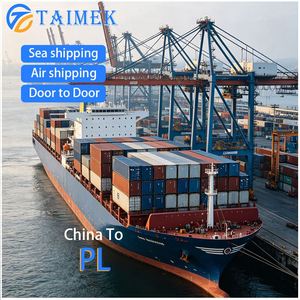
The trade dynamic connecting major Asian, European, and American manufacturing hubs with the Greater Sydney region represents one of the Southern Hemisphere’s most robust supply chain corridors. As the economic engine of New South Wales (NSW), Sydney’s consumer base and expanding infrastructure projects generate immense demand for factory-direct raw materials, structural steel, commercial machinery, solar hardware, and consumer goods. However, managing ocean freight effectively for the Sydney market requires far more than securing container slot space on a vessel. It demands rigorous execution across regulatory compliance, biosecurity protocols, port terminal logistics at Port Botany, and optimized landside drayage networks.
Importers and procurement directors sourcing directly from overseas factories must navigate an intricate matrix governed by the Australian Border Force (ABF), the Department of Agriculture, Fisheries and Forestry (DAFF), and local port terminal operators (such as DP World, Patrick, and Hutchison Ports Botany). Understanding how to streamline cargo from the origin factory gate to the final Sydney warehouse doorstep without suffering costly demurrage, detention, or quarantine holds is the primary driver of supply chain margin protection in today's volatile economic climate.
The sea freight pipeline serving Sydney relies heavily on direct ocean services operating out of major manufacturing clusters: the Pearl River Delta (Shenzhen, Guangzhou), the Yangtze River Delta (Ningbo-Zhoushan, Shanghai), and Northern China manufacturing hubs (Qingdao, Tianjin). Direct container ships transit southward through the Western Pacific, bypassing regional transshipment chokepoints when scheduled on express loops, arriving at Port Botany in approximately 12 to 18 days depending on port rotation.
Upon arrival at Port Botany, containers enter the landside distribution ecosystem. Unlike smaller regional ports, Sydney's container handling relies heavily on precise Vehicle Booking Systems (VBS) managed by terminal operators. Importers who fail to coordinate pre-cleared documentation before vessel berth often face severe financial penalties due to missed VBS slots, terminal storage fees, and container line detention charges (which can accumulate at upwards of AUD $250–$400 per container per day).
Information Gain Insight for Sydney Importers: Under Australian Border Force regulations, import entries can be lodged up to 10 days prior to the vessel’s estimated arrival at Port Botany. Utilizing an accredited U.S. and International Customs Brokerage team to transmit Full Cargo Reports (FCR) and Self-Assessed Clearances (SAC) in advance eliminates up to 72 hours of dwell time at the marine terminal.
All ocean freight entering New South Wales is subject to customs valuation under the Australian Customs Act 1901. Customs Duty (typically 5% for general manufactured goods) and Goods and Services Tax (GST of 10%) are calculated on the Customs Value (FOB price) plus international transport and insurance costs (CIF adjustment).
However, importers procuring directly from registered factories in China can leverage the China-Australia Free Trade Agreement (ChAFTA) to achieve 0% preferential tariff rates across thousands of Harmonized System (HS) code lines. To legally claim this exemption without triggering ABF audit flags, importers must secure a compliant Certificate of Origin (COO Form DAB or declaration by authorized bodies like CCPIT) prior to vessel departure, ensuring product descriptions and origin criteria (such as PSR - Product Specific Rules) match the commercial invoice exactly.
How optimized sea freight from overseas factories powers key industrial infrastructure, retail fulfillment hubs, and clean energy development across the Greater Sydney region.
The ongoing development surrounding the Western Sydney Aerotropolis (Badgerys Creek) and major transportation corridors (M4/M7 extensions) demands thousands of metric tons of structural steel, pre-fabricated modular building units, and heavy equipment. Factory-direct FCL ocean freight with specialized flat-rack delivery ensures heavy materials move seamlessly from overseas steel mills straight to Western Sydney job sites without double-handling delays.
Sydney is Australia's largest e-commerce gateway, home to major fulfillment hubs in Eastern Creek, Wetherill Park, and Kemps Creek. High-velocity consumer brands import consolidated LCL and FCL shipments directly from consumer product manufacturing plants. By establishing pre-cleared biosecurity sea freight schedules, brands prevent out-of-stock events during peak shopping seasons like Black Friday and Christmas.
NSW’s commitment to Renewable Energy Zones (REZ) requires a continuous supply of photovoltaic (PV) modules, battery energy storage systems (BESS), and inverter units manufactured in South China factories. Our ocean shipping protocol incorporates specialized temperature and humidity-monitored containerization, safeguarding sensitive solar components against marine dampness during oceanic transit to Port Botany.
Manufacturing plants in suburban Sydney (including Smithfield, Campbelltown, and Botany) rely on imported CNC machinery, robotics, and industrial packaging systems. We manage factory pickup via heavy-haul low-loaders overseas, vessel stowing, and ABF clearance, delivering turnkey equipment directly onto Sydney factory workshop floors ready for installation.
Stay ahead of regulatory shifts, environmental mandates, and technological developments governing maritime imports into Australia.
Australia’s Department of Agriculture, Fisheries and Forestry (DAFF) enforces strict seasonal measures for Brown Marmorated Stink Bug (BMSB) between September 1 and April 30. Ocean freight originating from target risk countries must undergo approved offshore heat treatment or sulfuryl fluoride fumigation before arriving in Sydney. Non-compliant containers face immediate mandatory re-exportation or costly onshore quarantine treatment at Port Botany.
Global shipping lines operating on Asia-Australia routes are progressively deploying dual-fuel LNG and methanol-powered container vessels to comply with IMO 2030 carbon reduction targets. Major Sydney corporate importers are actively selecting green ocean shipping options to meet scope 3 carbon disclosure mandates, requiring freight forwarders to provide verified carbon offset reporting per TEU shipped.
To reduce road congestion along the Botany Road and M5 corridor, NSW Ports is expanding its on-dock rail infrastructure at Port Botany. The strategic shift towards intermodal logistics means containerized factory cargo can be transferred via dedicated rail shuttles directly from marine terminals to inland container depots (ICDs) in Enfield and Moorebank, reducing drayage transit friction by up to 30%.
Get a comprehensive landed cost analysis, tariff assessment, and biosecurity check for your factory import shipments today.
Backing your international trade with four decades of licensed customs brokerage, CTPAT security compliance, and robust maritime agency networks.
Our licensed customs brokers bring over four decades of regulatory expertise. We manage complex commodity entries, duty concessions, and customs bond filings directly with border authorities.
As a CTPAT-certified and accredited partner, we provide validated supply chain security. This credential streamlines physical inspection rates and speeds up clearance processing at container terminals worldwide.
With offices strategically positioned across key trade hubs on both coasts and an international agent network covering over 100 countries, we maintain total visibility over your sea freight from factory origin to Sydney destination.
Communication breakdowns cause shipping delays. Our dedicated logistics team speaks English, Mandarin, Spanish, and Italian fluently, facilitating real-time resolution with overseas suppliers and local carriers.
Expert guidance on customs duties, transit times, biosecurity requirements, and local container drayage for New South Wales importers.
Direct sea freight services from major South China ports (Shenzhen, Guangzhou) to Port Botany generally take between 12 to 14 days port-to-port. Shipments departing Central/North China hubs (Ningbo, Shanghai, Qingdao) average 14 to 17 days. When factoring in origin factory loading, customs export filing, and Sydney landside container unpacking, total door-to-door transit usually spans 20 to 25 calendar days.
Import duties are administered by the Australian Border Force (ABF). Customs Duty is typically 5% calculated on the Customs Value (FOB product price). The Goods and Services Tax (GST) is 10%, calculated on the sum of the Customs Value + Customs Duty + International Freight & Marine Insurance cost (CIF value). Importers using ChAFTA Form DAB certificates may reduce the base duty rate to 0% on qualifying goods.
The Department of Agriculture, Fisheries and Forestry (DAFF) mandates seasonal treatment for target high-risk goods (such as machinery, vehicles, and raw timber products) shipped between September 1 and April 30 from designated BMSB risk countries. Goods must be fumigated (e.g., Sulfuryl Fluoride) or heat-treated by an approved offshore provider prior to departure to avoid quarantine holds or re-exportation orders upon arrival at Port Botany.
FCL (20ft or 40ft containers) is most economical when your shipment volume exceeds 15 to 20 cubic meters (CBM) or when shipping high-value/fragile cargo requiring dedicated seal integrity. LCL is ideal for smaller factory purchases (1 to 15 CBM), as you share container space and split ocean freight fees. Our team evaluates your cargo's total CBM, weight, and urgency to recommend the lowest landed cost option.
Port Botany terminal operators grant 3 calendar days of free storage after a container is discharged from the vessel, while shipping lines typically provide 7 days of container free-time before demurrage accrues. To prevent costly daily penalties, ensure commercial documents (Invoice, Packing List, Certificate of Origin, Bill of Lading) are delivered to your customs broker 5-7 days prior to vessel arrival so ABF and DAFF clearances are granted before the ship berths.
Yes. Our integrated logistics network coordinates dedicated container drayage vehicles (side-loaders, standard skeletal trailers, and heavy-duty tilt trays) operating out of Port Botany directly to major industrial parks across Sydney, including Eastern Creek, Wetherill Park, Erskine Park, Gregory Hills, and Marsden Park.
Partner with a trusted, licensed global freight forwarder and customs broker. Connect with our ocean freight specialists today for optimized routes, biosecurity compliance, and competitive factory-to-door shipping rates.